Showing posts with label Language. Show all posts

Friday, September 29, 2023

Tarzan and My Language Acquisition

ٹارزن کے جنگ اخبار میں روز شائع ہونے والے تصویری سلسلہ سے میں نے تقریباً 5-6 سال کی عمر میں اخبار پڑھنا شروع کیا-- یہ 1967-68 کا زمانہ تھا-- روز صبح امی، ابا یا بڑی بہنوں سے اصرار ہوتا تھا کہ وہ پڑھ کر سنائیں، اور شروع میں دو چار دفعہ ہر ایک نے سنایا-- چونکہ ہر کوئی اکثر اپنے کاموں میں مصروف ہوتا تھا، اور کہتا تھا بھئی خود پڑھ لو-- چنانچہ جھنجلا کر خود ہی پڑھنا شروع کر دیا-- اس کے بعد یہ چاروں فیروز سنز کی کتابیں IMSG سپر مارکیٹ اسلامآباد کی لائبریری سے لے کر پڑھیں-- بعد ازاں ٹارزن کی ان چار کتب کا پورا سیٹ خریدا اور بیسیوں دفعہ پڑھ ڈالا-- فیروز سنز کی ایک کتاب اسکول سے واپسی کے بعد کھانے کی میز پر شروع کرتے تھے اور وہ کوئی ایک ڈیڑھ گھنٹے کی مار ہوتی تھی--- ہماری imagination تخیل اور ایڈونچر کی آبیاری ان کتب سے شروع ہوئیں-- بعد ازاں اوریجنل بھی پڑھنے کا موقع ملا--
یہ چار کتب فیروزسنز واقع نزد تین تلوار شیل پٹرول پمپ سے خریدیں اس پیر کو خریدیں تھیں--

Wednesday, September 8, 2021

A Drive on a Rickety Cycle and Sufistic Thought by Shah M Ismail Rauf

This is a story/article written by my dear mamoo  Shah M Ismail written around 1953-55. Today September 8, 2021 is his 22nd death anniversary. He retired as Major in 1980s. He was great man who taught me how to love and play with children. 

Father of Faizan Shah, Faryal Osman Khan, Faraz Shah, Fariha Ahmreen, Farid Shah.
Rauf Mamoo as he was called by our entire extended family. Humaira Tariq, Sm Omar, Rabia T Zeeshan,.....Whether those who are be relation his grand daughters or grandsons or their sons and daughters would call him Mamoo. 

He was our companion in Hajj of 1996. What a great memorable 40 days.

Wednesday, January 27, 2021

Shajra Taxonomy of Sufi Tassauf Terminology

 شجرہ معرفت الہی و حقیقت روح و صراحت عالمہائے ظاہری و باطنی و طریقہائے تصوف متعلق نور ایمان

Monday, March 23, 2020

Ferozesons Children Urdu Novels Translated from English Novels

I would like to know if you can identify which of these books are translations of which authors of English books.
What a wonderful time that I spent with these books. I read them in Urdu before I read them in English later on. Once upon a time I used to have a collection of all these Frerozesons books that are mentioned here. I was a proud owner of "Millat Library" during early 1970s with a collection of hundreds of books that I used to rent out at 10paisa/book/day. Here are some of the translations that I have identified. Please fill the remaining ones in the comments if you can identify. I think many of these were translations of Franklin W Dixon's Hardy Boys series. At one time I recognized at least seven of these.

Saturday, January 12, 2019

Can a Child Learn a Foreign Language without obtaining full competency in First language

بچے کی زہنی نشو نما و خود اعتمادی کا گلا گھوٹنا ہو تو اس کو "پہلی زبان" پر دسترس ہونے سے قبل انگریزی زبان کے جبر میں قید کر دیں

I got this comment on the above FB post: 
Actually kids can learn multiple languages early in life a lot easier than later. But the downside is often that they take longer to speak. Girls tend to do better than boys. I learned to speak two and understand a third language all before 3 years of age:
The advantage of parents knowing multiple languages and sharing them with children will ONLY accrue once the child has obtained "full" competency in the "first" language(s) in which parents, grand parents, uncles, aunts, extended family, neighbors converse and the child finds himself immersed after his birth. By full competency I mean that the child can understand a joke, crack a joke, relate a hilarious (make believe) experience that will make family members or friends burst out with laughter. Once a child has this level of competency in the first language, then competency in any other language is a piece of cake. Without this level of competency in the first language, gaining full competency in any other language is wishful thinking.


پہلی زبان
First language is the language in which the child opens his eyes and hear his parents speaking. It is the language with which the child learns to interact with parents, grandparents, brothers, sisters, neighbors and friends. Articulation of thoughts into words and sentences is a complex learning. Then development of verbal skills to express abstract and complex ideas and learning to crack jokes and appreciate humor are the most difficult skills. Once a child has reached this state, learning any other language is a piece of cake.

The friend (Omer Dossani) further clarified that:
Irfan, our servents spoke Bengali, grandparents spoke Katchi, mother and father spoke 40% Urdu and 60% English. So, I cannot relate to what you are saying but maybe you are correct. From the research done by TCF in Pakistan they strongly stand behind their commitment to stick to Urdu as the medium of instruction based on the research that shows that kids learn best in their native language and so far their students are doing well

Articulation of complex ideas requires complex linguistic skills. The added pressure of not having enough verbal skills in a foreign language, stultifies expression of complex ideas, destroying self confidence and impedes mental development. Once complex verbal skills are fully developed in the first language, the child gains confidence to tackle any other language. Eg Schools where speaking in English is must, and the child is being bullied, the child is afraid and hesitant in complaining because the teacher will scold him for speaking wrong English instead of patiently trying to understand child's grievance. The child's emotions get strangulated and destroys his self confidence. 


Monday, June 11, 2018

A Tribute to Cricket for Spearheading my English Language Acquisition - Sports and Language Learning

I often see parents worrying about language skills of their children. A closer look at the hobbies of such children will indicate that they are not passionate about any hobbies especially sports. Here I would detail the role of cricket in spearheading my English language acquisition.  As my interest grew, with cricket and started following the cricket there were some milestones.
The book that I read in 1980s


[Work in Process]
Coming soon

Friday, December 15, 2017

An Indecent Obsession: Of War and its Futility

Reflections on "An Indecent Obsession" a movie and book by Colleen McCullough (author of "Thorn Birds" which I read in Pakistan around 1985-86). This is a page from my diary written on September 25, 1987. I was 25 and this was my first semester at UT Austin, and was residing at Riverside Apartments.
-------------------
For the first time after reading the "Purple Plain" by HE Bates, I again experienced the trauma, shock, feelings and tragedy that are associated with war. Lest we forget! It has been a long time since World War 2 which was around 20 years before my birth. Somehow, I think I feel or may be I imagine that I can feel the experience of what it is like being in the war, and witnessing its sufferings; all that dying, all the misery, and the in-consequence and futility of it. But wars are a real permanent feature of life. War has always remained a permanent feature of life. I think it is long overdue for our generation.

The sufferings, joys, and determination associated with it. How does it ruin the normal human beings, or make them or break them. What one feels and experiences in education  in itself. All our efforts, our preconceptions, and our business, and our longings and wishes seem pointless and meaningless. We love and suffer. Our associations seem to us to be permanent but they are simply our illusion. What is duty, morality, love. Every thing gets mixed up in the war. To come out of it unscathed, normal human being is really a tribute to the determination of man and his resilience. All dying and futility till you realize there is "All Quiet on the Western Front"!

Sunday, September 3, 2017

How Readers are Created. Ecosystem that Produces Readers

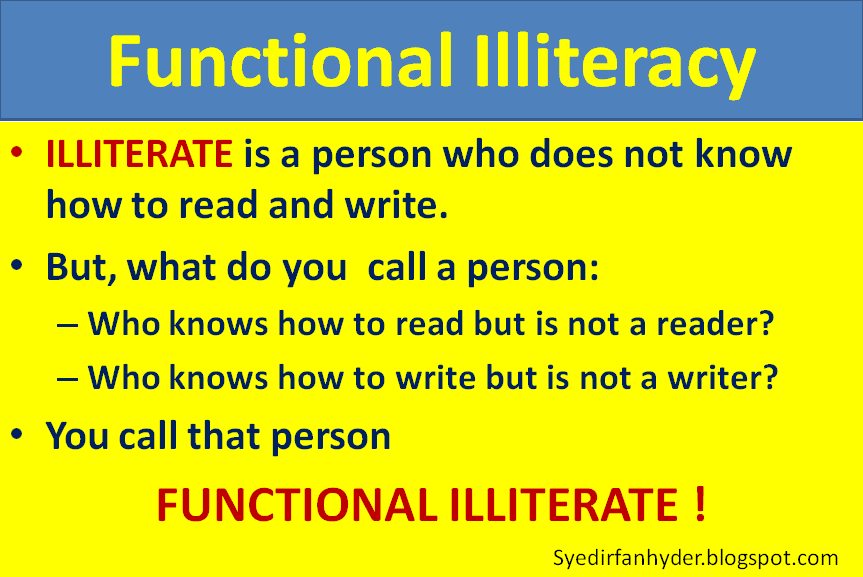
How can we create readers and an ecosystem where readers can thrive. How do we make reading a contagious disease when our educational institutions from schools to universities have become mass producers of functional illiterates [1]. Universities complain that they are getting intake that has studied English for 12 years but have no reading comprehension and no expression. The employers are complaining that graduates coming out of the universities can not even write a single page of correct English. This is a dismal situation. How come we are producing functional Illiterates who are defined as people who know how to read but are not readers, and those who know how to write but are not writers! How can we reverse this?

Wednesday, August 30, 2017

How Schools Teach Students to Hate Reading: Mass Creation of Non-Readers

Schools are producing graduates who know how to read but are not readers. They have become non-readers (functional illiterates) because the schools have taught them to hate reading! 
Functional Illiteracy
Schools typically use a curriculum and methodology that consists of senseless and meaningless worksheets and exercises which the students are forced to do repeatedly, continuously and ad-nauseam. And, when they resist, they are punished with F-grades, labeling and humiliation. These meaningless tasks and exercises and their resulting punishments teaches the students to hate reading and convinces them that ALL reading is so tedious, so boring, so frightful and accompanied with so much punishment that it is inconceivable that reading can ever be pleasure and fun. This is how we are producing non-readers, who believe that reading books is unreal, irrelevant, and disconnected with the challenges of life. We are in fact producing functional illiterates. 

Life Long Learning vs Sacrificing Interest
at the Altar of Technique Mechanics

Friday, July 21, 2017

Why People Hate Poetry? Because Schools have Taught them to Hate Poetry!

Why people hate poetry? Because schools did not teach them "to love poetry" but they actually taught them "to hate poets and their poetry". If you want students "to hate poetry" ask them to (1) write explanations (tashreeh) of poems, and (2) memorize life history and style (tarz-e-kalam) of poets, (3) associate grades with their learning of poetry, (4) make poetry a mind-activity instead of a heart-activity, (5) value subjects according to their potential for earning and employ-ability. The schools have sucked the life out of poetry by forcing the students to consider it as an object devoid of life, feelings and emotions, something that resides in mind and not in heart. Poetry is about feelings and emotions and expressing those emotions through similes and metaphors. Poetry is not about dissecting in a pedantic sort of the way why, when and how to write and appreciate good poetry. Unfortunately, schools specialize in making the students hate poetry through all the above ways.

Sunday, October 4, 2015

How Education System is Promoting Non-Readers and "Functional Illiteracy": Top Ten Reasons

Our educational system is producing graduates who can read but are not readers, who can write but are not writers i.e. functional illiterates [1].  They do not read fiction, have often never read books except those that they were forced to read for their exams, but which mostly they cunningly avoided by cramming the notes, and many a times not even the notes, just the presentation slides! I now think they are not even buying, let alone reading the text books!

Sunday, September 20, 2015

Managing English Teaching Outcomes in Universities: An Experiential Learning Case Study of ESL/EFL


My recollections as Vice President and Dean about ensuring the learning outcomes of English courses at PAF KIET from 2002-2012. 

Around ten to twelve years ago in our academic discussions with the President of the institute where I was working at that time, we would often worry about raising the English skills of our students. President of the Institute was Air Commodore (R) Khalid Husain who hailed from the Engineering Branch of PAF and who had been in senior positions in training and development wing of PAF. One day he mentioned that the new inductees in PAF are mostly from rural areas who have never been to English medium schools, and have had no or little exposure of English speaking environment. However, within a few months of their joining the PAF training academy, they are speaking fluently in English. How can we ensure that students of universities also start talking and writing in English within a few months? We agreed that  there was merit in this expectation, and we need to try to design systems that can ensure a similar level of outcome.

Sunday, September 13, 2015

Anti-National Language Policy leads to Rule by Rich and Corrupt Elites

One of the major reasons that has led to the continuous deterioration of economy and culture in Pakistan can be attributed to the anti-national language policies by the status-quo troika. This status-quo troika consisted of rich ruling elites in the bureaucracy that quickly joined hand with the establishment and the landed aristocracy during the rule military dictators to keep the common people away from the corridors of powers. The instrument of this machination was the use of English, the language of the colonial masters (gora sahebs), to extend the colonial rule during post-colonial era through their replacement with indigenous brown sahebs, the rich English speaking elites [1]. The recent supreme court judgement by CJ Jawwad Khwaja [2] is a bold attempt to correct this wrong perpetuated over the last 68 years and to strike at the root of the status-quo's power.
[Editing in Progress. Suggestions are welcome]
The discussion below giving examples from various institutions highlights that the dominant form of communications at all levels except the highest policy level is still Urdu and local languages (LL). Role of English is limited to making of the policy in an alien languages which common people should not be able to understand and also to ensure that policy making remains in the hands of the elites (brown sahebs) who are the real inheritors of the power from the departing colonial masters (gora sahebs) [3]. 

Schools and Universities

We know the sorry state of affairs in Urdu Medium schools. However, in majority of even private English medium schools, the level of English medium is pathetic. A survey has indicated that the maximum vocabulary of a typical English teacher in such English medium schools, is not more than four to six hundred. With such meagre and pathetic vocabulary, when these teachers conduct English classes, students know what sentences a teacher would use and when. They can even precisely predict what phrases they will say next. When schools force these teachers to speak only in English and also force the students to speak only in English, the results are disastrous because the teachers can neither make their student understand any thing nor the students feel confident enough to raise their hands and ask for any clarifications. This use of English under force and duress by teachers who have limited vocabulary impedes their ability to engage the students, to tell stories and other anecdotes in an interesting manner, and to stimulate the interests of students. Consequently, the willing expression of both the teachers and their students is stifled and strangulated; and teachers often resort to creating an environment of fear where asking of questions is considered as misbehavior. Teachers of technical subjects do not even make an effort to use English. They simply use Urdu or local languages to explain the technical contents. However, the tests and exams are in English. Therefore teachers take the easy route to just writing the contents of the book on the board and making the students copy that in their copies. Similarly, the students take the easy route to rote memorization over any attempt in trying to understand the contents.
Only the elite minuscule percentage of English medium schools that typically charge over Rs 15,000/= per month fees can afford teachers (at salaries around Rs 60,000 per month). These are the only places where one can expect some good quality English. However, these are the elite schools that cater to the rich and ruling troika of Pakistan. Here too the qualifying criteria is fluency of English. The only criteria for hiring of teachers is the fluency of English and Western modern dressing. But, these schools further create the elite class and does nothing to reduce the mediocrity.
The emerging scenerio has therefore been pathetic as depicted in the poignant Urdu saying, "Kawwa chala hans ki chaal, apni chaal bhi bhool gaya" (when the crow tried to walk the walk of a swan, it forgot its own walk). In fact, the students today neither know English nor Urdu.

With the exception of few elite universities, the situation in universities across the board is not much different. I need a separate post to describe the different techniques, methods and formats for teaching English that we have tried over several years with English department teachers of various backgrounds and competences in two universities. In our long meetings to discuss the efforts and their outcomes we often used to wonder about the efficacy of what can we do at the university level when the student getting admission has put in 12 years in English medium schools and had not learned much because they are neither readers nor writers. The state of English language learned by the students at the university level is not much different from the state described by this famous couplet of poetry by Momin Khan Momin:

Umr saari tu kati ishq e butaan mai Momin
Akhri waqt mai kya khaak musalmaan ho gay!

With the exception of English subjects, most other subjects are taught in Urdu. Teachers actually revolt when they are forced to teach technical subjects in English. They vociferously defend that if the objective is to teach the technical concepts, then why use English that impedes that learning!
With such confusion prevailing, over 99% of class room interactions, discussion, teaching takes place in Urdu or local languages. English is only used for writing the exam and tests. Hence the culture of mass ruttafication (senseless memorization) and production of people who neither have the capacity to express in any language nor any thing to express. The result is that we are mass producing Functional Illiterates. An illiterate is a person who does not know how to read and write. A functional Illiterate is a person who knows how to read, but does not read, and who knows how to write, but does not write. The educated majority in Pakistan are neither reading books nor writing books which is alarming.

Government and Governance

In Government offices, if you are dressed in national dress, your entry is difficult. If you are dressed as English Babu your entry is easier. If you talk in national/local languages your entry is difficult, if you talk in English language, your entry is easier. Interaction with government becomes easier if you have the right connections with the status quo powers. A telephone call would get your work done in no time. If you are not connected with the status-quo, you would need speed-money to get your task completed. If you are a commoner you will have to run from pillar to post; they will make you go from one window to another and at each window will ask you to fill out umpteen forms and applications; mind you, all would be in English. The system is rigged against redress of issues of common people.
If you are a government servant your promotion depends upon your ability to talk and write in English. This is the only language for file working and official notings, preparing of cases and getting their approvals. Merit and promotions all boil down to your knowledge and ability to draft in English.

I have noticed even bureaucrats of grade 21+ have difficulty of expressing themselves in Urdu extemporaneously what to talk about their ability to express themselves in English. They often send regrets at the last moment to functions where they are invited to speak. Most public officials are reading speeches written by their minions and in a manner so pathetic that exemplifies the state of English competency in Pakistan.
In every government office or department or ministry, whether at the federal level or the provincial level, discussions in the hall ways, in offices, in meetings with the officers, in dealing with the people, in participative discussions of meetings of officers, are all happening in Urdu or local languages. The only time English is used when presentations are being given on important matter where no discussion is intended or where the decision is already made. The final noting and decisions are all done in English so that only the English speaking and writing people have the decision making authority and right to promotion.

Assemblies and Lawmakers

Law bills are written and presented to parliament in English. Lawmakers; MNAs and MPAs rarely understand English with a competency to negotiate the nuances of English language in the law bills. Hence, discussion in the assemblies is in one direction and the law that gets promulgated says something else. This law is drafted by the status quo powers through careful deliberations of clauses that protect their interests. The inability of lawmakers to either understand this language or to appreciate its implications has led to the sorry state we are in where we are still using hundred year old laws of the colonial past with few amendments here and there.

The entire system is rigged to make the lawmakers coming from poor ground feel incompetent just because they lack command on English language. Had the language of law been Urdu, the lawmakers, MNAs and MPAs would have better understood the contents, and would have been better able to debate and also dessimate their intent to the masses. People, in turn, would have been able to comment and discuss the vires and nuances of the law that is being promulgated.


Courts, Tribunals, Regulators

Courts and tribunals and regulator hearings are platforms for those who can communicate in English. The irony is that all court proceedings either are conducted in Urdu or local languages but the decision is written in English. PLD is in English. The quality of case writing and published judgements is either not available or of poor quality [4]. Supreme court had to admonish the public officials and law ministry for not making these available. Add to the nonavailability of judgements to the common people, is the incomprehensibility by the masses of these decisions because of the foreign language in which they are written. Given the current state of English comprehension of lawyers, their ability to prosecute or defend the cases is poor. Consequently, litigants are mis-advised about the judgements and the cases are prolonged for the benefits of the lawyers and the associated legal touts.
The result is delay in dispensation of justice and the promotion of lawlessness and corruption.

Big Businesses, Multinationals and Banks, Markets

One would expect that the dominant mode of communication in big businesses and multinationals would be in English. But this is contrary to experience. Except for the board meetings, or formal meetings of the top executives, most of the communication taking place in most forums in these organizations is in Urdu or local languages. Whether it is communication or interaction with customers on telephone or in person, whether it is negotiations with the vendors, whether it is explanation of processes and giving of instructions to workers on the shop floors or in offices, whether it is training of sales persons and their interactions with customers, or whether it is interactions with other stakeholders, one would find Urdu and and local languages in most verbal communications. Written communications in English are often ignored and not read and have to be followed up with phone calls and meetings in person. Surprising thing is that business curriculum designers have also been ignoring this fact also [5].

Promotion in such organization is therefore not on the basis of competency of work but only on the merit of knowing the foreign language English and ability to make presentation to principals.

Small and Medium Enterprises and Informal Sector

This sector constitutes over 90% of businesses and over 95% of our workers. Again the predominant medium of communication is either Urdu or the local languages. This is where there are most non filers of tax for the simple reason as they can not fill out the technical forms or maintain the records in the language that is required by the tax authorities. Unfortunately, our regulators demand everything in foreign language. Hence most noncompliance is there. This may be a major reason for the graft and corruption we see in dealings with the regulators. The role of English in the development of this large sector has been debilitating and stifling.

Role of Dictators

It is important to note the role of military dictators in the impediments caused to the cause of national and local languages [6]. The rule of Gen Ayub and Gen Yahya consolidated the rule of the brown saheb. However, during Bhutto's regime the hegemony of the brown saheb was reduced and the new constitution proclaimed the status of Urdu as the national language to be implemented in a specified period which ended during Gen Zia's period who did nothing except paying lip service. The private English schools were the product of his time and also the start of the creeping influence of Cambridge system. After Gen Zia's death because of the 8th amendment there was a musical chairs of BB and NS each taking two turns; during this time neither the courts could function nor the political institutions were allowed to develop. This was followed by the dictator Gen Musharraf's 9 years which again were the hay days of the foreign cultural invasion. It was only during the post 18th amendment during Zardari's time that constitution was cleared of the martial law aberrations and led to the empowerment of constitutional courts. This paved the way for SC to act during NS's time. It can therefore be seen that Martial Laws had been stifling for the national aspirations and national languages, however, democratic rules have led to the empowerment of the national languages. 

References

[1]. Postcolonial discourse is an academic discipline that analyzes the cultural legacies of colonialism and of imperialism. Source: Boundless. “Postcolonial Discourse.” Boundless Art History. Boundless, 21 Jul. 2015. 
Also see an introduction at
https://literariness.wordpress.com/2016/04/06/postcolonialism/ 
[2] Supreme Court orders govt to adopt Urdu as official language, Daily Dawn, Sep 8, 2015
[3] Urdu kay mukhalifeen ka almia By Orya Maqbool Jan
[4] SC HEARS THE CASE REGARDING ERRORS IN PUBLICATION OF LAW BOOKS
[5] Revamping Business Curriculum in collaboration with Industry, talk by Dr Irfan Hyder in 2nd Conference of Deans and Director of Business Schools organized by HEC and NBEAC, Karachi, 2015.
[6] Supreme Court, Nifaaz-e-Urdu Aur Afwaj-e-Pakistan, by Orya Maqbool Jan, Daily Express, Sep 14, 2015.

See Also:

Monday, February 9, 2015

A Formula is Worth a Thousand Pictures: Dijkstra vs Buzan's Mind-Maps

A Formula is Worth a Thousand Pictures: Dijkstra vs Buzan's Mind-Maps

Problems with Pictures with too many details and Complexity
I had the opportunity to attend Tony Buzan's presentation of his famous Mind-Maps at the convention of Management Association of Pakistan held at Karachi in September 2014. Mind-maps became popular in Pakistan some years ago thanks to their use for pictorially representing the concepts in a summary page at the end of each chapter in many of the high school science text books for O/A Level students.  As Buzan was presenting the mind-map concepts, I was comparing them with my experience of graphs and pictorial representations for representing complex concepts, processes and relationships. 

Thursday, June 5, 2014

Capitalist Transactions Replacing Traditions and Values from Istanbul to Makkah


Free Water Fountain on National Mall
Last month during transit for a few hours at the Istanbul airport on my way to Tblisi, Georgia, I was struck by the "transactional" nature of every interaction at the airport. I was surprised that there were no drinking water fountains available at one of the busiest airports of the world. I started wondering if US and European airports have also lost the free water fountains that must have been there some 25 years ago because I don't seem to recall buying bottled water on my travels then, or has the University of Texas at Austin also lost its free water fountains which used to be there when I was there around that time. Nor do I recall having to buy bottled water during my visit to so many museums and buildings around the National Mall in Washington DC, or in Manhattan. If they have not lost them there in the heart of the capitalist West, then why this loss at Istanbul airport? However, a week later I got the opportunity to contrast this with the hospitality in the mosques of the same Istanbul! I will be connecting the dots later in the post.

Thursday, May 8, 2014

Georgia - Lesson in Preserving Language, Religion and Culture

Skyline with Churches
The first thing that strikes one in Tbilisi, Georgia is the love Georgians have for their language and their history and their resilience in maintaining their religious and cultural identity despite centuries of rule by foreign powers: Sign boards and billboards are all in Georgian, schooling is predominantly in Georgian, daily interaction is in Georgian, books and magazines are in Georgian, cultural performances are in Georgian and of course there is this distinctive Georgian Orthodox Church with its visible presence in every nook and corner and over the skyline of the city. So unlike Pakistan, where one has the foreboding of an impending complete loss of language, culture and tradition due to a whole scale adoption of English by the ruling elites including the religious elites.  Here I would relate some of my observations and conversations in my trip to Georgia and would later contrast them with what we see in Pakistan, and would derive some lessons.

Sunday, March 2, 2014

How Language Acquisition is Made Difficult for Children: Eight Lessons from an Urdu Acquisition Case Study

How Language Acquisition is Made Difficult for Children: Eight Lessons from an Urdu Acquisition Case Study

[The later part of this post would derive the lessons that I learned from my experience of how I learned Urdu which is described first. These lessons address the problems that our faulty methodologies are creating today in language acquisition especially in teaching of Urdu. The lessons are general and apply to other languages also as highlighted by references to well established and well known research. ]

The first Urdu Book I remember reading around 1966-67 was I think Urdu ki pehli kitab[?]. I must have been around five or six years old at that time. Those were the days when the madness of imprisoning two and three year olds in the pre-school had not begun. (It is madness because nowhere in the developed world any educationist recommends this except schools in Pakistan run by administrators not academics.) I had by then must have gone through the Noorani Quaida. Anyhow, I distinctly remember a few lines from the very first page of that pehli kitab. Surprisingly many others who had started their Urdu from this book also do so. The first page had some very simple rhyming sentences with very short "meaningful" words such as:

Friday, October 18, 2013

Most Effective Way of Cutting a Nation from its History and Ideals - Imposing a Foreign Language

Most Effective Way of Cutting a Nation from its History - Imposing a Foreign Language

The project for cutting a nation from its history and roots always starts with the introduction of a foreign "language". We know how Ataturk's drive for secularism led him to change the Turkish script from Arabic to Latin script to cut the Turks from their history, and we also know how the British used English as a tool to create an elite class more anglophile (more loyal than the king) to serve them during their colonial rule and later to extend their control during the post-colonial era. This elite class identified themselves more with their colonial masters than with their fellow country men as evidenced by the distance they still maintain (see the VVIP culture and the motorcades of our rulers; military, political or feudals). 

Monday, March 18, 2013

Structural Paradigm of Schools: Foundations and Assumptions

Current Education Paradigm [1]
Schools anywhere in the world share a common paradigm that was determined by the demands of the Industrial Revolution. In this post we identify the structural elements underlying the current paradigm. Many of the underlying assumptions of these structural elements are being questioned in the light of the transition to knowledge age of the 21st century from the industrial age of the 19-20th century. The structural elements given below are also shared by the universities, with some variations: