Learning and Life

Inspiration to Leadership, Lessons from Life, School/Higher Education, Parental Counseling, IT, Student Counseling.

Pages

  • Home
  • Contents
  • Higher Education
  • Parental Counseling
  • School Education
  • Leadership
  • PhD
  • Life
  • At What Cost
  • IT
  • Family
Showing posts with label PhD. Show all posts

Thursday, December 29, 2022

Future of MPhil/PhD in Pakistan

Q: What is the future of MPhil/PhD done through universities in Pakistan? How to build your future through Research?

Ans: Future of MPhil/PhD in Pakistan is now the same as the future of MPhil and PhD abroad--- Future is only in research organizations and universities doing funded research!

Future of MPhil is always a PhD. Future of PhD is in universities or research organizations that value researchers who can obtain funded research. There are several universities, consortiums, collaborations that are obtaining hundreds of millions of Rupees (even billions) funded research from foreign and local sources in Pakistan.


Read more »
at 7:32 PM 1 comment:
Email ThisBlogThis!Share to XShare to FacebookShare to Pinterest
Labels: Higher Education, PhD

Sunday, July 4, 2021

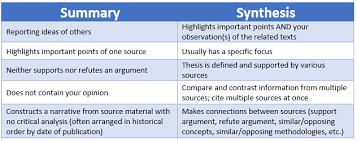
How to Identify Synthesis in the tables of your PhD Literature Survey

Instructions to my PhD students:
Please note that The taxonomy master and taxonomy detail are only a "structured" way of organizing the information and identifying "codes" and discovering "themes and categories". It is a tool to help you identify the literature support that leads to your PS.

You need to transform this structured information into distilled tables where individual papers at max could be in footnotes.

We discussed in class the tables used by Dr Omar Javaid and Dr Junaid Ansari dissertations tables in the chapter on literature survey. The dissertations are in lms.

You need to design those kinds of tables that fit the thrust of your paper areas.

Most of you have been asked to change/make these tables.

Read more »
at 10:43 AM No comments:
Email ThisBlogThis!Share to XShare to FacebookShare to Pinterest
Labels: Higher Education, PhD

Tuesday, December 22, 2020

Inter-Disciplinary and Multi-Disciplinary PhD Research

As I look back I am trying to connect the dots that I have been trying to follow the footsteps of Prof Dr JC Browne at UT Austin, TX, in multidisciplinary research. He was, my PhD Supervisor during 1990-95 whose pic is here:
Read more »
at 4:31 PM No comments:
Email ThisBlogThis!Share to XShare to FacebookShare to Pinterest
Labels: Higher Education, PhD, Quality

Sunday, September 27, 2020

Library Search for Articles at UT Austin in 1989: How searching of articles has changed

Think about researchers who reviewed hundreds of papers that they had to access manually! UT Austin,  Texas in 1987 had around 6 millions items distributed in several departmental libraries. Some of these were several storyed library buildings. There was also a huge 6 floor central library. For example, In Engineering building library each engineering discipline had their own encyclopedia type abstracts volumes. Computer and control abstracts had around 50 volumes (encyclopedia like thick volumes containing the abstracts of all papers published). Volume 1 and 2 contained the index of citations only. From the alphabetical index search you identified the particular volume,  say volume #34 containing abstracts of a particular area. Then you pulled out volume#34 to read the abstracts and titles. If you thought the abstract was any good or relevant and the article was worth reading, then you noted the reference in a diary. Once you have noted these 20-30 worth reading citations, the next stage was to get the article. Fortunately, library catalog was computerized and UT Austin had a huge subscription of journals. Online catalog told you whether whether the journal was available and at which library, and which floor and which shelf. Generally from 20 citations you found 5-7 not available on campus. For these you needed to go to inter University loan service that typically took from 2weeks to two months to get the photo copy from a partner University. If the journal was available on campus, you went to that physical library location to find the volume of journal. You were lucky if the journal was available on shelf. Often another student may have taken out the volume and placed it in the library somewhere. For that you had to contact the library staff to search the item and hold it for you  which may take a few days. Finally, you find the relevant volume and read the article. If it is really good and relevant you got to get the photocopy from the machines where you had to insert a prepaid cartridge to get the photocopies. 


at 6:53 AM No comments:
Email ThisBlogThis!Share to XShare to FacebookShare to Pinterest
Labels: Life, PhD

Monday, March 30, 2020

What is Originality in PhD Research- Explained Through a Concrete Example

I have often seen explanation of "originality" in research through abstract terms and ideas. 


Here I will try to explain the concept of originality in PhD research through the concrete example of Moodle which is an LMS. This example is chosen because PhD students today are very likely to have come across an LMS and would help in understanding various nuances of originality.

The other reason is to understand the dynamics of originality (creativity, invention) and significance (practicality, adoption, use and impact) in the context of computer technology whose tremendous growth over the last 70 years is exemplified through a continuous cycle of creativity, innovation, improvement, extension, collaboration, application, assimilation, enhancements, growth, and widespread adoption. This is enabled through the application of theoretical concepts which are converted into protoypes, tools and products, whose use leads to the identification of new requirements and opportunities, which in turn lead to another cycle of creative originality in design and implementation.

1. Presenting a major piece of new information in writing for the first time:

  •  Jean Piaget's theory of cognitive development which laid the foundation of constructivism or other theories that started laying the foundation of how learning happens and through what processes. This led to the development of "Learning by Doing" as can be seen through the seminal work of John Holt. 
  • Moodle is based on the philosophy of social constructivism.

2. Extending, qualifying or elaborating on an existing piece of work

  • Then would come people writing papers on use of computers for education and leading to the development of CBE (Computer Based Education) tools from 1960s. Then they started becoming mainstream in 1970s-80s for example Milliken Communication Systems (subsidiary of Milliken Publishing) CBE courseware. 
  • Then comes the scathing critique of original forays in the use of computers for education as Frank Smith's "Insult to Intelligence". 

Undertaking an original piece of work designed by someone else

  • Moodle is based on the philosophy of social constructivism.
  • It is also based on the experience and critiques of computer based education, and computer based learning systems of 1980s and 1990s. 

Developing a new product or improving an existing one

  • Moodle was originally developed in 2002 based on the experience of other computer systems. 
  • It is based on the open source movement's Open Source Software. Wikipedia being one of the major successes of this movement and so is Linux Operating system which powers the most operating systems on cloud. 

Reinterpreting an existing theory, maybe in a different context

  • Moodle is a reinterpretation of constructivism theory in an LMS context. 
  • It modifies various assumption of constructivism in the process of fitting the LMS to meet the requirements of educational institutions that range from one end of spectrum represented by constructivism and extends to the other end of the spectrum that is need for teacher based interactions enabled by Moodle. 
Demonstrating originality by testing someone else’s idea
[work in progress]
Carrying out empirical work that has not been done before
Using a different methodological approach to address a problem
Synthesizing information in a new or different way
Providing a new interpretation using existing / known information
Repeating research in other contexts, for example, a different country
Applying existing ideas to new areas of study
Taking a particular technique and applying it in a new area
Developing a new research tool or technique
Taking a different approach, for example a cross-disciplinary perspective
Developing a portfolio of work based on research
Adding to knowledge in a way that has not previously been done before
Conducting a study on a previously unresearched area or topic
Producing a critical analysis of something not previously examine

There are many ways you can incorporate originality without your thesis becoming too ambitious or unmanageable.

‘New’ elements can arise when you:

  • generate new data
  • apply new methods to existing data
  • create new interpretations of existing data
  • provide additional support for existing theories, models or interpretations
  • modify existing theories, models or interpretations
  • critique or disprove existing theories, models or interpretations
  • discover new information
  • provide new solutions to problems
  • analyse phenomena in new ways
  • devise new investigative methods
  • sample new populations.

References


Copied from Research Gate


Deleted profile

Some criteria which may merit ‘originality’
  • Presenting a major piece of new information in writing for the first time
  • Extending, qualifying or elaborating on an existing piece of work
  • Undertaking an original piece of work designed by someone else
  • Developing a new product or improving an existing one
  • Reinterpreting an existing theory, maybe in a different context
  • Demonstrating originality by testing someone else’s idea
  • Carrying out empirical work that has not been done before
  • Using a different methodological approach to address a problem
  • Synthesizing information in a new or different way
  • Providing a new interpretation using existing / known information
  • Repeating research in other contexts, for example, a different country
  • Applying existing ideas to new areas of study
  • Taking a particular technique and applying it in a new area
  • Developing a new research tool or technique
  • Taking a different approach, for example a cross-disciplinary perspective
  • Developing a portfolio of work based on research
  • Adding to knowledge in a way that has not previously been done before
  • Conducting a study on a previously unresearched area or topic
  • Producing a critical analysis of something not previously examine
  • Source - http://services.unimelb.edu.au/__data/assets/pdf_file/0009/471267/Developing_originality_Update_051112.pdf
  • Phillips, E., & Pugh, D. (2010). How to get a PhD: A handbook for students and their supervisors. McGraw-Hill Education (UK).
https://www.researchgate.net/post/What_are_the_criteria_of_research_originality2
https://mvngu.wordpress.com/2011/07/22/originality-in-research/
https://books.google.co.in/books/about/How_to_Get_a_PhD_4th_Edition.html?id=pPFJAAAAYAAJ&redir_esc=y
https://www.theverge.com/2015/10/7/9469845/different-meanings-from-same-data-research-science
https://www.slideshare.net/AmrAbdAlkrimHassan/research-methody-ch
https://books.google.co.in/books/about/The_Research_Student_s_Guide_to_Success.html?id=r8x0QgAACAAJ&redir_esc=y
Article What does originality in research mean? A student's perspective
1 Recommendation


2nd Feb, 2018
Avishag Gordon
Technion - Israel Institute of Technology

Hi,
Being original means that your findings are contributing something new to a body of knowledge, and this can be established by the evaluation of experts in the field. However, there are cases in which the originality of the findings is not identified immediately, and sometimes it takes years before it is recognized.
2 Recommendations


Popular Answers (1)
8th Aug, 2016
Jorge Morales Pedraza
Morales Project Consulting

An original research paper is the one based on original research that produces new knowledge instead of summarizing what is already known in a new form. There are many ways to produce new knowledge: observations, experiments, new approaches to solving existing problems, etc. Very often, an original research paper is simply called a dissertation.
An article is considered original research if...
· it is the report of a study written by the researchers who actually did the study.
· the researchers describe their hypothesis or research question and the purpose of the study.
· the researchers detail their research methods.
· the results of the research are reported.
· the researchers interpret their results and discuss possible implications.
27 Recommendations

8th Aug, 2016
Ali A R Aldallal
University Of Kufa

How to recognise and develop originality in research
 For research to be of PhD standard, all institutional regulations require it be 'original' and significant. In practice, though, research projects at all levels should be original; just the duration shorter and the significance less - much less for undergraduate projects. (Advice on limiting the scope and significance of a project at the outset is on the page about choosing a research topic; advice on limiting scope towards the end when seemingly submerged in too much data is on the page about a fall-back position.)
Students often worry about how to recognise and claim originality in their work. This page should help, but remember that originality without some sort of significance is worthless.
Ways of thinking about originality
A useful way to appreciate the scope of originality is through an analogy, where the research programme can be likened to an exploration into a wilderness at a time in history when the world was still largely unexplored and when explorers still had considerable personal autonomy. In the analogy, the explorer may have certain visions in mind concerning what he or she hopes the expedition will achieve, but appreciates that these may not materialise, so is open to alternatives. To avoid cumbersome repetition, the explorer and student will be taken as having different sexes, arbitrarily male and female respectively.
Originality in tools, techniques and procedures
In the analogy the explorer uses all the information he can to firm up on why he wants to explore the wilderness and how he might do so within the resources at his command and within any constraints that may exist. He uses this information to plan and organise what background knowledge, procedures, tools, equipment and personnel he will need, tailored to the available resources and constraints. Some procedures may have to be specially designed, some tools and equipment may have to be specially made and some personnel may have to be specially trained or brought in.
Similarly, the student studies the literature, talks to experts and attends relevant training to get background knowledge and to develop an appropriate research methodology. This must include decisions about the procedures, tools and techniques, and possibly also the people to be involved. These may be fairly standard in the field of study, but if she uses them in new and untested ways, this would justify a claim for originality. Or if she develops new procedures, tools and techniques for a specific purpose, this, too would justify a claim for originality. If neither is the case, her claim for originality must lie in later stages of the work, as suggested in the next few sections.
Originality in exploring the unknown/unexplored
In the analogy the expedition begins along the pre-planned route. If this is previously unexplored, the mere exploration is original work.
Similarly, if the student is conducting a major investigation on something which has never been investigated before, such as a recently discovered insect, star, poem, etc, the work will necessarily be original.
Such originality is built into the research topic and is straightforward to justify.
In many fields of study, however, originality is not built-in. So read on.
Originality in exploring the unanticipated
In the analogy the main route may already have been broadly explored. However, the explorer will, from time to time, come across unexpected and unexplored sidetracks. He may not notice them and he may continue on the planned route anyway, in which case nothing original is involved. If, however, he does notice the sidetracks, he has to make decisions about whether to explore any of them, and if so, which ones. These decisions may be difficult, because he cannot know whether anything of interest will turn out to lie along them without at least partially exploring them, and doing so will use resources of time and equipment which will delay the expedition on its main route. Yet, one or more of the sidetracks could contain something of such great interest and significance that it would be worth abandoning the expedition as first planned and putting all the resources into exploring the sidetrack.
Similarly, in fairly mundane research, one phase of the work can open up alternative ways forward which have never previously been researched. These ways forward are necessarily original, and they can also turn out to be highly significant. They can, on the other hand, equally turn out to be dead-ends which consume time and effort fruitlessly. Researchers cannot know without devoting some time to looking, and even if nothing worthwhile results, a student can at least claim to have searched for something original and significant.
Originality in data
In the analogy the explorer may make interesting notes of observations along the way. Where he is unable to give them the time they deserve while on the expedition, he may pack them up for carrying back home to work through properly.
Similarly, the student may find herself collecting data, a great deal which she does not process at the time. She just hopes that it may provide something original and useful later when processed or analysed. This is a perfectly possible way of incorporating originality into work, but it is not at all safe because the data may turn out to have minimal significance. To follow such a route successfully, students need either good hunches about how the data might be used to advantage or considerable creative abilities.
Originality in transfer of mode or place of use.
The explorer may collect all manner of goodies along the way, ranging from what he hoped for when planning the expedition to the entirely unanticipated. These goodies may have an obvious uniqueness, beauty or value, like gold or precious stones. More likely, though, they are commonplace where they were found, but unknown back home, like the potato which Sir Walter Raleigh brought to England from America.
Similarly, originality in research need not be new in absolute terms. It can merely be new to the research situation or the discipline. Even well-known and already published data can lead to 'originality' if tested in new situations. It is both feasible and acceptable for researchers to make something original and significant with secondary data, i.e. data that they did not gather themselves. This route to originality is often overlooked by research students.
Originality in by-products
Things may go so badly wrong on the expedition that it has to be abandoned with seemingly nothing achieved. Yet, the illnesses of the team could be used to testify to the diseases that are rampant in the area. Or the torrential storms that washed away the collections of specimens could be monitored for interpretation in terms of what is already known about storms in that type of terrain. Neither of these would have been the purpose of the expedition, but they would be none the less valuable and count as original and significant outcomes.
Similarly, the student may be able to capitalise on things that seem to go wrong. Important equipment may not work; crucial resources may not be available; people may not agree to be interviewed; funding may be withdrawn; or there may be other serious and unforeseen obstacles. Just as in the analogy, a little creative thinking can rescue the situation, which is the primary reason for the third role in which students need to operate. There are almost always by-products during any research, perhaps the development of a certain piece of equipment or some interesting secondary findings in the literature. These can be moved into the mainstream, focused on or developed further. When the thesis or dissertation is written, the research problem, theme or focus merely needs to be reformulated to reflect the new nature of the work. There is nothing at all dishonest about this.
Originality in the experience
Whatever happens on the expedition, the explorer should, provided that he did not give up and return home early, have some interesting stories to tell.
Similarly students who stay the course with their research should be able to tease out something worthwhile from an academic or scholarly standpoint. Creative thinking techniques should help.
Originality as 'potentially publishable'
Departing from the analogy, another useful way to stimulate thinking about originality is through the concept of 'potentially publishable' in a peer-reviewed journal. This is increasingly being equated to 'significant originality' for students' research. The work does not necessarily have to be published, only to be worthy of publication, in principle, if suitably written up at a later stage. 'Potentially publishable' is a useful notion, because most research, particularly at PhD level, ought to be able to generate at least one, and probably several, journal articles. If, by the time of the examination, the work has already been accepted for publication in a peer reviewed journal, that is a considerable plus.
The variety of interpretations and configurations of originality
It is not very difficult to develop new and original twists to research, and Box 21.1 in the book gives some examples of how real students have done so. You should be able to do it too.
http://www.postgradresources.info/student-resources08-originality.htm


11th Nov, 2016
Stavros Hatzopoulos
University of Ferrara
I think that the colleagues before me have already provided a wide -range set of answers to the question about originality. Unfortunately this question would be answered differently lets say 20 or 30 years ago. 
While the theoretical concepts of "what is original" are still valid, very little research is original in our days. Most of the research topics are already saturated with previous work.. and very rarely the research results are UNIQUE in comparison to the data in the literature. 
So I believe that in our present scientific context, that we should substitute the term "Original Research" with "Good Research", that is conducted via established scientific rules. 
2 Recommendations

See Also: 

  • Motivation: Why PhD?
What is PhD?
  • What does it Mean to Have a PhD: Myths of Specialization and Departmental Expertise 
  • What is the Difference between MS/MPhil Research and PhD Research
Why PhD is Difficult: 
  • Why PhD is Difficult to Complete and Why there are so many ABDs and PhD Dropouts
  • How Progress of Research is related to the Mood and Psychology of a PhD Student
Starting with your PhD
  • Am I ready for MPhil/PhD Research: Self Checklist 
  • How to Select an MPhil/PhD Research Topic
Reading Research and Writing Your Research 
  • What is a Problem Statement and its role in MS-PhD Research
  • What is a Thesis Statement and its Role in PhD-MS Research
  • How Literature Review of a PhD Dissertation Presents the State of the Art: Synthesis vs Listing
  • How to Read a Research Paper and Extract Problem Statement and Thesis Statement
  • What is meant by Rigor of PhD Research
  • Dynamic Role of Abstract in Guiding the Flow of Writing of a PhD Dissertation
  • Conclusion vs Assumption in Research Writing- Flipping the Thread of Argument in your PhD Thesis
  • PhD is about Pursuit of Excellence. Pursuit of Excellence vs Guzara: How to teach excellence through everyday examples
Qualitative Learning from a PhD
  • Myth: Impact Factor Measures Real Impact
  • Pursuit of Excellence vs Guzara: How to teach excellence through everyday examples
  • Discerning the Forest from the Trees - The Insights from my PhD Supervisor JC Browne
  • A Formula is Worth a Thousand Pictures: Dijkstra vs Buzan's Mind-Maps
  • Fairness in Grading: A Lesson by the Great Dijkstra
  • Lesser known dimensions of US Universities - Archives of history and literature
Myths: 
  • Myth: Impact Factor Measures Real Impact
  • Myth: We are Backward because we Lag Behind in Science and Technology
  • Beauty is Our Business - Mathematics, Excellence and the Great Dijkstra
  • 5 Myths of Higher Education in Pakistan
at 9:23 AM No comments:
Email ThisBlogThis!Share to XShare to FacebookShare to Pinterest
Labels: Higher Education, PhD

Friday, January 31, 2020

How HEC Kills Creativity and How PEC Kills Creativity

How HEC and PEC kill creativity! They kill creativity by targeting the roots from where creativity and innovation originate. Creativity, innovation, new paradigms, new frameworks and and new ideas originate from out-of-the-box thinking, lateral thinking, inter-disciplinary aha experiences. However, HEC/PEC's notion of quality works in the reverse direction; they force faculty, curriculum as well as research to be imprisoned in rigidly defined boxes or cells! They compartmentalize knowledge and think that knowledge can be captured in boxes and in silos designated by the names of the disciplines, programs or departments. This helps the bureaucracy in imprisoning the faculty into existing rigidly defined boxes i.e. the name of the discipline written on the degree or the name of the department on the transcript. This box then becomes the territory on which turf wars are fought for future promotions and fancy designations of professors, chairpersons, and deans. It is on this turf that departmental politics is played out. This imprisoning of knowledge in silos has nothing to do with academics or the quality of higher education.
This is also discussed in my blogpost What does it Mean to Have a PhD: Myths of Specialization and Departmental Expertise
[https://syedirfanhyder.blogspot.com/2014/10/Myths-Definition-of-PhD-Specialization-Expertise.html]

Read more »
at 9:46 PM 1 comment:
Email ThisBlogThis!Share to XShare to FacebookShare to Pinterest
Labels: Higher Education, PhD

Sunday, January 26, 2020

Different Types of Research Contributions and Challenges in Defense


Paper Writing and Research Strategies

 [Copied from the net in 2012. Source unknown]


Introduction

Here is a brief reminder of how to write papers and what kinds of papers to write. Please also see the other materials on our web site on paper structure.
What matters most about a paper is what the reader gets out of it, not how much work you put into it. That is, after reading your paper, the reader should feel that he knows something new, has a better insight into something, or has a better idea of how to do something.
Each paper you write should stick to one main idea, and that idea should be clear enough that you can formulate it in a single sentence. If you can't tell someone else what the main contribution of your paper is in a single sentence, you haven't worked it out enough.
Writing papers doesn't need to be all that hard because papers fall into a small number of common categories. Most of them involve some problem that needs to be solved or some observation that needs to be explained; for the paper to be accepted, it's important that this problem or observation is interesting in the first place.
Solving problems that aren’t interesting to reviewers won't get you published. It is therefore important that you keep track of the literature and figure out what topics are likely going to be of interest to reviewers.
In writing your paper, keep in mind that many reviewers are graduate students like yourself. Think about how you approached your last few paper reviews. How well did you yourself know the literature? Did you give the authors the benefit of the doubt when you didn’t understand something? Did you ask for more experiments?
Read more »
at 7:30 PM No comments:
Email ThisBlogThis!Share to XShare to FacebookShare to Pinterest
Labels: Higher Education, PhD

Sunday, January 19, 2020

Quality and Duration of PhD Degree: Will HEC recognize Iqbal's PhD ?

Do you know that Allama Iqbal's PhD thesis would never have passed HEC's quality criteria of minimum duration of three years for a PhD!
Iqbal arrived in Germany between 17 to 20 July 1907. Munich University issued call for defense on 21st July. Defense was held on 10th November 1907.

A group photo, of young Allama Iqbal with his landlady and roommates during his stay in Heidelberg Germany. Year: 1907
Read more »
at 4:45 PM No comments:
Email ThisBlogThis!Share to XShare to FacebookShare to Pinterest
Labels: Higher Education, PhD, Quality

Sunday, August 11, 2019

Dynamic Role of Abstract in Guiding the Flow of Writing of a PhD Dissertation

Abstract is the first thing in a dissertation that is read, and is often the last. A dissertation is at most read by 1.6 people from end to end, including the author [1]. PhD dissertation is written to enable a researcher to find all information necessary for replicating the results and understand the thesis. Hence, the detail. However, most readers are only interested in finding out a few items about the research which are typically provided in the abstract. These include the problem statement, thesis statement, contribution, and significance. Details of what a dissertation should contain has been amply documented elsewhere. In this post, I will discuss the role of abstract in guiding the flow of PhD Dissertation during its writing stage. 
Read more »
at 4:56 PM 7 comments:
Email ThisBlogThis!Share to XShare to FacebookShare to Pinterest
Labels: Higher Education, PhD

Monday, March 5, 2018

Problems of Psychometric Labeling (MBTI-DISC) and Imprisoning People in Artificially Constrained Boxes

Psychometric scales in the hands of psychologists and HR professionals are playing havoc with the lives of people. They are misdiagnosing and being used for purposes that were not the objectives of their design. Use of a test to determine the current state of a person's perception and thinking is one thing and to use it for projecting and predicting the future of that person is quite another thing.

A few years ago I was introduced to MBTI (Myers-Briggs Type Indicator) which consist of tests that try to fit a person in one of the sixteen boxes as shown in the diagram below. It took me several days after my first introduction with MBTI,  to understand why I felt a troubling unease with the model. MBTI idea is to help the managers identify the box in which a person belongs. He is assigned responsibilities and tasks that are only suitable for that box. Once boxed-in, the HR makes the person believe that he belongs to that box and tries to build strategies within and around that box.

MBTI Boxes in which to fit the human behavior
Read more »
at 2:46 PM 1 comment:
Email ThisBlogThis!Share to XShare to FacebookShare to Pinterest
Labels: Metaphysics of LifeStyles, PhD

Friday, February 16, 2018

Conference Marketing and Promotion-Where is the "conference" in a conference!

Conference Marketing and Promotion: Where is the "conference" in a conference?
Marketing and branding of a conference depends upon its value proposition for its participants. Currently value proposition of most conferences is often every thing except the "confer" part of the conference, which means exchange of ideas and discussions. Typical value propositions of existing conferences include (i) site seeing, (ii) establishing contacts, (iii)  "presenting" papers, (iv) citing conference papers in CVs and research profiles, (v) making money, (vi) gaining promotional mileage, etc where exchange of ideas does not happens except as a side-effect. One-to-many presentations by a paper reader who is totally glued to and dependent on the slides and with no eye contact or engagement with the participants has downgraded the value of conferences. Typically, research paper presentations are only attended by other paper presenters who keep on leaving after their presentations till a time comes that the last presenter is addressing an empty hall. They disappear for site seeing immediately after their presentations. Any discussion and exchange of ideas that do take place happen on the sidelines when participants bunk the conference sessions. Challenge for marketing and promotion of a conference is to establish clearly its value proposition and work on ensuring that worthwhile discussion and exchange ideas takes place during the conference sessions. Panel discussions is often a mechanism to engage the participants and the speakers in interactive discussions but this seldom happens because the moderators are often ill-equipped to catalyze a worthwhile energetic exchange of ideas. The challenge for marketing and promotion of a conference is to ensure the catalyzing of deep discussions about the major issues of the conference themes. This talk would focus on the challenge of connecting the marketing and promotion of a conference  with its content and its value proposition.

[Keynote Speech at IEEE mini POCO 2017, Sep 19, 2017, Organized by IEEEP, CIIT, HEC, Falettis' Hotel, Lahore.]
at 3:21 PM No comments:
Email ThisBlogThis!Share to XShare to FacebookShare to Pinterest
Labels: Higher Education, PhD

Sunday, December 3, 2017

What is Meant by Rigor of PhD Research

The rigor with which your hypothesis are tested and the methodology that is pursued differentiates a PhD from an MS/MPhil [1]. A PhD is held to higher standards of meticulousness and scholarship which becomes evident from the rigor of the analysis of conditions, constraints, variables that influence the experiment, and may have an impact observations, and use of established theories for justifying their inclusion or exclusion.

Read more »
at 7:53 PM 10 comments:
Email ThisBlogThis!Share to XShare to FacebookShare to Pinterest
Labels: Higher Education, PhD

Friday, September 1, 2017

How Literature Review of a PhD Dissertation Presents the State of the Art: Synthesis vs Listing

Quality of literature review is what majorly differentiates a PhD Thesis from an MS Thesis. The qualitative difference is in the digestion and synthesis of the existing work into a framework on which your research contribution and sequence can stand. This synthesis of existing work in the topic area should itself be worthy of a publication. Digestion of the existing papers is represented by a list of factors or parameters that you have identified on which you can compare and and contrast the existing literature. Not all parameters are relevant to all the papers. Hence, parameters are separated into different subsets. For each subset, a table can be constructed through which papers relevant to the subset parameters can be compared and contrasted. Analysis of these parameters provide you with the explanation of the gap or the problem area which is then articulated in the form of a problem statement.

Read more »
at 8:08 PM 16 comments:
Email ThisBlogThis!Share to XShare to FacebookShare to Pinterest
Labels: Excellence, Higher Education, PhD

Friday, August 25, 2017

What is a Problem Statement and its role in MS-PhD Research

I am coming across research proposals and dissertations where there is a section heading called "Problem Statement" under which you find several paragraphs containing everything except the "Problem Statement"! The problem statement seems to be embedded somewhere in these several paragraphs but never crisply, precisely stated in a single sentence. Statement is ONE sentence. The problem statement is one sentence that describes why your research and your thesis exists. If you do not have a convincing problem statement describing the gap that requires to be filled, then there is no need for you to research! "Problem Statement" identifies the problem that you are solving, the gap that you are going to fill, the ontological "contribution" that you are going to make via the "original" research of your thesis. Unfortunately, an imprecise and vague description of the problem statement often creates a huge issue during the defense, because the examiners may not understand or buy into the problem as it was not precisely stated and not articulated convincingly.


Read more »
at 6:20 AM 15 comments:
Email ThisBlogThis!Share to XShare to FacebookShare to Pinterest
Labels: Higher Education, PhD
Older Posts Home
Subscribe to: Posts (Atom)

All posts

All posts

Youtube

Total Pageviews

Subscribe To

Posts
Atom
Posts
All Comments
Atom
All Comments

Search This Blog

Labels

At What Cost (149) Higher Education (141) Life (128) History (119) Metaphysics of LifeStyles (72) School Education (69) Constitution (68) Leadership (65) family (52) Vignette (49) Parental Counseling (42) PhD (37) Student (30) Corruption (25) Books (21) PBL (20) Language (19) Teaching (19) Experiential Learning (18) IT (18) Literature (13) Enterpreneurship (12) Quality (10) Curriculum (9) Grading (8) Myths (8) Excellence (7) LMS Based Education (6)

Popular Posts

  • How to Read a Research Paper and Extract Problem Statement and Thesis Statement
  • Sad Ending of Abdullah Yousuf Ali - the Translator of Quran
  • Why PhD is Difficult to Complete and Why there are so many ABDs and PhD Dropouts
  • What does it Mean to Have a PhD: Myths of Specialization and Departmental Expertise
  • What is a Problem Statement and its role in MS-PhD Research
  • What is a Thesis Statement and its Role in PhD-MS Research
  • How Schools Teach Students to Hate Reading: Mass Creation of Non-Readers
  • Dr Wahab and IBA of 1980s and 1990s
  • How to find "Buzurg" and "Wali" of Allah
  • Ghaus e Buner (Swat), Syed Ali Tirmidhi's Descendant Syed Akbar Shah of Sathana

Visitors: since 7-Jun-18

Flag Counter

Blog Archive

  • ▼  2024 (2)
    • ▼  December (1)
      • 16th December- A Tale of 2 Tragedies n Follies of ...
    • ►  July (1)
  • ►  2023 (12)
    • ►  September (4)
    • ►  August (1)
    • ►  April (4)
    • ►  March (3)
  • ►  2022 (38)
    • ►  December (4)
    • ►  October (4)
    • ►  August (3)
    • ►  July (18)
    • ►  June (1)
    • ►  April (5)
    • ►  February (3)
  • ►  2021 (43)
    • ►  September (3)
    • ►  August (5)
    • ►  July (4)
    • ►  June (1)
    • ►  May (16)
    • ►  April (6)
    • ►  March (4)
    • ►  January (4)
  • ►  2020 (50)
    • ►  December (3)
    • ►  October (1)
    • ►  September (2)
    • ►  July (12)
    • ►  June (4)
    • ►  May (4)
    • ►  April (8)
    • ►  March (9)
    • ►  February (1)
    • ►  January (6)
  • ►  2019 (50)
    • ►  December (6)
    • ►  November (2)
    • ►  October (4)
    • ►  September (15)
    • ►  August (7)
    • ►  July (6)
    • ►  June (2)
    • ►  April (3)
    • ►  January (5)
  • ►  2018 (54)
    • ►  December (3)
    • ►  October (2)
    • ►  September (6)
    • ►  August (6)
    • ►  June (9)
    • ►  May (6)
    • ►  April (6)
    • ►  March (10)
    • ►  February (5)
    • ►  January (1)
  • ►  2017 (42)
    • ►  December (3)
    • ►  November (5)
    • ►  October (2)
    • ►  September (4)
    • ►  August (9)
    • ►  July (6)
    • ►  June (3)
    • ►  May (4)
    • ►  April (1)
    • ►  March (4)
    • ►  January (1)
  • ►  2016 (37)
    • ►  November (1)
    • ►  October (3)
    • ►  September (4)
    • ►  August (11)
    • ►  July (4)
    • ►  June (2)
    • ►  May (3)
    • ►  March (2)
    • ►  February (1)
    • ►  January (6)
  • ►  2015 (25)
    • ►  December (3)
    • ►  October (2)
    • ►  September (4)
    • ►  August (2)
    • ►  July (3)
    • ►  June (2)
    • ►  May (1)
    • ►  April (2)
    • ►  March (3)
    • ►  February (1)
    • ►  January (2)
  • ►  2014 (22)
    • ►  December (1)
    • ►  November (3)
    • ►  October (3)
    • ►  September (2)
    • ►  August (1)
    • ►  June (3)
    • ►  May (2)
    • ►  March (6)
    • ►  February (1)
  • ►  2013 (43)
    • ►  December (1)
    • ►  November (4)
    • ►  October (4)
    • ►  September (2)
    • ►  August (4)
    • ►  July (3)
    • ►  June (3)
    • ►  May (7)
    • ►  April (4)
    • ►  March (11)

Leadership

More posts..........

Counseling

More posts.........

School Education

More posts..........

See Also

  • Dr Irfan Hyder Personal Website

Linkedin

View Irfan Hyder's profile on LinkedIn

About Me

My photo
Dr Irfan Hyder
Prof. Dr Syed Irfan Hyder has a wide experience in academic leadership, consultancy, entrepreneurial ventures, trainings, research and in the design and implementation of innovative programs and as a multi-disciplinary speaker. He provides consultancy for entrepreneurial and personal visions, students/parental counseling and school education. He is currently VC of Salim Habib University. Last edited 8-10-24
View my complete profile
Theme images by luoman. Powered by Blogger.