Showing posts with label Books. Show all posts

Friday, September 29, 2023

Alif Laila Series of Ferozesons and my love for books

 مجھے سب ہے یاد زرا زرا-- تمہیں یاد ہو کہ نہ یاد ہو

کس کو یاد ہے ان 6 کتب کی قدر مشترک؟
ملکہ شہرزاد
حجام اور قزاق
چین کی شہزادی
گنجا لنگور
سندباد کے سات سفر
معروف موچی
1970 کی دہائی میں یہ کتب میری اسلام آباد میں "ملت لائبریری" کا حصہ تھیں جن میں بچوں کی فیروز سنز کی کتب کے علاوہ ابن صفی، این صفی، مظہر کلیم وغیرہ کی کتب تھیں
کل فیروز سنز نزد تین تلوار جانے کا اتفاق ہوا، تو یہ سیٹ خرید لیا--
کیا زبوں حالی کا شکار نظر آیا-- فیروز صاحب کے بچوں کی اگلی نسل کیلئے فکر فردا کا مقام
فیروز سنز کراچی کا پتہ:
تین تلوار سے دو تلوار کی طرف جاتے ہوئے الٹے ہاتھ پر شیل کے پیٹرول پمپ کے سامنے کھڑے ہوں تو سیدھے ہاتھ والے کونے کے سامنے کمرشل کے فرسٹ فلور پر


Tarzan and My Language Acquisition

ٹارزن کے جنگ اخبار میں روز شائع ہونے والے تصویری سلسلہ سے میں نے تقریباً 5-6 سال کی عمر میں اخبار پڑھنا شروع کیا-- یہ 1967-68 کا زمانہ تھا-- روز صبح امی، ابا یا بڑی بہنوں سے اصرار ہوتا تھا کہ وہ پڑھ کر سنائیں، اور شروع میں دو چار دفعہ ہر ایک نے سنایا-- چونکہ ہر کوئی اکثر اپنے کاموں میں مصروف ہوتا تھا، اور کہتا تھا بھئی خود پڑھ لو-- چنانچہ جھنجلا کر خود ہی پڑھنا شروع کر دیا-- اس کے بعد یہ چاروں فیروز سنز کی کتابیں IMSG سپر مارکیٹ اسلامآباد کی لائبریری سے لے کر پڑھیں-- بعد ازاں ٹارزن کی ان چار کتب کا پورا سیٹ خریدا اور بیسیوں دفعہ پڑھ ڈالا-- فیروز سنز کی ایک کتاب اسکول سے واپسی کے بعد کھانے کی میز پر شروع کرتے تھے اور وہ کوئی ایک ڈیڑھ گھنٹے کی مار ہوتی تھی--- ہماری imagination تخیل اور ایڈونچر کی آبیاری ان کتب سے شروع ہوئیں-- بعد ازاں اوریجنل بھی پڑھنے کا موقع ملا--
یہ چار کتب فیروزسنز واقع نزد تین تلوار شیل پٹرول پمپ سے خریدیں اس پیر کو خریدیں تھیں--

Friday, April 16, 2021

Growing up with Magazines

In 1969-70 I was 7 when I started reading Taleem o Tarbiat and other magazines. We had almirahs shelves full of magazine issues going back to early 1960s and to even mid 1950s. 

Saturday, December 19, 2020

Irfan Husain, Mazdak, Begum & Akhtar Husain Raipuri and Zafar Umar

I have been reading Mazdak/ Irfan Husain's articles in Dawn for last 20+ years. Although I often disagreed with his opinions but yet used to read them regularly. 

Monday, March 23, 2020

My Most Memorable Readings- Tilism e Hoshrub and Dastan e Amir Hamza

My most memorable experience of reading Urdu books was the time spent in reading of Ferozsons' Tilism e Hoshruba and Dastan e Ameer Hamza.

Ferozesons Children Urdu Novels Translated from English Novels

I would like to know if you can identify which of these books are translations of which authors of English books.
What a wonderful time that I spent with these books. I read them in Urdu before I read them in English later on. Once upon a time I used to have a collection of all these Frerozesons books that are mentioned here. I was a proud owner of "Millat Library" during early 1970s with a collection of hundreds of books that I used to rent out at 10paisa/book/day. Here are some of the translations that I have identified. Please fill the remaining ones in the comments if you can identify. I think many of these were translations of Franklin W Dixon's Hardy Boys series. At one time I recognized at least seven of these.

Sunday, December 8, 2019

Where to Download Books for Free and Legally


45 places you can download tens of thousands books, plays and other literary texts completely legally for free

stacks

Sunday, August 25, 2019

Far From the Madding Crowd, Hardy and Me

Today I got off from the board meeting early and my flight was in the evening. I had a few hours to kill with nothing to do. I chanced upon a YouTube video snippet of Bathsheba Everdene and Sergeant Troy's sword scene of 2011 remake of Far From the Madding Crowd. I didn't like it at all, there was no mystery, no suspense and no thrill that I remember experiencing when I first watched the scene in the original 1967  British movie starring Julie Christie, Alan Bates, Peter Finch and Terrance Stamp. Knowing me, YouTube presented the Terrance Stamp interview recorded just before the remake. He had played Sergeant Troy in the 1967 BBC movie. The interview opened a flood of memories flashing across my mind of the various times of my life when i had seen the movie and the times that I have read the book. It brought to my mind my struggle to derive meanings of various scenes. My first viewing was at a time when I had limited understanding of what was happening as our exposure to the themes discussed in the book were not discussed openly in my time. The book itself dealt with these themes in a roundabout manner making it difficult for school boys to fathom. I first saw the movie around 1977. I started going through the various scenes being presented by YouTube and connecting them with my earlier stage. Terrance stamp was saying that the original 1967 team involved in the movie consisted of luminaries of British Film making and were the who-is who of the British cinema. He predicted that it would be really difficult for the remake to break the spell weaved by the original. How true was that:

Sunday, October 14, 2018

Love of Research and Books-Prof Ahmed Saleem

I went to meet Professor Ahmed Saleem at his home library. His house is in Judicial Town near Chhattar Park in a very picturesque setting at the foot of the hill with stream flowing near by. His library consists of his personal collection of over 45,000 books and a collection of newspapers since 1947 of Jang,  Imroze, Pakistan Times etc. His room is next to the library and resembles more of a bed placed in a library room with a nearby desk-chair and a small sofa. 


The library is divided into various sections. Sections on East Pakistan, Punjab, Balochistan, Sindh, Gilgit-Baltistan had around six shelves each containing several thousands books. He has command over Punjabi (mother tongue), Pushto (grew up and did his early schooling in Peshawar), Sindhi (taught for around 5 years in Sindh University) and has a working knowledge of Balochi. There is a separate sections of Urdu literature (he taught for around 5 years at KU). There are additional sections on Iqbal, on feminist authors and their works. He also has a shelf filled with his own books. It contains a large number of research oriented works that he had produced as a researcher for SDPI,  an NGO in blue area Islamabad with which he had been associated with over 20 years. He proudly showed me some precious collection of magazines and newspapers and documents dating to mid 19th century. There are valuable issues from over hundred years of monthly Ismat and Tehzeeb e Niswan. 

I had gone there to collect articles by Mrs  Altaf Husain Fatima Khatoon. She was the mother of my late father-in-law Ausaf Husain, and she was also my father's second cousin. Apa Fatima Khatoon's  articles and poetry was published in monthly Ismat from 1950s till her death in 1983 under the name of Mrs Altaf Husain. I had around 50 articles and pieces written by her in Ismat that I got from my father's collection. In researching about her I happened to meet Ms Safoora Khairi, the current managing editor of Ismat. She connected me to Prof Saleem. My objective was to see if I can get more articles from Prof Saleem's collection.  

I managed to get 20 more pieces by Mrs Altaf Husain from Prof Saleem's library which has Ismat issues since its inception in 1908 by Allama Rashid ul Khairi till present. Prof Saleem has also published an index of all the articles published in Ismat from 1908 till 1947, a work that he got completed as part of the MPhil thesis of his student. The newly obtained articles when added with 50 that I have from my father's collection are sizable enough that  I am planning to publish in a book form (inshallah). While searching for these in Prof Saleem's library, I managed a wonderful discussion with him on his associations with literati, their works and his learning from them. 

He talked about his association with Ahmed Faraz while he was growing up in Peshawar, and his association with Faiz and his association with Ibn e Safi. He told how his parents would not allow him to read ibn e safi while he continued despite their punishments. He talked about his love for books and how he collects them. He said that he knows several second hand junk dealers. They call him whenever they get some old document that they think would be valuable for Prof Saleem. 

He mentioned that he is planning to create more space by either moving on the second floor or obtaining a place nearby. There is a need for preparing a proper catalog of all the books and the need for more space for shelving. The books did not have that stuffy smell that comes in collections that are not properly exposed to sunlight and fresh air. Both these things were there. However, since his movement to this place in recent months, the books need to be properly shelved. Given his age and his recent operation, this appears to be a tall order. He said he would be getting some full time assistant as soon as there is more space for him to be seated. He has only a daughter who lives in Rawalpindi. There is a this treasure of books that needs a proper institution for preservation and access.

Anyhow, it was such a pleasure knowing and meeting him. You should all seek him out through his employer SDPI's office in blue area. A treat to meet a knowledge encyclopedia like him. 

See Also:

Friday, December 15, 2017

An Indecent Obsession: Of War and its Futility

Reflections on "An Indecent Obsession" a movie and book by Colleen McCullough (author of "Thorn Birds" which I read in Pakistan around 1985-86). This is a page from my diary written on September 25, 1987. I was 25 and this was my first semester at UT Austin, and was residing at Riverside Apartments.
-------------------
For the first time after reading the "Purple Plain" by HE Bates, I again experienced the trauma, shock, feelings and tragedy that are associated with war. Lest we forget! It has been a long time since World War 2 which was around 20 years before my birth. Somehow, I think I feel or may be I imagine that I can feel the experience of what it is like being in the war, and witnessing its sufferings; all that dying, all the misery, and the in-consequence and futility of it. But wars are a real permanent feature of life. War has always remained a permanent feature of life. I think it is long overdue for our generation.

The sufferings, joys, and determination associated with it. How does it ruin the normal human beings, or make them or break them. What one feels and experiences in education  in itself. All our efforts, our preconceptions, and our business, and our longings and wishes seem pointless and meaningless. We love and suffer. Our associations seem to us to be permanent but they are simply our illusion. What is duty, morality, love. Every thing gets mixed up in the war. To come out of it unscathed, normal human being is really a tribute to the determination of man and his resilience. All dying and futility till you realize there is "All Quiet on the Western Front"!

Wednesday, December 13, 2017

To Kill a Mockingbird: A Personal Journey

I was around 10 when I saw the movie "To Kill a Mocking Bird" on PTV in 1971-72. That was the time when I didn't focus on the dialogues but used to only concentrate on the emotions and feelings depicted. We didn't have access to Internet or magazines with briefs about the programs or movies being shown on the PTV. There used to be a flyer but often it only listed the titles but not details. However, I could sense even at that early age that what I had seen is not a typical run of the mill movie, but I had gone through a tremendous and profound experience. It would be a decade later when I would find out about how much acclaim the movie had won through a book that I issued from the American Center library. This was an attractive pictorial history of cinema and from there I discovered that this movie had won the Oscar for the best picture in 1960, and Gregory Peck had won the Oscar for the best actor.  One of his three roles that made him my all time favorite actor (the other two were in Roman Holiday and Guns of Navarone). I also read the book on which this movie was based around the same time. The book and this movie had a tremendous impact on me as described here:

Sunday, November 12, 2017

Last Emperor of China and Mughal Empire of India

I always recommend people to see "Last Emperor" movie about Pu Yi, who was the last emperor of China. His rule was only in name and restricted to only the Imperial Palace (Forbidden City). The movie won nine Academy Awards including that for best picture and best director in 1987. 
It depicts how Britishers manipulated the emperors of China in late 19th and early 20th century. The plight of an emperor restricted to just the palace, not allowed to meet the people or even to peep outside the palace is so poignantly depicted. It evoked an eerie comparison with our history of 1750-1857, during the twilight of the receding control of the Mughal Empire in India. Last Mughal Emperor Bahadur Shah Zafar was also confined to his palace (Lal Qila).  His rule was only in name and its jurisdiction was limited to only the Lal Qila. The broader narrative of the two last emperors needs to be compared. Pu Yi and Bahadur shah zafar were both captives of their palaces. Both may have wanted to do some thing for their nations but were raised singularly unequipped to take over the emerging challenges. China was the action replay of subduing several proud nations with illustrious history including that of India. Bahadur Shah Zafar met with an ignominious death in exile in late 19th century. 
Yearning to do something but utterly powerless. How British colonial masters destroyed the pride of nations subjugated by them.

Sunday, September 3, 2017

How Readers are Created. Ecosystem that Produces Readers

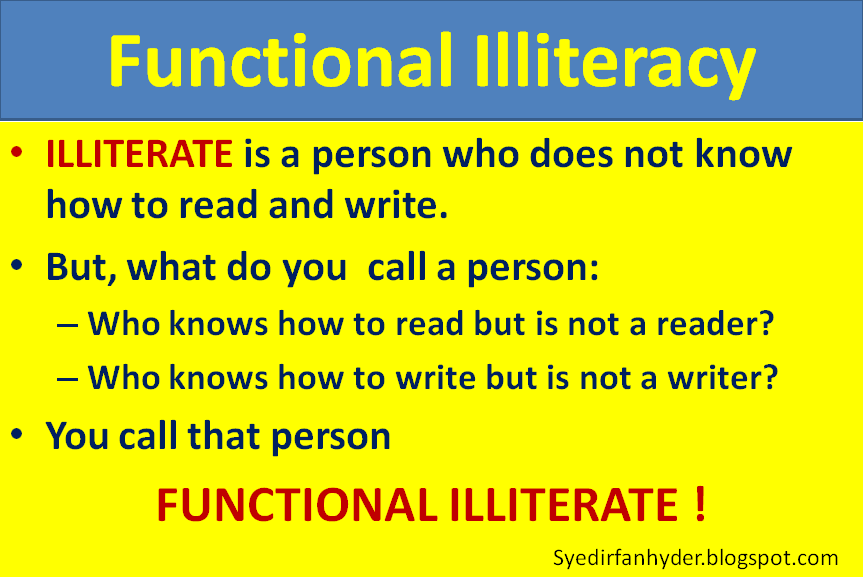
How can we create readers and an ecosystem where readers can thrive. How do we make reading a contagious disease when our educational institutions from schools to universities have become mass producers of functional illiterates [1]. Universities complain that they are getting intake that has studied English for 12 years but have no reading comprehension and no expression. The employers are complaining that graduates coming out of the universities can not even write a single page of correct English. This is a dismal situation. How come we are producing functional Illiterates who are defined as people who know how to read but are not readers, and those who know how to write but are not writers! How can we reverse this?

Saturday, August 12, 2017

What Legal Questions Perry Mason would have raised in SC Panama Case Disqualification of PM

Why read literature and history?
It had been a great surprise for me that the lawyers representing the PM have failed to raise forcefully some basic and fundamental questions about due process of law and constitutional rights in the recent  SC disqualification of the PM in the Panama Case Judgement. Interestingly, if they had read Perry Mason and other books of literature they would have  been better able to respond to the literary challenge of Judge Khosa! Their ignorance about history and literature was also telling in their defense. The lawyers failed to raise several objections forcefully during the proceedings as well as during the JIT investigations that a laymen reading of Perry Mason could have provided. Their ignorance about Islamic and Legal injunctions about due process of law was also evident. Even in the review petition, lawyers should note that literature can only be rebutted with literature, Islamic injunctions can only be defended through Islamic Fiqh, poetry can only be rebutted through poetry, accounting issues can only be defended through accounting principles, tax returns can only be defended through tax laws, and history can only be argued with history.  Legal arguments need to be of course rebutted through constitution and law, even in that which they were seriously amiss:

Monday, May 1, 2017

Importance of Literature in Law: A Case Study of the Panama Case Supreme Court Judgement

Importance of literature in law and legal judgments and arguments in the floor is an established tradition. This post collects together various quotations from masterpieces of literature in the Supreme Court judgement on the Panama Case Scandal on April 20, 2017. It also contains the references to Quranic definitions of Sadiq and Ameen. I think universities can use this judgement to enable a deep appreciation of how matters of law and constitution are analyzed in the context of culture, literature, religion, constitution and history. This judgement is also a very good example of how qualitative research methods are employed in dissecting the arguments and then reaching a judgement.

SC judgement starts with the following attribution to Mario Puzo's Godfather and Balzac:
Asif Saeed Khan Khosa, J.: The popular 1969 novel ‘The Godfather’ by Mario Puzo recounted the violent tale of a Mafia family and the epigraph selected by the author was fascinating: 
"Behind every great fortune there is a crime." — Balzac

Sunday, April 16, 2017

Mukhtar Masud's Awaz-e-Dost and Love for Literature and History

A literary social autobiography that is poetry in prose; beauty in words and imagery; each sentence contains a world of meaning, ideas, conflicts illustrated through metaphors, and references to deep historical events, people, places, contrasts, arts, architecture, insights, classics, writers, leaders, historical figures.... A book that gives a personal view of Pakistan history through hopes, aspirations, longings, feelings, inspirations of a person who was there in Aligarh when Khalida Adeeb Khanum was speaking and flowers were raining down on her in the auditorium, when Quaid e Azam's carriage was being hauled by the students from the station, when Iqbal came and spoke,.... . Extremely poignant vignettes of Raja Sb Mehmoodabad, Zafar Ali Khan, Toynbee, Bahadur Yar Jung, Majaz...... Takes you to that time and that world and that era when history was being made. And later in the 1950-60s when the leaders who made Pakistan were being sidelined. Makes you feel as they felt. Makes you wonder why people can't feel it that way again. My father was there in Aligarh during those times. This book depicts many of his feelings.
Mukhtar Maud (M). Irfan Hyder (L), Omar (R). June 2008


Through the descriptions in this book, I try to picture what my father who was in Aligarh during the 1930s, would have felt and imagined. My father did not much talk about those times. He was among those who could not express his disillusionment with the course taken by Pakistan after its inception with its continuous slide in ethics and morality; taken over by rulers who had no idea of what partition was, why it came into being, what were the reasons. Rulers who felt no association with the founding fathers and their aspirations and ideals. Ideals that have been thrown away. Ideology that is trampled every day. Manzil unhain mili jo shareek e safa na thay.

Awaz e Dost. What a book, what a writer! First read this book in 1980, and was taken to a different world. I can still feel the disappointment when I finished it. Wanted to know more about the people and places. Frantically searched for other books that he may have written related to Pakistan history. Had read Awaz e Dost several times since. Each reading is rewarding as it takes you to a different dimension and a higher level. I had read portions of the books many more times. Mukhtar Masud's Safar Naseeb does a similar thing with imagery, beauty, aesthetics, nature, and arts encountered in his travels. The only time I felt that I should have been joined the civil service to enjoy the privileges of travel on government expense.

My most pleasurable time was the one spent doing joint reading with my two elder sons. We read one paragraph a day in the morning before the breakfast during the mid 2000s. Took several months to complete. Used to discuss the hidden meanings in each sentence, phrase and word. I feel the urge of learning Persian to appreciate his frequent references to Persian couplets of Iqbal and other poets. However, fortunately my Urdu reading experience is such that I can enjoy the wonders of his mastery of language. Currently, a similar reading is taking place with my third son. Each subsequent reading makes me aware of the meanings that I could not fathom in my previous reading. It makes me aware of what I don't know and need to.

I had the pleasure of meeting Mukhtar Masud sb at his home on Canal Road in June 2008. Had an interesting one hour discussion about the book. Took several copies of the book and got them personalized for my nephews and sons. I mentioned that there is a need to write a "sharah" (explanation) of his book with footnotes detailing all the references. He said that he has written the book. This explanation should be written by others. A project that I would love to do in future.
The autographed book refers to my two elder sons; Hassaan Hyder and Azzaam Hyder .
My most cherished segment of the book is the following. See how in one sentence he moves across centuries and historical events and then uses the lessons drawn to explain our current state and crisis. The metaphorical beauty of relating the physical distance between Alamgir Mosque in Lahore and Minar e Pakistan with Sikh era's Gurdwara and the British era's building and connecting it with Sikh rule and British rule in between the Mughal rule and the Pakistani rule. In this capacity, he can be compared with Qurratul Ain Hyder. They make you travel across time and space in a single sweep of sentence and make you appreciate social changes, cultural changes, rise and falls of nations. They can contrast one grand historical figure with another, compare a nation in the north with another in the south, compare races across millennia, highlight the conflicts in emotions, and take you across civilizations. This comes with a deep grasp of history, reflection and understanding of people.

Example of a Grand Sweep of History
Connecting history with physical layout of this historical area and
diagnosis of the malaise afflicting Pakistan
I learned about the greatest historian of 20th century; Toynbee and how just talking and reading about history is not enough. He is best known for his 12-volume A Study of History (1934–1961). On my visit to British Council I found a pictorial abridged A Study of History in a single volume that I issued and read. A few years ago I got the same pictorial history book from Frere Hall books stalls. The book stimulated my interest in history and historical figures.


What I learned from the book:
  • How beautiful can prose be. 
  • How one can travel across eras and times in a single sweep of a sentence. 
  • Appreciation of paintings. 
  • Developed interest in history. 
  • Unveiled hidden aspects of personalities of historical figures. 
  • Made me aware of my lack of knowledge. 
  • Reflection on great ideas. 
  • Explore and learn more about people, ideas, places. 
Credits:

Sunday, October 4, 2015

How Education System is Promoting Non-Readers and "Functional Illiteracy": Top Ten Reasons

Our educational system is producing graduates who can read but are not readers, who can write but are not writers i.e. functional illiterates [1].  They do not read fiction, have often never read books except those that they were forced to read for their exams, but which mostly they cunningly avoided by cramming the notes, and many a times not even the notes, just the presentation slides! I now think they are not even buying, let alone reading the text books!

Sunday, March 2, 2014

How Language Acquisition is Made Difficult for Children: Eight Lessons from an Urdu Acquisition Case Study

How Language Acquisition is Made Difficult for Children: Eight Lessons from an Urdu Acquisition Case Study

[The later part of this post would derive the lessons that I learned from my experience of how I learned Urdu which is described first. These lessons address the problems that our faulty methodologies are creating today in language acquisition especially in teaching of Urdu. The lessons are general and apply to other languages also as highlighted by references to well established and well known research. ]

The first Urdu Book I remember reading around 1966-67 was I think Urdu ki pehli kitab[?]I must have been around five or six years old at that time. Those were the days when the madness of imprisoning two and three year olds in the pre-school had not begun. (It is madness because nowhere in the developed world any educationist recommends this except schools in Pakistan run by administrators not academics.) I had by then must have gone through the Noorani Quaida. Anyhow, I distinctly remember a few lines from the very first page of that pehli kitab. Surprisingly many others who had started their Urdu from this book also do so. The first page had some very simple rhyming sentences with very short "meaningful" words such as:

Sunday, November 17, 2013

How to find "Buzurg" and "Wali" of Allah

How to find "Buzurg" and "Wali" of Allah

During the late 1970s I started reading extensively and would read whatever came my way. This decade was probably the peak of monthly magazines or "digests" publications. Taking cue from the Reader's Digest and success of Urdu magazines such as Urdu Digest and Sayyara Digest, several "digests" became popular such as Subrung Digest, Jasoosi Digest, and Suspense Digest. Most of them relied upon crime, fiction and suspense short stories translated in Urdu from the West. However, some like Subrung Digest acquired a distinctive position due to the original fiction produced in Urdu, of which some of the long running series are now considered epic.

Friday, October 18, 2013

Most Effective Way of Cutting a Nation from its History and Ideals - Imposing a Foreign Language

Most Effective Way of Cutting a Nation from its History - Imposing a Foreign Language

The project for cutting a nation from its history and roots always starts with the introduction of a foreign "language". We know how Ataturk's drive for secularism led him to change the Turkish script from Arabic to Latin script to cut the Turks from their history, and we also know how the British used English as a tool to create an elite class more anglophile (more loyal than the king) to serve them during their colonial rule and later to extend their control during the post-colonial era. This elite class identified themselves more with their colonial masters than with their fellow country men as evidenced by the distance they still maintain (see the VVIP culture and the motorcades of our rulers; military, political or feudals).