Tuesday, May 30, 2017

Why Dictatorships are Weaker in Accountability than Constitutional Governments

At What Cost? Costs of perceived strictness of military dictatorships vs the reality of constitutional governments in Pakistan. The comparison in this post indicates that the perception of better accountability in clean dictatorship is not valid because in the long term the constitutional governments of corrupt politicians deliver a far better accountability than the dictatorships which are forever trying to buy their legitimacy.  The table below indicates the stark contrast of 9 years of dictatorship of General Musharraf from 1999-2008 versus 9 years of civilian governments of Asif Zardari (2008-13) and Nawaz Sharif (2013-to date in 2017). It is mistakenly believed in Pakistan that dictatorships are cleaner and better in managing the accountability than the civilian governments. This perception is mainly due to the misunderstanding of how a constitutional democracy conducts the accountability. 


To understand the context of this post, please read At What Cost! Why Compute Economic Costs of Faulty Political Decisions

Tuesday, May 23, 2017

Family Tree Shajra of Sadat e Nehtaur: A Case Study of Compilation of Social History


Sadat e Nehtaur Shajra Compilation Effort

Syed Mohammad Khurshid Alam Zaidi
Khursheed Alam Zaidi in his keynote address at a get together of Sadat-e-Nehtaur on 7th May 2017 related the impressive history of compilation of "shajra" of Sadat-e-Nehtaur. The shajra documents their history in India from around 1175 AD when the ancestors moved from Tirmiz to Kaithal and later settled in Nehtaur

جب شہاب الدین غوری ہندوستان پر حملہ کرنے کیلئے افغانستان میں آئے تو ان کی ملاقات *جناب میر سید کمال الدین ترمزی* سے ہوئی جو *بہ ارادہ تبلیغ* اپنے اہل و عیال کے ساتھ ہندوستان جا رہے تھے ‫. *شہاب الدین غوری* نے *میر صاحب* کو اپنے زیرِ حفاظت سفر کرنے کی پیشکش کی جسے *میر صاحب* نے یہ کہ کر قبول نہیں کیا کہ *ہم دونوں کے مقاصد مختلف ہیں‫. تم ِہندوستان پر حملہ کرنے جارہے ہو اور میں تبلیغِ کے لئے*‫. مگر میر صاحب نے اپنے ہمراہ *گیارہ میں سے ایک بیٹے (میر سید ابراہیم شاہ)* کو شہاب الدین کے سپرد کر دیا *(جو بعد میں ہانسی قلعے پر حملہ کے دوران شہید ہو کر وہیں مدفون ہیں)*.

میر کمال الدین کے ایک صاحبزادے *میر جلال الدین* کے عیال میں سے ایک صاحب *جناب میر سید حسن (نہٹوری)* نے ہمارے خاندانی قصبہ (نہٹور) میں نقلِ مکانی کی‫. ہمارا موجودہ خاندانِ *ساداتِ نہٹور انہی کی عیال پر مشتمل ہے.


Monday, May 1, 2017

Importance of Literature in Law: A Case Study of the Panama Case Supreme Court Judgement

Importance of literature in law and legal judgments and arguments in the floor is an established tradition. This post collects together various quotations from masterpieces of literature in the Supreme Court judgement on the Panama Case Scandal on April 20, 2017. It also contains the references to Quranic definitions of Sadiq and Ameen. I think universities can use this judgement to enable a deep appreciation of how matters of law and constitution are analyzed in the context of culture, literature, religion, constitution and history. This judgement is also a very good example of how qualitative research methods are employed in dissecting the arguments and then reaching a judgement.

SC judgement starts with the following attribution to Mario Puzo's Godfather and Balzac:
Asif Saeed Khan Khosa, J.: The popular 1969 novel ‘The Godfather’ by Mario Puzo recounted the violent tale of a Mafia family and the epigraph selected by the author was fascinating: 
"Behind every great fortune there is a crime." — Balzac

Sunday, April 16, 2017

Mukhtar Masud's Awaz-e-Dost and Love for Literature and History

A literary social autobiography that is poetry in prose; beauty in words and imagery; each sentence contains a world of meaning, ideas, conflicts illustrated through metaphors, and references to deep historical events, people, places, contrasts, arts, architecture, insights, classics, writers, leaders, historical figures.... A book that gives a personal view of Pakistan history through hopes, aspirations, longings, feelings, inspirations of a person who was there in Aligarh when Khalida Adeeb Khanum was speaking and flowers were raining down on her in the auditorium, when Quaid e Azam's carriage was being hauled by the students from the station, when Iqbal came and spoke,.... . Extremely poignant vignettes of Raja Sb Mehmoodabad, Zafar Ali Khan, Toynbee, Bahadur Yar Jung, Majaz...... Takes you to that time and that world and that era when history was being made. And later in the 1950-60s when the leaders who made Pakistan were being sidelined. Makes you feel as they felt. Makes you wonder why people can't feel it that way again. My father was there in Aligarh during those times. This book depicts many of his feelings.
Mukhtar Maud (M). Irfan Hyder (L), Omar (R). June 2008


Through the descriptions in this book, I try to picture what my father who was in Aligarh during the 1930s, would have felt and imagined. My father did not much talk about those times. He was among those who could not express his disillusionment with the course taken by Pakistan after its inception with its continuous slide in ethics and morality; taken over by rulers who had no idea of what partition was, why it came into being, what were the reasons. Rulers who felt no association with the founding fathers and their aspirations and ideals. Ideals that have been thrown away. Ideology that is trampled every day. Manzil unhain mili jo shareek e safa na thay.

Awaz e Dost. What a book, what a writer! First read this book in 1980, and was taken to a different world. I can still feel the disappointment when I finished it. Wanted to know more about the people and places. Frantically searched for other books that he may have written related to Pakistan history. Had read Awaz e Dost several times since. Each reading is rewarding as it takes you to a different dimension and a higher level. I had read portions of the books many more times. Mukhtar Masud's Safar Naseeb does a similar thing with imagery, beauty, aesthetics, nature, and arts encountered in his travels. The only time I felt that I should have been joined the civil service to enjoy the privileges of travel on government expense.

My most pleasurable time was the one spent doing joint reading with my two elder sons. We read one paragraph a day in the morning before the breakfast during the mid 2000s. Took several months to complete. Used to discuss the hidden meanings in each sentence, phrase and word. I feel the urge of learning Persian to appreciate his frequent references to Persian couplets of Iqbal and other poets. However, fortunately my Urdu reading experience is such that I can enjoy the wonders of his mastery of language. Currently, a similar reading is taking place with my third son. Each subsequent reading makes me aware of the meanings that I could not fathom in my previous reading. It makes me aware of what I don't know and need to.

I had the pleasure of meeting Mukhtar Masud sb at his home on Canal Road in June 2008. Had an interesting one hour discussion about the book. Took several copies of the book and got them personalized for my nephews and sons. I mentioned that there is a need to write a "sharah" (explanation) of his book with footnotes detailing all the references. He said that he has written the book. This explanation should be written by others. A project that I would love to do in future.
The autographed book refers to my two elder sons; Hassaan Hyder and Azzaam Hyder .
My most cherished segment of the book is the following. See how in one sentence he moves across centuries and historical events and then uses the lessons drawn to explain our current state and crisis. The metaphorical beauty of relating the physical distance between Alamgir Mosque in Lahore and Minar e Pakistan with Sikh era's Gurdwara and the British era's building and connecting it with Sikh rule and British rule in between the Mughal rule and the Pakistani rule. In this capacity, he can be compared with Qurratul Ain Hyder. They make you travel across time and space in a single sweep of sentence and make you appreciate social changes, cultural changes, rise and falls of nations. They can contrast one grand historical figure with another, compare a nation in the north with another in the south, compare races across millennia, highlight the conflicts in emotions, and take you across civilizations. This comes with a deep grasp of history, reflection and understanding of people.

Example of a Grand Sweep of History
Connecting history with physical layout of this historical area and
diagnosis of the malaise afflicting Pakistan
I learned about the greatest historian of 20th century; Toynbee and how just talking and reading about history is not enough. He is best known for his 12-volume A Study of History (1934–1961). On my visit to British Council I found a pictorial abridged A Study of History in a single volume that I issued and read. A few years ago I got the same pictorial history book from Frere Hall books stalls. The book stimulated my interest in history and historical figures.


What I learned from the book:
  • How beautiful can prose be. 
  • How one can travel across eras and times in a single sweep of a sentence. 
  • Appreciation of paintings. 
  • Developed interest in history. 
  • Unveiled hidden aspects of personalities of historical figures. 
  • Made me aware of my lack of knowledge. 
  • Reflection on great ideas. 
  • Explore and learn more about people, ideas, places. 
Credits:

Wednesday, March 22, 2017

How do I lift thee from the mundane: Musings of a Dean

How Do I Lift Thee From the Mundane

What a fleeting time is youth!
that beckons the future
that walks in beauty
that gallops with force
that exudes energy in every motion
that dances with the daffodils
that climbs every mountain
that explores every valley
that aspires for the stars

Monday, March 13, 2017

5 Phone Behaviors of Employees who Need to be Fired

Based on my experience with dealing with people over the last so many years, I have identified the following phone behaviors that should raise a red flag about the ethical values and personal responsibility of an employee. A manager can use these phone behaviors to identify the employees who need to be fired or got to be replaced:

Thursday, March 9, 2017

5 Major Misconceptions of Muslim Parents regarding Parenting Challenges of the 21st Century

[Themes of this post were presented at Forward Institute for Educational Bridgework Seminar on Jan 27, 2016. ]

Note: This post is specifically written for Muslim parents and presupposes reader's belief in Quran and Sunnah.
Over the last few years I have come across Muslim parents who are making extra effort in following Sunnah. However, their over-emphasis on "school education" seems to be backfiring creating several issues stifling the growth of their children. Their misplaced emphasis and strictness reveals several major misconceptions from the Islamic point of view:

Saturday, March 4, 2017

Why Students Avoid and Stop Taking the Course of Some Teachers: 7 Top Reasons

Over the last 37 years in higher education  as student (from 1980-94), and as faculty member and academic administrator (since 1995), I have come across scores of instances  where students went out of the way to avoid certain teachers, dropped the course en-mass, ganged up to remove the teacher, walked out or simply dropped the course whenever it was possible possible. Here are some of the top reasons for why students avoid certain teachers and drop their courses en-mass:

Sunday, January 15, 2017

Why Educational Experiments are "Doomed" to Succeed?

It is often said that all educational experiments are doomed to succeed [1]. Here is my different take on this from the perspective of an educational reformer and educational leader.

There are tons of methodologies, experiments, strategies and their resources that are available to teachers. However, when a teacher designs a new educational experiment, it often means that he has exhausted most of the existing material that he could lay his hands on. He is so frustrated and so angry that he feels inspired to design a new educational experiment of his own.


Saturday, November 26, 2016

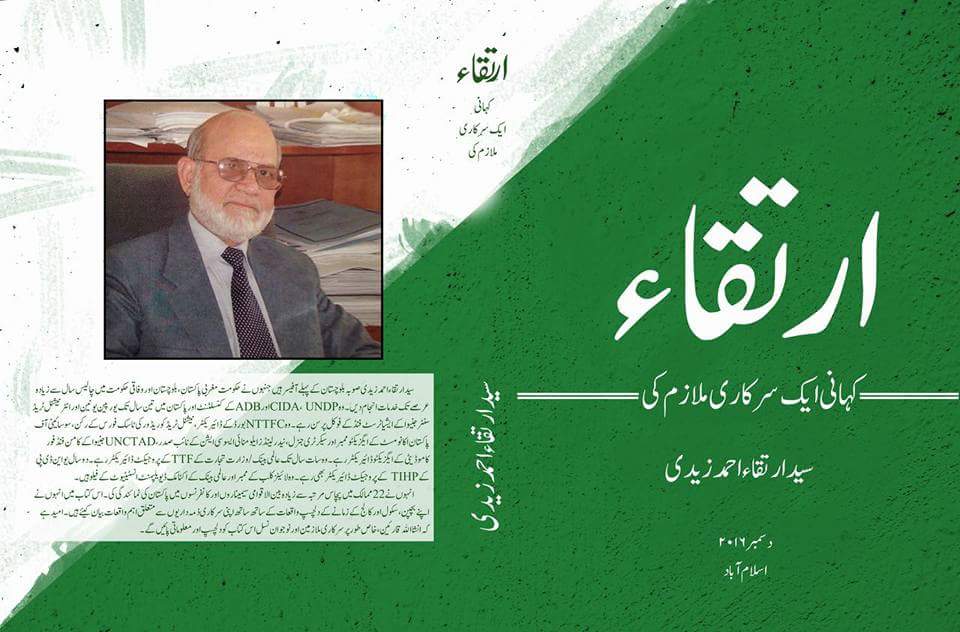
Struggles of a Conscientious Government Servant: Lessons Learned from Memoirs of Irtiqa Zaidi

I felt honored when I was asked to review the book of memoirs of Mr Irtiqa Zaidi that is about to go into publication. The book is exciting, enjoying, and often a thrilling account of his photographic memory of the events spanning the expanse from his childhood in Quetta to his rise as a senior official in Government, where he was involved in some momentous agreements of Pakistan related to trade and commerce. 


My first meeting with Mr Irtiqa Zaidi was in the early 1970s when he got posted in Islamabad and came to stay at our place while waiting for the allotment of a suitable government accommodation. Irtiqa Chacha is a close relative of my father, and also the elder brother of my brother in law.   During that first winter when he was staying with us, I remember listening to his stories with my father, mother and sisters huddled around coal fire with blankets wrapped around us. I remember listening intently to his wonderful and picturesque narrations that were and still are full of humor and suspense with dramatic turns and twists from among the huge collection of his encounters and personal experiences. I recall that this fully captivating story telling sessions would often seamlessly extend for hours. I had the pleasure of listening to such experiences throughout the seventies when he was among those few relatives that we had in Islamabad, with whom we would regularly meet every week or so. During 1980s and later when I had moved to Karachi,  I would lose no opportunity during my trips to Islamabad to get that warmth of his riveting accounts often starting around dinner time and extending deep into the night.

Sunday, October 16, 2016

At What Cost! Why Compute Economic Costs of Faulty Political Decisions

Political discourse in Pakistan is punctuated with allegations and counter allegations without a formal study of the economic implications of the various decisions that have been rocking the country from as early as 1950s. The series of posts in this thread of "At What Cost" is attempt to build a framework for researchers to explore the economic costs of each of these decisions. The title of this series is based on my extensive discussions with late Mr Fazle Hasan of IBA in 1986-87. My later reflections on the lessons that he was trying to convey and which I vehemently disagreed with at that time, but have now come to appreciate only recently have been put down as the first post in this "At What Cost!" series: At What Cost! Fazle Hasan of IBA and our Computation of Economic Costs


The type of economic computation that is required can be seen from the computation of economic costs of joining War on Terror. Researcher may look at other models of computing the economic costs and can then do a similar analysis of the decisions that I have listed in the different tenures of people who have been ruling our country.

The despondency that we see in our people where they have started questioning the wisdom of our founding fathers on the basis of disastrous decisions by the successors is not a solution. Actually, it is foolish to blame our fathers for our behaviors. Blaming the Founding Fathers for Our Mistakes: Case of Pakistan analyzes this psychology. It also highlights that the existence of our country now depends upon a ruthless examination of all the costs of our political decisions, whether taken by sham democracies or by well meaning dictatorships. 
I think the point from where to start is Chief Justice Munir's disastrous decision on Doctrine of Necessity that can be termed as the mother of all evils that has been afflicting our country. His decisions effectively condones the right of the might and has been responsible for all our compromises that were made with disastrous consequences. Our entire culture is now shaped by the operationalization of this doctrine of necessity in the form of "muk-muka" and "matti-pao" ethos that permeates all the communities and the workings of our organizations. Everyone would just like to "matti-pao" the history, regularize the wrongs and move on after a mutually beneficial "muk-muka". 

The first beneficiary of this might is right doctrine of necessity was General Ayub Khan. The disastrous decisions that his violation of rule of constitution brought upon our country are mentioned in Costs of General Ayub's Dicatatorship, and relate one hand to separation of East Pakistan through his blue eyed General Yahya and on the other hand to nationalization by ZAB, who used to call Gen Ayub his daddy. 

Gen Ayub's decision to violate his own constitution and handing over the power to General Yahya Khan, instead of the constitutionally mandated office of speaker, brought us the ignominy of the secession of half of our country. This is another example of the cost of Justice Munir's doctrine of necessity. There is of course a need to identify the disastrous implication of not following on the Justic Hamoodur Rehman Commission report and we are left crumbs of some fond memories of East Pakistan and the great loss that it represented. 

General Yahya's disastrous decision to give power to ZAB in 1971 as CMLA led to the development of a dynastic rule of sham democracies. The costs of sham democracies in Pakistan are being compiled. Their decisions related to Nationalization and Privatization all need to be analyzed separately. 

In comes Genereal Zia's with his11-year rule, and again on the shoulder of Justice Munir's Doctrine of Necessity. His disastrous autocratic decisions had long running economic implications for Pakistan and even today we are suffering from those disastrous decisions. Costs of General Zia's Dictatorship outline some of these decisions. The Afghan adventure through Jehadis may have given us some crumbs from USA, but have ended up making Pakistan a security state that is now vulnerable from every side. 

General Zia's infamous 8th amendment gave rise to the musical chairs between BB and NS for the next 11 years culmination. One can actually derive the distinction of what a sham democracy is through an analysis of these successive turns of one after the other between the two and their short truncated rules. Why Pakistani Democracies are a Sham? Costs of Controlling a Democracy from Outside details this impact. 

Yet another dictator General Musharraf comes on horseback fluttering the flag of Justic Munir's disastrous doctrine of necessity. His decision to make u-turn under the pressure of USA again submerges us in the quagmire from which we are still trying to extricate.  Costs of General Musharraf's Dictatorship lists those disastrous decisions.

When we look back at our history we learn that there have been huge Costs of Military Dictatorships of Pakistan, and the dominant view that saviors on horseback can be panacea for our ills is misplaced. There is a definite need to question whether Generals are Qualified to Make Long Term Strategy: Costs of Strategic Failures of Military Dictators

A deeper look at these dictatorial interventions and a continuous series of destabilization efforts during civilian rules indicate that this kind of destabilization is present in all the developing countries and is part of post-colonialism exploitation by the world superpowers, this has been named as neo-colonialism. My post on narratives designed to dishonor popular choice and support neocolonialism explains how neocolonialism spreads destructive narratives in developing countries which are taken up by vested interests and un-elected elites. These narratives are used to dishonor the will of the people, and justify the takeover by un-elected elites. This seems to be the history of post-colonialism in developing  countries such as Egypt, Saudi Arabia, Syria, Iraq, Sudan, Yemen, Pakistan, Afghanistan, and on and on through out all the old colonies of the imperial powers. This is how they are kept perpetually destabilized and hence "perpetually developing". 

 Doctrine of Necessity from CJ Munir to Judge Khosa: Role of Judiciary in the Service of Neocolonialism describes this intervention of judiciary. I think despite the protestations to the contrary by the supreme court that they have buried it, doctrine of necessity is alive and kicking

It is time to understand that rule of civilians,  however much contemptuous,  is better than dictatorial rule if we have to safeguard our independence. This can be seen from Why Dictator Generals are Weaker than Civilians Rulers in Withstanding External Pressure. This is also established by analyzing the evidence that Why Dictatorships are Weaker in Accountability than Constitutional Governments.

The neo-colonialism narratives can also be seen in the justification of the umpteenth removal of prime ministers. None of the prime ministers of Pakistan, 16 of them, have ever been able to complete their tenure. Premature removal is the fear of the stability that may arrive if a few of them are allowed to complete their tenures in succesion which will spoil the game plan of neocolonialism. Why no PM of Pakistan has ever completed his/her tenure provides a context of these issues.
[to be extended]

See Also: 

Connecting vs Disconnecting with Relations- Sila e Rahmi vs Qata e Rahmi

Over the last few years, misconceptions regarding disconnecting from the relations (relatives, neighbors, colleagues) seem to be spreading. Disconnecting from relatives and relations is not a part of our culture or tradition. Our guidance has been to mend fences and work towards establishing relationships. Ethical leadership in our tradition requires that we care for those who throw garbage on you, make fun of you, or even try to harm you. Mohabbat fateh e Aaalim.


Left hand column shows the basis of our culture and traditions, whereas
the right hand column shows typical messages being shared on the facebook/whatsapp promoting
misconceptions that stand in stark opposition to our culture and traditions. 


Monday, October 10, 2016

What does a Child Need? Mother's Teacher-hood vs Motherhood

I am forced to write this post as I increasingly encounter cases upon cases of children with shattered confidence, broken personality and with severe personality issues and most of them emanating from the tremendous desire of the mother to relinquish her "mamta' (motherhood) role and assume the role of a teacher for which she is singularly unequipped! A child needs his mother's motherhood more than her teacher-hood. In their enthusiasm to make their children smart, and under tremendous peer pressure and the pressure from schools, mothers in Pakistan are assuming more and more the role of a teacher, at the expense of  their motherhood role. This is disastrous for the confidence and feeling of self-worth for a child, especially, because motherhood is a natural role for the mother, however, role of a teacher has to be learned and does not come naturally to everyone. Teaching requires aptitude, attitude, soft nature, quest for knowledge, magnanimity and  hosts of teaching skills. These skills are in short supply even in those who have had formal training in teaching.

Saturday, September 17, 2016

How to Distort History through Prejudices of Today: Taj Mahal as a Symbol of Love

I often see people looking at history using today's prejudices and lenses. History can not be seen in the light of our current preferences and current philosophies. History has to be evaluated in the context of the prevalent norms and challenges of that day. 

Wednesday, September 14, 2016

Top 10 Reasons Why Students Fail in Semester System- Survival Guide

About 5%-10% of students entering the university are unable to survive the semester system. The following list of top 10 reasons is based on my observations as a student from 1980-1994 at NED, IBA Karachi and at Univ of Texas at Austin. These are also based on my interactions with dropouts as faculty member from 1995-present (FAST NU, IBA, KIET, IoBM) with eighteen years as Deputy Director and Dean. I have given counseling to countless students. Often the students come when it is too late. At times their behavior compels me to think that they were asking to be dropped! You will agree too after reading this list. 

Wednesday, September 7, 2016

Dr Wahab and IBA of 1980s and 1990s

Dr Abdul Wahab went to meet his creator on Sep 6, 2016 morning, inna lillah we wa inna ilaihi rajioon. The news brought flashbacks of several memories from my association with IBA; first as an MBA student from 1985 to 1987, and then during my stint as a faculty member from 1995 to Dec 2000, the last four years of which were spent as Deputy Director. I relate here the essence of Dr Ab Wahab's contribution to IBA from the period when he became director in 1978 till he retired in 1999. The contributions are pictorially represented in the graph below.

Saturday, September 3, 2016

Youth Leadership and Dave Ulrich-Orientation for University Students

[Presented at IoBM Orientation Session for Fall 2016 intake on Sep 3]

Last Wednesday I had the pleasure of attending a workshop on leadership at Karachi Marriott by Dave Ulrich, who is considered as the father of modern Human Resource Management. Ulrich is a professor at the University of Michigan and a consultant to top companies of the world. With over 30+ books on HR and leadership, he was ranked #1 Management Educator and Guru by Business Week, and was selected as one of the 10 most innovative and creative leaders, and was named as the most influential thinker in HR of the decade by HR magazine.

Dave Ulrich ended this Karachi workshop on leadership by presenting the three questions on which he had based his commencement speech at the graduation ceremony of a US university some years ago.

I will start my orientation speech with those three questions which I think are so fundamental to youth leadership that instead of you grappling with these questions at your graduation, you should be asking them at the very start of your professional education. The three questions that Dave Ulrich briefly touched upon in about ten minutes were:

Wednesday, August 31, 2016

Why Engineering Students are Reluctant to become Entrepreneurs: Role of PEC and Universities

Presented at ICEE-2016, International Conference on Entrepreneurial Engineering: Commercialization of Engineering Projects and Research

There are several reasons why Engineering students in Pakistan have been found to be reluctant to opt for entrepreneurship in their engineering fields as opposed to other disciplines such as Computer Science. These reasons can be classified in five major categories; (i) cultural and family mindset, (ii) demographic pressures (iii) narrow focus of curriculum, (iv) teaching and lab methodology, (v) enabling and facilitation environment.  Pakistan Engineering Council has a major role to play in at least the last three areas. The curriculum design and enforcement of PEC has left no room for subjects that can broaden the vision of the students and open their minds to other areas. The recommended lab methodology is based on the use of trainers and fill-in-the-blank type of submissions that further constrains the work of the students in predetermined directions. The recommended teaching methodology focused on class-room type of work also leaves no room for out-of-the-box exploration of ideas. There is a need for the universities and PEC to join together to provide an enabling and facilitation environment that can help the students. There is a need to diversify the curriculum to other areas by reducing the number of technology intensive areas and more creativity and exploratory courses that can broaden the perspectives. There is a need to adopt new methodologies such as project based learning and problem based learning. The lab work needs to be liberated from the clutches of the trainers. A post graduation apprenticeship or internships in exploring new ideas is necessary for entrepreneurial engineering. 

The Case for Engineering Entrepreneurship

Sunday, August 28, 2016

Abuse of Presentation Slides in Classrooms: Ban Powerpoint Presentations

Problems with Powerpoint Presentations in Classroom

A couple of weeks ago I came to deliver a presentation in a seminar after four speakers who were delivering a technical talk to the business owners using powerpoint and speaking in English, which is the second or third language of the speakers and the audience. I could see the disconnect of the speakers with the audience. I could see the boredom. It was getting late after lunch and people were dozing. I came, junked the presentation that I had prepared, and made a presentation using our local language and talked with my heart. Immediately I got the attention and the audience woke up. Several from the audience later came and congratulated me for waking up the participants and making the session lively.

 For  over 10 years now, I have realized the futility of using the presentations. I have discarded the use of the powerpoint presentations, except very technical talks to very captive audience where there is enough time to intersperse talk with slides, in workshop type formats.
I had started with power point presentations much before they became a norm. It was way back in the mid of 1996-97 that I started with multi-media presentations using a laptop. Those were the time when powerpoint presentations and multimedia was a novelty. Somewhere along the line they became a ritual. They lost their power and became a drag on the presentation.Following are my reasons for urging people to ban the use of powerpoints:


Lights are on the Powerpoint Screen and
the performer is hidden in the dark

Saturday, August 27, 2016

Who has Greater Will and Resolve in controlling Karachi Disturbances: Dictators vs Civilian Governments

To understand the context of this post, please read At What Cost! Why Compute Economic Costs of Faulty Political Decisions
At What Cost? Costs of perceived strictness of military dictatorships vs the reality of civilian governments in Pakistan.
This post studies the case of Karachi disturbances and rise of MQM from 1980 and the relationships of various governments with MQM. It is interesting to note that unlike military dictators with cozy relationships with MQM, civilian governments have been more focused and have shown greater political will and resolve in dealing with the disturbances. The poor dictators always seem to be busy trying to buy legitimacy through political wheeling and dealing. There had been five major operations in Karachi during this period interestingly enough every one of these operations were conducted during the civilian governments. In contrast, during the two dictatorial regimes of General Zia and General Musharraf, MQM was given a free hand to fashion the situation of Karachi as they pleased. In both of these regimes, MQM continued to amass more and more power, and acquired greater and greater control while the civilian and military agencies acting more like bystanders. Although the rangers had been deployed since late 1980s, but they seem to had only been "operational" only during the civilian regimes.


Tuesday, August 23, 2016

Traitor/Foreign Agent Production Factory of Pakistan

To understand the context of this post, please read At What Cost! Why Compute Economic Costs of Faulty Political Decisions
At What Cost? Costs of Branding a Politician as a Traitor
There is a traitor/foreign agent production factory in Pakistan that seems to be in full swing. It has targets that have been trained on most prominent elected politicians since mid 1950s and did not spare even the sister of Quaid-e-Azam, Madre-Millat Mohtarma Fatima Jinnah.  The list has included former prime ministers (HS Suharwardy, ZA Bhutto, Benazir Bhutto), politicians who had been been blue eye boys of the establishment (MQM/AH, Akbar Bugti, Jehadists/Talibans) and political leader like Shaikh Mujeeb ur Rehman who was once with Muslim League and led the election campaign of Mohtarma Fatima Jinnah a few years before he became a case of self-fulfilled prophecy! The factory efficiently converts good Pakistanis of yester years  into bad Pakistanis through a staged fall from grace. Then a time comes when they meet their ignominious end. 

 Interestingly enough the official list of traitors never listed the Dictator Generals who were responsible for breaking half of the country, and who ensnared us in useless wars.

Sunday, August 21, 2016

Cyber Control and Cyber Crime: From Panopticon of 18th Century to Imprisonment in Technology Age

"Cyber Control and Cyber Crime : Big Brother is Watching Us" was presented at FPCCI Seminar on Media Security and Cyber Crime on August 17, 2016 at Federation House, Karachi.
Modern Times (1936) CEO monitoring washrooms

This presentation focused on the problems introduced by the pervasive cyber world of today at a higher philosophical level where the existence of human being and the concept of being human is being questioned by the "Internet of Things", and where people are willingly ceding their privacy and the personal control of their lives to external social networking platforms represented by googles and facebooks of today. This cessation of our relationships, our thoughts and feelings and what constitutes our personality to external agencies and allowing them to define who we are and what do we represent is much more sinister and a much greater concern than the issues of Cyber Crime and Cyber Bill that we are discussing today.

Wednesday, August 17, 2016

Field Marshals of Pakistan: Costs of Sycophancy and Political Expediency

[To understand the context of this post, please read At What Cost! Why Compute Economic Costs of Faulty Political Decisions]
At What Cost? Costs of Self Proclaimed Field Marshals in Third World Countries
In Pakistan the award of Field Marshal rank has been a product of sycophancy and political expediency for personal gain and short term advantage. The case of Ayub Khan who self awarded himself the rank of Field Marshal is a case in point. Currently, there is also the debate of awarding Field Marshal to the current COAS for every thing except any victories against enemies on the battle field. “The prime minister is repeatedly asking the army chief to take an extension and become a field marshal because he [PM Sharif] fears him;”  Imran Khan


Tuesday, August 16, 2016

Costs of Justice Munir's Doctrine of Necessity: 4 Martial Laws and 35 years of dictatorships

[To understand the context of this post, please read At What Cost! Why Compute Economic Costs of Faulty Political Decisions]
Doctrine of Necessity Decision by Justice Munir had been disastrous for Pakistan. Not only did this decision annulled the historic judgement of Sindh High Court that has disallowed the dissolution of assemblies by Gen Iskandar Mirza in 1954 [1], it also laid the foundation of subsequent usurpation of power by the saviors on the horseback leading to disastrous martial laws and their horrendous costs.

I recall a documentary that I saw in the late eighties celebrating 200 year celebrations of US Constitution in which ABC anchor Peter Jennings describes the incident of a Governor dissolving the assembly and the dissolution of assembly case goes to a court that holds the dissolution illegal. [I need reference for this] I remember Peter Jennings saying that this was a crucial time in the constitutional history of US. Had the decision gone the other way, the history of US would have been different. Unfortunately, in our history the supreme court overturned the Sind High Court decision and as a result we had lost 50 years until Chief Justice Iftikhar Chaudhry's bold decisions brought back the autonomy to our court.


Sunday, August 14, 2016

Costs of Military Dictatorships of Pakistan

[To understand the context of this post, please read At What Cost! Why Compute Economic Costs of Faulty Political Decisions]

Historic Failures of Strategic Doctrines by Dictator Generals in Pakistan

What happens when generals (military men) arrogate to themselves "strategy making" when at best they have been trained for obtaining tactical advantage? 
The table below shows the fiascoes in which our country had been led into: 
Dictator
Doctrine/Strategy
Major Areas Ignored
Consequences/Failures
Gen
Ayub
Unrestrained Development at the Expense of Have-Nots without representation
Ignored people’s power
Estrangement of Bengalis Surrender and Fall of East Pakistan
Created rich-poor divide; created ZAB’s rise
Created famous 22-Families Nationalization of all major firms that sent us back for fifty years
Defense of East Pak lies in West
Size/depth of enemy forces; inability to read enemy’s mind
Failure of Op Gibraltar → 1965 War
Gen
Yahya
Popular discontent in East Pakistan can be subdued by military force
Fierceness of Bengali resistance,
Indian forces all out support 
1971 war → Surrender of East Pakistan; 92,000+ Pakistani soldiers become PoWs
Gen
Zia
Army as Protector of ideological frontiers
Ideologies are not Concrete frontiers. Military is not in the business of ideological warfare
Created Jehadists → Increased sectarian polarization → → Led toSectarian killings → bomb blasts
US’ Afghan Jehad, Strategic Depth
Ignored US response in Clinton’s time & 9-11
Arms culture → drugs culture militancy → instability Talibanization
Gen
Baig
Bleed India in Kashmir
Ignored Indian capacity to strike back in kind; RAW infiltration in Balochistan
Baloch resistance, Baloch insurgency, Karachi disturbances
Gen
Mush
arraf
U-Turn: Good-Taliban-Bad-Taliban
WoT imported in Pak; Blackwater/RAW/BLA infiltration
Suicide bombers → War on Terror → Op Zarbe Azb

Costs of General Musharraf's Dictatorship

[To understand the context of this post, please read At What Cost! Why Compute Economic Costs of Faulty Political Decisions]
This post analyzes the continuing accumulation of long term costs associated with General Musharraf's dicatatorship 1999-2008 in the areas of ideological costs, economic costs, governance costs, foreign policy debacles and political engineering costs.

Costs of General Ayub's Dicatatorship

[To understand the context of this post, please read At What Cost! Why Compute Economic Costs of Faulty Political Decisions]
We typically look at General Ayub and the economic performance during his time, ignoring the long term economic and political impact of the decisions that he took and the processes that he set in motion. This post analyzed the long term costs of his dictatorship.


Friday, August 12, 2016

Blaming the Founding Fathers for Our Mistakes: Case of Pakistan

[To understand the context of this post, please read At What Cost! Why Compute Economic Costs of Faulty Political Decisions]
In the cozy environment of our drawing rooms, we often see the self styled intellectuals belong to the ilk of Hasan Nisar trying their best to put the blame of shortcomings of our nation on to our founding fathers. The venom in their opinions indicates their disdain for this nation and the founding principles. They lose no opportunity to take snipe at the founding fathers including Quaid e Azam and Allama Iqbal to vent their frustrations when the nation seems to climb out of impossibly discouraging situations.