 Reliance on unverified sources and unverified reporting and forwarding on social networks have made them a platform for the mass dissemination of ignorance and lies. See for instance some of the Fake Quotes making rounds on the internet:
 Thursday, June 30, 2016
Sharing with Responsibility on Social Networks: Avoid Mass Dissemination of Lies and Ignorance
Reliance on unverified sources and unverified reporting and forwarding on social networks have made them a platform for the mass dissemination of ignorance and lies. See for instance some of the Fake Quotes making rounds on the internet: 

Sunday, June 5, 2016
Growing up with Mohammad Ali's Legend
This is 1971 and I am in class IV in Islamabad. I find myself in the midst of young people animatedly discussing the impending fight of the century in a charged environment. We in Pakistan are excited about a Cassius Clay who converted to Islam and became Mohammad Ali but was stripped of his Heavy Weight Champion title for refusing to join the Vietnam War or for having converted to Islam. He was going to fight Joe Frazier who was the reigning champion to reclaim his title. Both were undefeated and were going to enter a fight which has been hailed as the Fight of the Century.
Sunday, May 29, 2016
Conclusion vs Assumption in Research Writing- Flipping the Thread of Argument in your PhD Thesis
Conclusion vs Assumption in Research Writing- Flipping the Thread of Argument in your PhD Thesis
Research especially PhD research is often not a predictable process. Starting with some assumptions we start moving in a particular direction, however, the direction may change a number of times during our journey. Initially, we may have started in a particular direction thinking about a certain goal, however, the goal may change not once, but often several times during our research. We continue modifying the goals till such time that we identify a possible conclusion which would be significant enough to merit the award of the PhD degree. This journey is shown in the figure with yellow lines moving in different directions.

Research especially PhD research is often not a predictable process. Starting with some assumptions we start moving in a particular direction, however, the direction may change a number of times during our journey. Initially, we may have started in a particular direction thinking about a certain goal, however, the goal may change not once, but often several times during our research. We continue modifying the goals till such time that we identify a possible conclusion which would be significant enough to merit the award of the PhD degree. This journey is shown in the figure with yellow lines moving in different directions.

Friday, May 27, 2016
Discerning the Forest from the Trees - The Insights from my PhD Supervisor JC Browne
In the acknowledgement section of my PhD dissertation in 1994, I wrote:
I appreciate the support and help of my advisor, Dr. James. C. Browne. His vision and ability to abstract away the details has taught me how to discern the forest from the trees. Working with him, I learned the full import of what it means to ask the right questions. His questions would often send me scurrying on a search path that would clarify my confusions and would lead me to a true understanding of the problem, and hence, to the solution.As I contemplate on the above statement written over 22 years ago, I think I need to explain the full import of this insight from my five years of effort for PhD at UT Austin from end of 1989 to the end of 1994.
 |
| James C Browne, my Supervisor (Profile at the end of post) |
Friday, May 20, 2016
From Lifestyles to Metaphysics
[By Hassaan Hyder]

In lay men's understanding metaphysics is the belief/ theory/ idea or thought which is the point of reference of and for anything.
Intention is the purpose/ the "why"/ the driving force behind anything. This intention is derived from the metaphysics.
Wednesday, March 23, 2016
Parenting Challenges of the 21st Century
Presented at the ERDC Seminar on 23rd March 2016 at Rangoonwala Hall, Karachi. Parenting challenges for the 21st century are growing in intensity and are going to become a major issue for parenting in general and for Muslims in particular.

Self organization is becoming a major challenge for survival in the 21st century. I think for parents to be a role model of self discipline and self-organization is the biggest challenge. Unlike the previous century, social, family and work structures that forced much of the organization in our lives are loosening and putting pressure on the parents as well as children to be self organized.
Previously our lives had a regimented existence typically structured around meal times and early-to-bed-early-to-rise routine, TV/entertainment time in the evening in the living room with everyone together, newspaper in the morning, office/school starting in the morning and ending in the afternoon. Today, TV and entertainment is available all the time. I think majority of homes no longer have strict meal times as meal is no longer being cooked at home regularly. Office emails, messages, and calls have penetrated 24 hours of time. early-to-bed-early-to-rise routine has not only been forgotten but have also led to further complications of health, wealth and wisdom.
Developing structures and rules for organization and discipline in life is a huge challenge.
 We can't expect our children to become what we are not!
To understand that parenting is not a transactional relationship is also a challenge. All relationships are now increasingly becoming transactional in nature. But, the family relationships should not be allowed to become transactional. We should not allow the replacement of mother's time with the child for a day-care center, or time and effort to care for old parents for an old-homes, or to trade the interaction time with child in the evening with a tutor, etc.
Parents must appreciate that the parenting role is a gift from Allah and the parents are not transacting with the children in return of future favors and returns.
I see this confusion regarding three roles taking over the parental role:
Assuming the role of teacher at the expense of mother's role


Challenge of Becoming a Role Model of Self Organization and Self Discipline
Self organization is becoming a major challenge for survival in the 21st century. I think for parents to be a role model of self discipline and self-organization is the biggest challenge. Unlike the previous century, social, family and work structures that forced much of the organization in our lives are loosening and putting pressure on the parents as well as children to be self organized.
Previously our lives had a regimented existence typically structured around meal times and early-to-bed-early-to-rise routine, TV/entertainment time in the evening in the living room with everyone together, newspaper in the morning, office/school starting in the morning and ending in the afternoon. Today, TV and entertainment is available all the time. I think majority of homes no longer have strict meal times as meal is no longer being cooked at home regularly. Office emails, messages, and calls have penetrated 24 hours of time. early-to-bed-early-to-rise routine has not only been forgotten but have also led to further complications of health, wealth and wisdom.
Developing structures and rules for organization and discipline in life is a huge challenge.
We can't expect our children to become what we are not!Challenge of Providing Unconditional Love in a Family
Parents especially mothers must have a supreme trust, faith and confidence in their children. It is through mother's unconditional love that a child would overcome his weaknesses and his deficiencies. Without this all encompassing love of the children, parenting can not rise to the highest levels envisioned by our religion where paradise is under the feet of the mother.To understand that parenting is not a transactional relationship is also a challenge. All relationships are now increasingly becoming transactional in nature. But, the family relationships should not be allowed to become transactional. We should not allow the replacement of mother's time with the child for a day-care center, or time and effort to care for old parents for an old-homes, or to trade the interaction time with child in the evening with a tutor, etc.
Parents must appreciate that the parenting role is a gift from Allah and the parents are not transacting with the children in return of future favors and returns.
Differentiating the Parental Role from Other Roles
I have been increasingly observing that parents are arrogating responsibilities of roles that are either not theirs to assume or allowing some other roles to dominate their more important "parental" role. I have observed mothers ignoring the role of the mother, and assuming a role of a judge, role of a prison guard, role of a teacher, role of a "raaziq", role of "haadi" and others. I see mothers picking up on the kid's weaknesses all the time, trying to teach the kids in the morning, evening, afternoon, at meal times and late into night and not letting go of this obsession with studies and teaching and in the process completely ignoring the role of the mother.I see this confusion regarding three roles taking over the parental role:
Assuming the role of teacher at the expense of mother's role
Not letting go of the role of a teacher. The role of teacher dominating and even eclipsing the role of the mother. I am now forced to say this:

There is an imperceptible role of mother as a teacher, where the child continues to see his mother as a mother even while she is teaching him. This type of collaborative learning environment with mother as a facilitator of child's learning is recommended. However, there is the other side where the mother puts on the crude, brutal role of of a teacher, where the motherly care and love gets replaced by the harsh, uncompromising, judgmental, vindictive and humiliating teacher who loses no chance to humiliate the child in front of his siblings or friends. This must be avoided.
However, many parents are unable to distinguish between the two. It is therefore recommended that they explicitly put on the teacher's role by donning a robe and putting that robe away once they have completed the teaching so that the child can take a sigh of relief when the ordeal is over and the parent also realizes that now the role of the teacher is over, and the parental role has begun.

The move towards nuclear families living in smaller apartments in big cities has alienated the opportunity of children to socialize which was present in extended families with frequent get-togethers and scores of invitations to family weddings and other events. These opportunities providing extensive interaction interact with children of different ages, play, fight, resolve conflicts, and learn inter-personal issues and how to cope with the emotional pressures.
Alone-together phenomenon introduced by the cell phones has imprisoned the children and parents in the prison cell of their cellphones.

The challenge of writing and posting intimate pictures on facebook and writing of open diaries is a new challenge which was not present earlier. Earlier, reading some one's personal diary was a big no-no. Today this is not only common but encouraged by the writer (often a young, naive adolescent youth) himself or herself. They can't envision that as we mature and grow older, we change, our interests change and our likes and dislikes change; we learn from our mistakes, and build anew our lives. They forget that their lives once on the internet are into public sphere, constricting the space for them to grow, unlearn and start afresh, redesign their lives, and learn from their mistakes. The costs of this redesign of their lives becomes huge once intimate details are on public internet where the information never dies. Consequences of mistakes now made are exponentially higher and information on the net never dies and is never forgotten and may come to haunt decades later.
bachay ko maa ki mumta ki zaroorat hoti hay, maa ki teachiri ki nahi
Child needs mother's love, not mother becoming a teacher.
- See the details of issues in my other post: What does a Child Need? Mother's Teacher-hood vs Motherhood
There is an imperceptible role of mother as a teacher, where the child continues to see his mother as a mother even while she is teaching him. This type of collaborative learning environment with mother as a facilitator of child's learning is recommended. However, there is the other side where the mother puts on the crude, brutal role of of a teacher, where the motherly care and love gets replaced by the harsh, uncompromising, judgmental, vindictive and humiliating teacher who loses no chance to humiliate the child in front of his siblings or friends. This must be avoided.
However, many parents are unable to distinguish between the two. It is therefore recommended that they explicitly put on the teacher's role by donning a robe and putting that robe away once they have completed the teaching so that the child can take a sigh of relief when the ordeal is over and the parent also realizes that now the role of the teacher is over, and the parental role has begun.
Role of "Raaziq"
The way I see the parents worrying about the children's future is surprising. Forty years ago, in Karachi there were only two engineering colleges and two medical colleges. Today there are over 17 engineering colleges and around 15 medical schools, and there are over 30 universities. Today, any average student can get admission in whatever field he likes. The scenario is quite different from the exclusive opportunities available in the past. Yet I see the parents subjecting even a child age as small as 4-5 years with extended tuitions for preparing for admissions in God knows what school. I have seen of a kid of 4th grade being forced to attend tuitions after the school for 3+ hours and the parents paying over Rs 18000 to the tutor. This is extremely crazy. Robbing the child from his playtime, socialization time, and reflection time is criminal. I believe this attitude represents wavering of faith and eemaan in the creator being "raaziq". This craziness is coming from parents who are projecting their frustrations and "mehroomis" on to the children and are going overboard in their effort to give them a more prosperous future. They seem to be trying to assume the role of "raaziq" when they think that are determining the abundance that a child may have in future!!!!- See also: 5 Major Misconceptions of Muslim Parents regarding Parenting Challenges of the 21st Century
Role of "Haadi"
I often see the parents taking on this role which even prophets were not given. That is, assuming the responsibility of ensuring that they give hidaya and guidance to the kids. In their zeal, they abuse and punish the kids when they feel frustrated at the youth not obeying their commands. The rule for tableegh is wa ma alina illal bilagh. Parents are only responsible to show the right from the wrong and use hikmah in trying to provide this guidance. They often forget the need to understand child psychology and need to have the faith in the potential of a child, and patience in the goodness that the child has and faith in Allah that he is the protector, and then try to do the best that the parents can. However, parents should not think that they can assume the responsibility which was not even given to the prophets.Wa tu-izzu man tasha o wa tu-zillo man tasha o... [Al-Imran: 26]
Yudillo man yasha-o wa yahdi man yasha-o... [Ash Shura: 8]
The challenge for parents starts when they start taking the intransigence of their children personally and lose their composure and patience. This becomes a huge problem when parents are unable to understand their own psychology and what was going on in their mind when they got angry. This happens when they are unable to distinguish whether they are angry because their ego was hurt when the child refused their command, or whether they should feel sorrow about the child suffering in the hereafter because of the child's intransigence.
- See also: Education as Tazkia: Is Child Like a Clean Slate!
Challenge of Social Connection with Real People in Real Life
Inability to differentiate between real social interaction with real people and in real life with virtual social networks in virtual web world is becoming a huge challenge. People now are unable to differentiate reality from virtual life. For example, it is easy to "unfriend" someone in FB but hugely difficult to unfriend someone in the real world. Real world disconnection from a friend has emotional costs and social costs. There is actually no cost of time and effort in unfriending someone with a click of a button.The move towards nuclear families living in smaller apartments in big cities has alienated the opportunity of children to socialize which was present in extended families with frequent get-togethers and scores of invitations to family weddings and other events. These opportunities providing extensive interaction interact with children of different ages, play, fight, resolve conflicts, and learn inter-personal issues and how to cope with the emotional pressures.
Alone-together phenomenon introduced by the cell phones has imprisoned the children and parents in the prison cell of their cellphones.

The challenge of writing and posting intimate pictures on facebook and writing of open diaries is a new challenge which was not present earlier. Earlier, reading some one's personal diary was a big no-no. Today this is not only common but encouraged by the writer (often a young, naive adolescent youth) himself or herself. They can't envision that as we mature and grow older, we change, our interests change and our likes and dislikes change; we learn from our mistakes, and build anew our lives. They forget that their lives once on the internet are into public sphere, constricting the space for them to grow, unlearn and start afresh, redesign their lives, and learn from their mistakes. The costs of this redesign of their lives becomes huge once intimate details are on public internet where the information never dies. Consequences of mistakes now made are exponentially higher and information on the net never dies and is never forgotten and may come to haunt decades later.
- See also: Facebook Encourages Unethical Behavior: Metaphysics of Social life based on Lies, Ignorance, Bigotry -

Self Learning and Customized Learning Experiences
Opportunity of learning and acquiring knowledge from any source and in any field, good or bad, are now limitless and available on a single click anywhere. This accessibility can no longer be constrained or censored.Making Marriage Easier
Children are growing up much earlier and learning about things decades before their parents did. They are maturing earlier and hence obstacles for "halal" should be reduced from "haram". Marriage should be made easy. Illicit relationships should be made difficult. Waiting for the youth to be in job and established in life before marriage should be discouraged. There is a need for the parents to understand the psychological and social pressures that a child feels today and to facilitate the permissible.Challenge of Studies vs Games
Once upon a time, there was a distinction between games and study. Study meant better job and self sufficiency and games meant not to be self-sufficient. This is represented by the famous poem:khelo gay kodo gay ho gay kharab...parho gay likho gay banao gay nawabAll this has changed tremendously. People in sports and games are often earning more today. Games are increasingly becoming a vehicle for providing a learning experience for the children in all disciplines. I can see that in future, all learning would happen through software which would be more like exciting and engrossing games of today, where the child would become a player in different roles in the experiential learning of the concepts. Eventually, games would become a preferred mode of learning and acquisition of knowledge and skills.

Exposure of nature, physical exercise
Need for the parents to provide exposure to nature and physical environment would become great with the life in the virtual world becoming more and more exciting. The physical experiences of the nature would become a challenge with so many low cost virtual experiences abounding around us. A human being is human because he can appreciate nature and has experienced nature, has swam in rivers, climbed mountains, breathed in the fresh air of the country side, smelled the fragrance of rain drops after an extended drought. Closeness to such experiences are crucial for avoiding many of the depressions and psychological issues now plaguing the population and often afflicting the children.- See also: Overprotected Kids: Need for Risk Taking and Self Discovery
- See also: Truth about Attention Deficit Disorders (ADD/ADHD): Reasons and Revelations

See Also:
- Parenting Challenges of the 21st Century
- From Disposable Cups to Throwaway Relationships: Costs of Disposable Culture
- Progress vs Pollution and Development vs Destruction of Nature? Costs of Progress and Development
- Eight Disconnectivities induced by Social Networks and Smart Phones: Costs of Tech Connectedness
- Small is Beautiful: Why Small Businesses should Replace Big Businesses (A Case Study of Rickshaws vs Buses)
- Parenting and Physical/Corporal Punishment
- Harmful Effects of Comparing Siblings
- Capitalist Transactions Replacing Traditions and Values from Istanbul to Makkah
- How to define success of a school or a student
- Why Education and Why Higher Education: Leadership in Life and Society
- Testing/Grading vs Motivation: A Variation on Heisenberg's Uncertainty Principle for Academics
- Iqbal's view on What is Meant to be Educated
- Learning Problems: Top 9 Questions to Answer Before You Run for Help
- Education as Tazkia: Is a child like a clean slate?
- Bell-curve assumption about the distribution of intelligence of students
- Pursuit of Excellence vs Guzara: How to teach excellence through everyday examples
- Charter of Children's Recognition
- How Maths is Made More Difficult
- Fairness in Grading: A Lesson by the Great Dijkstra
- Beauty is our Business: Dijkstra and Mathematics
- Holistic Learning and Whole Life Orientation
Friday, March 11, 2016
Names vs Intent and Contents of Programs and Courses: Experiential Learning Case Study
There is an interesting academic issue related to the name of a course and its relationship with the intent and contents of the course. Over the last 20 years in academic management of curricula at several universities involving design of degree programs from bachelors to PhD level and introducing scores of new courses and monitoring their execution over time has taught me the following lesson: The name of a course always trumps the intent of the course contents irrespective of what we may write in the outlines about the learning outcomes and what we specify as the contents or pedagogy. Once a new intent of the course is defined under an existing name, the intent quickly loses its spirit once the initial drive and focus wanes and shifts elsewhere.

Thursday, February 25, 2016
What Students Expect from their Teachers: Roles and Responsibilities of Teachers
Core of the following talk was presented at 3rd Conference of Deans and Directors of Business Schools organized by NBEAC at PC Lahore, Feb17-18, 2016. The talk was presented during the session Roles and Responsibilities of Business Schools' Teachers: Perspectives of Students.


This talk is based on my experiences of managing the expectations of students over the last 20 years as a teacher and predominantly as an academic administrator: During the late 1990s, I was managing scores of sections taught by visiting and permanent faculty as deputy director CCS at IBA. This was followed by my tenure as Dean and VP at PAF KIET from 2001 to 2012 during which I was managing hundreds of sections per semester spread over three campuses in Karachi, and across three faculties. For the last three years as Dean CBM and CES at IoBM I have been looking after over 500 sections spread over two faculties ranging from business disciplines to engineering disciplines and from bachelors up to PhD level.
Sunday, January 31, 2016
What is the Difference between MS/MPhil Research and PhD Research
What is the Difference between MS/MPhil Research and PhD Research
An MPhil/MS research differs qualitatively in two aspects with a PhD Research: (i) Quality of literature survey, and (ii) rigor of research methodology [1].
An MPhil/MS research differs qualitatively in two aspects with a PhD Research: (i) Quality of literature survey, and (ii) rigor of research methodology [1].
Depressive Moods and Psychology of a PhD Student: What Causes Depression and leads to dropouts or even suicides
The mood and psychology of thesis research students directly corresponds to their progress status. If you are making continuous progress you would be positive, if you are not making progress or are missing the advising sessions then you would be pessimistic. Your pessimism and your disappointment and disillusionment will continue to increase with the time period that you have not been working. Please see my other post on why PhD is difficult and why there are so many dropouts or ABDs (All But Dissertation).

Psychological States of a PhD Student
This post only explains the psychological states.You can classify your mood from the following table:
The table links the Research Status of a PhD Student and links it with his or her Mood/ Psychological State. And the Perception of who is to be blamed or to be made the scapegoat.
The table links the Research Status of a PhD Student and links it with his or her Mood/ Psychological State. And the Perception of who is to be blamed or to be made the scapegoat.
Research Status of the MPhil/PhD Student | Mood/ Psychological State | Perception of who is to be blamed or made the scapegoat |
When you are working and making progress | Optimistic and energetic | Everyone is good |
When you are working, but NOT making progress | Energetic | I am good |
Initial state of not working | Embarrassment | There are no issues. I will start to work next week |
2nd stage of not working | Guilty | I am having issues, but will overcome them soon and show progress |
Not working for 4-6 months | Fear of being reprimanded. | Why the supervisor is angry all the time? He should be more understandable. |
Not working for 6-11 months | Denial. | Not only the supervisor but the office of graduate studies has problems |
Not working for over 1 year | Skeptic | I think the supervisor, office of graduate studies as well as the university has problems. |
Not working for 3 or more years | Disillusionment | I think PhD is not worth the effort. All PhDs are crap |
A quick completion of the MPhil/PhD is simple for those who are willing to put in the desired time and effort. The only reason why people are unable to complete their Thesis/Dissertation on time is that they are not willing to put in the required time and effort. Consequently their moods go from denial to guilty to fear to disillusionment to skepticism.
When you are working and making progress, you areOptimistic and energetic and Everyone is good.
When you are working, but are NOT making progress, then you are still energetic you still feel you are good and optimistic about future.
During the Initial state of not working, you start feeling
embarrassed. You feel there are no issues, and you think you will start to work next week. You admit your mistake and tell your supervisor that you will complete the work.
During the 2nd stage of not working, you become Guilty conscious. You begin to feel that you are having issues, but will overcome them soon and show progress. You highlight the issues with the supervisor.
When you have not been working for 4-6 months, you become afraid of being reprimanded. You start wondering why the supervisor is angry all the time? You expect him to be more understandable. The supervisor is now beginning to see through your excuses. You are also running out of convincing excuses. Now you are becoming afraid of even meeting the supervisor.
However, if you are not working for 6-11 months you enter a state of Denial. You start blaming. Not only the supervisor but the office of graduate studies has problems. You start projecting your problems outward. You now need an excuse why you are not going to the supervisor. Supervisor is now the bad guy and possibly in cahoot with the graduate department.
When you are Not working for over 1 year, you enter the state of skepticism. You now start feeling that the supervisor, office of graduate studies as well as the university has problems.
Then you enter the stage of not working for 3 or more years. This is the state of Disillusionment. You think and start believing PhD is not worth the effort. All PhDs are crap. All universities are crap. Even PhD is a useless degree. This is just cognitive dissonance. One can see the comments on many of the posts related to the suicide of the KU student.
This is the stage students typically drop out or enter stages of depression. This typically happens when you are an RA, or on scholarship, you do not have emotional support, and you do not have any option of bailing out such as being stuck with the stipends. You are stuck. You keep blaming the supervisor, your graduate office, your university. Then you start blaming your life and all those around you. Anyone giving you an advice appears to you as a tormentor. You can find fault in everyone else except your own self. Unfortunately, the person who can help you the most appears to you to be your biggest enemy.
How to Overcome the Psychological Stress
Not being part of an active research group is a recipe for continuous degradation of your psychological state. The group of peer researchers and coworkers with whom you meet every week or every other week is a great support system. How this helps is part of another post. Suffice to say that a peer support group consisting of friends is necessary to help you out when the supervisor scolds you, and some technical bureaucratic hitch stops your case from progressing. You actually need a shoulder to cry on, to listen and help overcome the phase.
In my experience every PhD student going through a tough program goes through at least one episode during the course of their PhD. Over the last few years I have supervised and helped several PhD students complete their programs. Every one of them have for one reason or other been very close to feeling depressive, dejected, disheartened, angry. Interestingly enough the major trigger had been different issues. Some relating to bureaucratic change in process, change in supervisor, change in HEC policy, some family circumstance, health, job or an unforeseen requirement. These showstoppers may come at any stage during the PhD process. It can be at the beginning of the program for not being able to meet a requirement, at the proposal stage, at the research stage, at the data collection stage, at dissertation submission stage, at the dissertation rejection/major objections by one of the externals, and even after the completion of dissertation for lack of bureaucratic approval from the university or even HEC. PhD students with good faculty mentors and peer support group can make it through.
Even during my PhD at UT Austin, I went through a similar phase when my proposal defense was rescheduled after a disastrous presentation in which my use of transparencies overlays (good old days of projectors and plastic transparencies) backfired. Please note that the proposal defense was happening a couple of years into my PhD. I got severe throat infection, fever and sleeplessness. I was referred to a doctor who gave me some sleeping tablets to overcome it. When I went to see my supervisor a week later, he listened to me and I still remember the chuckle with which he referred me to the co-supervisor saying please help him, he is going through that phase! He gave me some time out and helped me overcome the kink in my research formulation.
[PhD culture is highly charged with politics of power. This is also true abroad. But, there the power fight is on the validity of your philosophical approach vs the opposing philosophical approach. At UT Austin I found the truce in the philosophically opposing camps. Theoretical purist camp vs the pragmatist camp. The truce was that they had decided long ago that they would avoid meddling in each other's opposing camp's thesis processes, but would viciously criticize other in their own camps. In Pakistan, however, the politics of power is based on (1) supervisors' research incompetence or weakness, (2) jockeying for seniority appointments for promotions from asst prof to assoc prof to prof, (3) incentives for chairmanship, or some other prestigious position such as seat on a board, syndicate, Registrar ship etc. (4) using the power to fulfill the publication requirements, (5) lack of formal processes, (6) lack of automation and monitoring software.....But, that is a subject for another post.]
The important thing to note is that the student must hunker down, put his/her head down, take each challenge calmly and coolly. It does not matter even if you have to repeat a significant portion of your work. What is required is a dogged determination to continue, slowly, gradually, one step at a time. The tortoise always wins the race especially in a PhD. Hare always loses. He is too ambitious, too smart, too energetic for PhD which requires tortoise like dogged determination.
A quick completion of the MPhil/PhD is simple for those who are willing to put in the desired time and effort. The only reason why people are unable to complete their Thesis/Dissertation on time is that they are not willing to put in the required time and effort. Consequently their moods go from denial to guilty to fear to disillusionment to skepticism. And finally depression.
Are You Making Steady Progress?
I have observed that not all students often make steady progress. Some seem to be not working regularly and are only working in short duration pulses. This is not the way to work on Thesis research.- Working for 30 hours in (say) a short duration of three days is NOT equal to working for 2 hours for 15 days. Small dozes of work administered on a regular basis are much better than short intensive dozes. You can't get better by drinking the entire bottle of cough syrup in one day or by taking the entire prescription of antibiotics for five-day course in one day.
- Thesis requires continuous dozes of efforts that need to be administered every 2nd day if not every day. You can compensate for long periods of inactivity by taking a few days leave and by working for 15 hours every day.
- Thesis requires as much if not more work thinking about the problem (arm-chair time) then work you do by sitting on your desk (desk-time). You must let the ideas that you have read sink in. They take time to sink and digest. When you have read a few papers, take some time out for reflection. Your mind needs to compare and evaluate the ideas with one another. Most of the time your mind does this activity when you are not sitting on your work desk but when you are walking, sitting idle, driving, traveling, or even sleeping. This is like a digestion process or a background process. Digestion of complex ideas requires time for the ideas to sink in and form associations with other ideas that are already present in your mind. You can compare this with operating system processes that work in the background and keep on monitoring the hardware resources, reclaiming resources from dormant processes and dormant files, doing the housekeeping, recovering cached memory etc. Similarly, your mind requires background processes to run and digest the new ideas. Allocate some time every day.
- Allocate (say) half-hour at night before sleeping or more if you can. Or in morning or any other time that would be exclusively reserved for research. The point is that the allocated time for research need to be faithfully reserved and followed.I have emphasized that you must allocate a definite period of time every day for research. It can either be early morning or late evening, or in afternoon. Whichever one suits you, you must allocate a time of day. Even if it is only half-hour to start with. Gradually as your interest will grow so would this time period also. You must make it a point to leave every thing aside and involve yourself in doing some thing related to the research.Do some thing in this time related to research. You may start with very easy things. You can start out today by writing down the references of the papers that you have selected.If you don't feel like reading a complex argument in the research paper, you may just go through the abstract, introduction or the conclusions and future work sections.
- If you don’t want to do that, then you may just start writing your bibliography. If not that why not start writing a summary of some research paper that you have read. If not that, then you may just write down what is coming to your mind about the topic. Even if this is a jumbled list of ideas, don't worry, you will be able to compile them later. May be you should just organize the papers according to different categories. Why not just start writing a glossary of the important terms that you are working on. In short, do any thing related to the research. Don't let the time go by without you having done some thing.
Finally, if you have NOT written what you have done today, you have NOT done anything. If you have not written you have not done any thing.
The good thing to note about students making progress is that: They have sufficiently narrowed down their area of research. They have collected relevant papers. Although they still need to collect some more relevant papers. Papers that they have collected were research papers.
How many hours of work are required in a 3-Cr Hr Research Course
You see students typically want to know the formula for passing a 3 credit hour research course without putting more than 50 hours (i.e. 15 sessions x 3 hours/session + 5 exam hours). That is, they typically want to just attend the classes and not study at home and not put in the additional home-work hours. This is not possible. For every, one hour spent in the class, a student must be prepared to put in at least 2 hours at home. That is, an additional 100 hours of home work. (This brings the total time to 100+50 = 150 hours) Only then he/she can pass the course.
If you want to know the way to complete a 3 credit-hour research course by putting in less than the required 150 hours, then it is difficult for a supervisor to guide you. However, if you are willing to put in 150 hours for each 3-credit hour segment, then I can personally guide you to complete the requirements of the IS (3 credit hours) and in the same proportion MPhil Thesis (6 credit hours) or a PhD Disseration (30 credit hours) in a reasonable amount of time.
Please note that this formula of 3 Cr Hr course/semester means about 135-150 clock hours of work in a semester is a standard formula followed in taught courses typically by all recognized universities. Usually, the proportion is more for lab courses, research courses, project courses, clinical courses etc.
You have to make a decision. Whether you want to get a degree without working or you want to get the degree after working. If you want to get through without the requisite effort, then I can not help you. Go seek a third grade supervisor in a third grade university.
[Much of this material was first written in 2005 and distributed to research students as Guidelines for MS Research]
On January 31, 2016 I updated it in my blogpost web blog to bring in the PhD emphasis
I have updated it more for this post keeping in view the controversy surrounding suicide of the KU student. For Other PhD relevant articles google Dr Syed Irfan hyder's blog
See Also:
- Motivation: Why PhD?
- What does it Mean to Have a PhD: Myths of Specialization and Departmental Expertise
- What is the Difference between MS/MPhil Research and PhD Research
Why PhD is Difficult:
- Why PhD is Difficult to Complete and Why there are so many ABDs and PhD Dropouts
- How Progress of Research is related to the Mood and Psychology of a PhD Student
Reading Research and Writing your Research
- How to Read a Research Paper and Extract Problem Statement and Thesis Statement
- How Literature Review of a PhD Dissertation Presents the State of the Art: Synthesis vs Listing
- What is a Problem Statement and its role in MS-PhD Research
- What is a Thesis Statement and its Role in PhD-MS Research
- What is meant by Rigor of PhD Research
- Dynamic Role of Abstract in Guiding the Flow of Writing of a PhD Dissertation
- Conclusion vs Assumption in Research Writing- Flipping the Thread of Argument in your PhD Thesis
- PhD is about Pursuit of Excellence. Pursuit of Excellence vs Guzara: How to teach excellence through everyday examples
Qualitative Learning from a PhD
- Myth: Impact Factor Measures Real Impact
- Pursuit of Excellence vs Guzara: How to teach excellence through everyday examples
- Discerning the Forest from the Trees - The Insights from my PhD Supervisor JC Browne
- A Formula is Worth a Thousand Pictures: Dijkstra vs Buzan's Mind-Maps
- Fairness in Grading: A Lesson by the Great Dijkstra
- Lesser known dimensions of US Universities - Archives of history and literature
- Myth: We are backward because we Lag Behind in Science and Technology
- Myth: Mushrooming of HEIs in Pakistan
- Myth: Impact factor measures impact
- Myth: Increase in PhDs Increase Teaching Quality
- What is a PhD and What is its Definition
Am I ready for MPhil/PhD Research: Self Checklist
Am I Ready to Embark on my Thesis/Dissertation Research? Self-Checklist.
This checklist will help evaluate your status of preparation for embarking on your thesis research. If you have not carefully gone through this list, be prepared for depression and discouragement during your research:
- I know the difference between a thesis and a project. A project tries to solve a single "instance" of problem, a thesis proposes a solution to a "class" of problems using some theory or model.

- I know the difference between an MS/MPhil and a PhD.
Sunday, January 24, 2016
Change Management in Academics: Change Agents and Credit Hours
Over the last twenty years, I have been involved in various change management efforts involving faculty members. Change management is hard and difficult in any organization; bigger the organization, more complex the change, and greater the challenge. Each organization has its own culture which makes change management distinctively challenging. In universities, it becomes especially challenging to sell change among the faculty members who are used to displaying in front of students their intellectual prowess, who are often not at loss for words, and who are actually fond of involving students and others in intellectual debates and who are fond of giving arguments in favor of their positions.


As dean of private institutions of higher education since 2001, and before that deputy director at IBA, I often had the privilege of translating new ideas into policy statements and issuing them formally for implementation. However, for quite some time I have understood the limitations of such policies. I have learned that such policy pronouncements issued as memos and conveyed through faculty meetings are often accepted without protest, but are often ignored at the time of execution in the classrooms. The faculty members know that they are king of their classrooms, and it is not possible for administrators to police hundreds of class sessions being conducted often at different campuses every day, or to verify the contents of the question papers or validate the veracity of grading of thousands of answer scripts.
How to Select an MPhil/PhD Research Topic
To appreciate the following you must have read my post "What does it Mean to be a PhD: Myths of specialization and departmental scope of expertise".
How to Select the Area of My Research?
Don't spend too much time mulling over which area of research to concentrate on. If you feel that you have entered the analysis/paralysis stage and you are having too much difficulty zeroing in on the topic and finalizing it, then my advice is to just write down the names of areas of research that you are interested and then throw a dart blind-folded. Just start wherever it lands. Of course, I am talking about the sub-areas within the research specialty of your supervisor.

Why PhD?
Why energetic youth should pursue PhD?
I think PhD is necessary for our youth, especially those who (1) have the opportunity and (2) have the academic background, for several reasons:
Saturday, December 26, 2015
Parenting and Physical/Corporal Punishment
In my experience typical justifications for beating the kids turn out to be flimsy excuses pulled out from scriptures (Hadeeth regarding prayers) and out of context as explained below.

A parent typically beats the kid when he is angry and not in his senses. When the parent is irritated, frustrated, or feeling weak due to some illness, or may be angry due to fight with spouse/boss can make the otherwise reasonable parent vent his/her frustration and beat the kid.
Parents do not beat the kid when they are cool minded or in their senses. They beat their kids when their egos get hurt which happens when children refuse to obey their parents. The cause is not the violation of rule but the violation of ego!
Thursday, December 24, 2015
Harmful Effects of Comparing Siblings and Children
Biggest torture (zulm) on a child that can be done by a parent is "comparing the child with a sibling or some other child".

For example here is the complaint of a mother of two children: "Comparison starts as early as one month;
- He was active, but this child is so weak...
- He walked so early, but this child is still not trying...
- He started to speak so early, but this child still cannot babble...
4 Attributes of Marital Relationships that can Build or Destroy
By Arif Masoud
[A renowned architect, motivator, and a greatly admired faculty member of CIIT, Islamabad. His love in creating beautiful designs from deep appreciation of nature is visible from the architecture of Islamabad Monument at Shakarparian.]
[A renowned architect, motivator, and a greatly admired faculty member of CIIT, Islamabad. His love in creating beautiful designs from deep appreciation of nature is visible from the architecture of Islamabad Monument at Shakarparian.]
.... Four attributes of a "Marital relationship" (among others) which either build or destroy it:
... 1) Ego
... 2) Expectation
... 3) Possessiveness
... 4) Forgiveness
... 2) Expectation
... 3) Possessiveness
... 4) Forgiveness
Friday, October 16, 2015
Are Generals Qualified to Make Long Term Strategy: Costs of Strategic Failures of Military Dictators
 Is it possible for Generals to do long term strategic planning?
 What is meant by the famous quote "War is much too serious a matter to be left to the military men (or generals)". This quote is by Clemenceau who was a French statesman who served twice as the Prime Minister of France and was the statesman who led France in the First World War, and was among the principal architects of the Treaty of Versailles.
Sunday, October 4, 2015
How Education System is Promoting Non-Readers and "Functional Illiteracy": Top Ten Reasons
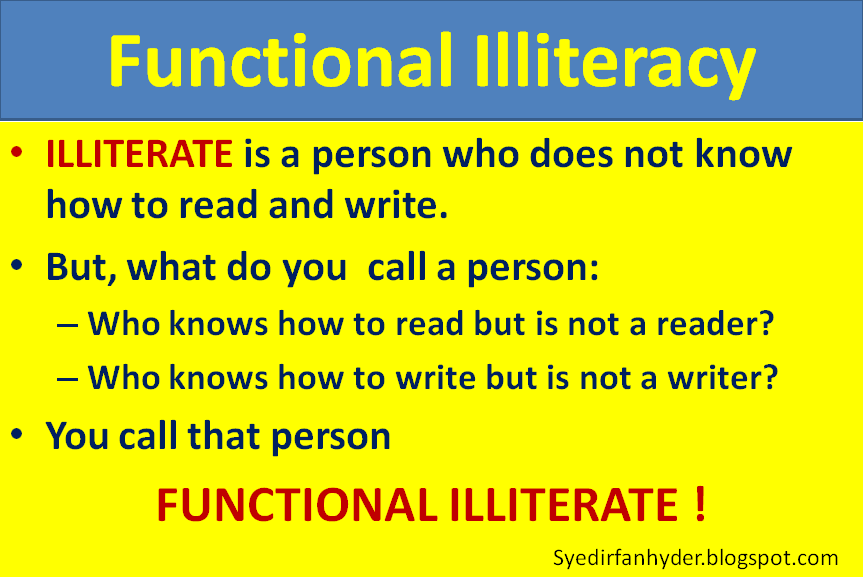 Our educational system is producing graduates who can read but are not readers, who can write but are not writers i.e. functional illiterates [1]. They do not read fiction, have often never read books except those that they were forced to read for their exams, but which mostly they cunningly avoided by cramming the notes, and many a times not even the notes, just the presentation slides! I now think they are not even buying, let alone reading the text books!
Friday, September 25, 2015
How Mina Stampede Happened and How to Avoid it: Hajjis Traffic Management System:

Subscribe to:
Comments (Atom)