Today on Facebook I saw a video of some old students of Aligarh University reciting the official anthem in New York with a great deal of energy and lilt. This brought a recollection of a day in 1990s when I was dusting the bookshelf of my father Syed Ahsan Hyder and picked "Aahang", a collection of poetry by Majaz. My father was an aligarian of 1930s, and a contemporary of Majaz, who also used to frequent our family gatherings at Masood Manzil, hostel of our family in Aligarh, where several of my father's cousins and relatives used to stay and study at Aligarh University. My father picked up the book, took out the poem "نذر علی گڑھ" and started reciting it in such a beautiful manner that its rhythm and fondness still resonates in my mind. He would sometimes do this in times when he was in "vacant and pensive mood". I can still see him vividly deriving so much pleasure from the recitation. The recitation was full of fondness of memories of an era long gone, a time well spent, friendships often recounted. I could see this recollection bringing to him that "bliss of solitude" which is associated with time and experiences associated with cherished memories. To me this recollection fills my heart with pleasure and sways with the emotions and aspirations and ethos of that time.
Inspiration to Leadership, Lessons from Life, School/Higher Education, Parental Counseling, IT, Student Counseling.
Sunday, November 5, 2017
Monday, October 30, 2017
How to Create Love for Poetry: A Tribute to Sir Ghalib Raza of ICB
Over the last 25 years as I desperately try to connect my students with the joy of reading and poetry, at universities and at schools , I realize the worth of what Sir Ghalib Raza was achieving in my school days. He was making us "feel" the poetry, not "understand" it. Poetry is meant for "feeling" the emotions which are being expressed by the poet. You kill the poetry by trying to "explain" it. This is the story of how Sir Ghalib Raza imbued love of poetry in me and other students. He would not make us labor with "explanations" but would rather focus on evoking the "feelings". He knew that once a loving association is developed, understanding will follow naturally in good time. He would enjoy reading the poetry immersed in the emotions being expressed. He loved poetry and he infected us with that love. Thank you, Sir Ghalib Raza, for cultivating in me this love for poetry and literature.
My association with Sir Ghalib Raza started on the wrong foot. I was in class 8th at Islamabad Model School for Boys (now ICB), in G-6/3, adjacent to the famous Covered Bazar (which was razed a few years ago). It was first or second week of the new term. When Sir Ghalib Raza entered the class most of the students were talking to each other. He may have noticed some disturbance in the class, and he thought that I was the one making it, and the first thing he did was to come and slap me. I used to be a really quiet student at that time; always very careful not to get on the wrong side of any teacher. This was my first time in life being slapped, and I cried. When I reached home, I was still disturbed and shared my perplexing experience with my mother. My mother arranged a meeting at the school a few days later. She met with Sir Ghalib Raza, and discussed the issue. I think the matter was resolved amicably and Sir Ghalib Raza's attitude towards me changed drastically. Of course, I never gave him an opportunity to be cross with me ever again. He would later on always call me as Irfan-e-Hyder, and I think he was the only one who called me with this twist that actually improved the meaning of my name.
I can still recall his athletic built, his fair complexion, his hazel, brownish-green eyes. He was among the smartest of the teachers at the school, looking specially dashing in his Pakistan flag color blazer with Pakistan emblem indicating his participation in an international event where he had represented Pakistan. We could see him in the morning conducting fitness exercises for the male and female teachers. Exercises for teachers included jogging, stretching, warm up, etc. I learned to copy many of these movements during my early morning exercise regime at my home, and still seem to repeat these movements when I exercise. Several year later, I would learn of his romantic, colorful and adventurous side of his handsome personality.
From that 1975-76 session, I recall his love for Urdu poetry. He seemed to have in his memory immense poetry related to every conceivable situation which he could recall effortlessly. His recitation was correct, balanced and amazingly wonderful and without accent. I still recall his explanations of poems and "ghazals". They were less about pedantic details, critical appreciation of the style, or focusing on form or measuring the meter. They were more about beautiful and emotional evocations with copious references to excerpts from romantic poetic works emphasizing a relevant theme.
I recall vividly three of his recitations in class that were delivered in his distinctive style. First one is from the ghazal of none other than the most romantic of Urdu poets, Shair-e-Rumaan, Akhtar Shirani:
mai aarzo-e-jaaN likhon , ya Jan-e-aarzo
tu he bata day , naz say emaan-e-aarzo
I later discovered its beautifully fluent rendition by Munawwar Sultana. Whenever, I hear the song, I can see Mr Ghalib Raza reciting it teht-ul-lafz.
The second piece was no wonder, again from Akhtar Shirani:
I now come to his wonderful rendition of a poem of which only two verses had remained stuck in my mind for the last over four decades, I vaguely remembered that the poet was Ahmed Nadeem Qasmi. The two beautiful ashaar were:
The second piece was no wonder, again from Akhtar Shirani:
tā ḳhuld-e-barīñ le chal!
ai ishq kahīñ le chal!
sansār ke us paar ik is tarah kī bastī ho
jo sadiyoñ se insāñ kī sūrat ko tarastī ho
aur jis ke nazāroñ par tanhā.ī barastī ho
I now come to his wonderful rendition of a poem of which only two verses had remained stuck in my mind for the last over four decades, I vaguely remembered that the poet was Ahmed Nadeem Qasmi. The two beautiful ashaar were:
Maang ki tarh seedhi sayyaarain, teRhi leekhoan say kutnay na paaen
and
mein in chatanoan peh bethi tujh ko dohay sunaati rahoon gi;
The poem related to a young wife looking at her husband tilling the soil of the fields as she carried the lunch to him at mid day, and waiting for him to join her on a rock nearby. The way Sir Ghalib Raza recited the poem deeply immersed in the scenery and engrossed in the imagery depicted in this poem is a treat for me till this day. I can visualize him reciting the poem each time I think about that class session way back over 4 decades ago in 1975. I can see his face red with emotions. I can see him in his trance actually living the situation of that young wife of the tiller singing for her husband. In that moment his emotions and feelings were felt by us in a transmission that connected him to the hearts of all the students. I can still visualize him standing there in front of the class reciting the poem. I don't think I understood at that time all the meanings of the verses or the depth of emotions and messages. But I experienced the feelings that he was feeling and expressing in his ecstasy. In that moment, I fell in love with poetry. I enjoyed it then and I enjoy that experience now whenever I think about it.
I had been searching for that poem for a long time. My Sargodha Board Urdu textbook of 1976 is long gone and forgotten except the couple of ashaar that I found stuck in my mind. Today I had the great fortune of having Mr Hammad Rasheed, a lover of literature and poetry, some how pulled out the poem from Internet. It is actually by Ahmed Nadeem Qasmi:
تھپکی : ایک کسان عورت کا اپنے شوہر سے خطاب
I was waiting for this information. I am now completing this post which had been lingering in my draft folder for years. Thank you Hammad Rasheed Sb. for reconnecting me with the poem and that experience. The context of the two couplets that had been stuck in my mind for so many decades are now again much clearer, and what a pleasure it is to remember and recall that experience of his rendition:
جھٹپٹے تک ابھی ہاتھ تیرے
ہل کی ہتھی سے ہٹنے نہ پائیں
مانگ کی طرح سیدھی سیاریں
ٹیڑھی لکیروں سے کَٹنے نہ پائیں
میں یہاں اِں چٹانوں پہ بیٹھی
تُجھ کو دوھے سُناتی رھوں گی
اپنی آواز کی تھپکیوں سے
ہاتھ تیرا بٹاتی رھوں گی
The full poem is copied at the end of this post to highlight how poems highlighting the feelings and emotions should be used for kindling love of reading and poetry rather than dry analysis and dead erudition.- See also: How Education System is Promoting Non-Readers and "Functional Illiteracy": Top Ten Reasons
Mr Salman Siddiqui, a renowned academic, often says that if you want to make people hate poetry ask them to explain the poem or paraphrase it or explain the style, or explain the context. Poetry is not about context or analysis. Poetry is about emotions and feelings.
I think this is so true. Our curriculum and text books prefer explanation of poetry over feelings and intellectual analysis over heart felt emotions. Instead of developing interest in poetry, the analytical approach of critics teach us to hate all those poets whose life events we were forced to memorize and "tarz e kalam" that was thrust down our throats. We could not understand those sentences and therefore hated pedantic explaining of details that we found in no way connected with the emotions that the poet was actually feeling, experiencing and then expressing. No wonder most of us hate poetry to an extent that we have stopped enjoying it and have even started hating Urdu itself.
Later I learned about his romantic life that was full of adventure. He had passion and was romantic. As someone said: Poetry is an infectious disease. It can not be taught. It can only be caught. And it can only be caught by someone who already has the disease.
تھپکی
See Also:
- A Formula is Worth a Thousand Pictures: Dijkstra vs Buzan's Mind-Maps
- Anti-National Language Policy leads to Rule by Rich and Corrupt Elites
- Capitalist Transactions Replacing Traditions and Values from Istanbul to Makkah
- Georgia - Lesson in Preserving Language, Religion and Culture
- How Education System is Promoting Non-Readers and "Functional Illiteracy": Top Ten Reasons
- How Language Acquisition is Made Difficult for Children: Eight Lessons from an Urdu Acquisition Case Study
- How Schools Teach Students to Hate Reading: Mass Creation of Non-Readers
- Managing English Teaching Outcomes in Universities: An Experiential Learning Case Study of ESL/EFL
- Most Effective Way of Cutting a Nation from its History and Ideals - Imposing a Foreign Language
- Why People Hate Poetry? Because Schools have Taught them to Hate Poetry!
- How to find "Buzurg" and "Wali" of Allah
- Importance of Literature in Law: A Case Study of the Panama Case Supreme Court Judgement
- Mukhtar Masud's Awaz-e-Dost and Love for Literature and History
- Sad Ending of Abdullah Yousuf Ali - the Translator of Quran
- What Legal Questions Perry Mason would have raised in SC Panama Case Disqualification of PM - New!
Sunday, October 22, 2017
Why Dictator Generals are Weaker than Civilians Rulers in Withstanding External Pressure
[To understand the context of this post, please read At What Cost! Why Compute Economic Costs of Faulty Political Decisions]
There is a widespread "myth" that what Pakistan needs is a "strong leader" (a savior on horseback) who will come and conquer all our issues and problems in no time. There is a mythical belief that Pakistan is stronger in withstanding external challenges and pressures when ruled by military dictators than when it is ruled by the civilians. This post describes a tale of two encounters that belies this myth. First is the situation arising from India's nuclear explosions in 1998 when a civilian was the prime minister and the second is the situation arising after 9-11 when a dictator was in power.
As can be seen from the comparison of the two situations, a civilian PM was better able to withstand the US pressure than a military dictator who made a u-turn on a single call for Assistant Secretary of State. Whereas a civilian PM did not buckle under intense international and US pressure, a military dictator easily submitted to all the demands in no time. Analysis of these two situations can help us in understanding why neo-colonialism requires dictators and monarchs in developing countries; rulers who can easily be brow beaten into submission. Neo-colonial demands are difficult to achieve in a civilian democratic (even a sham) dispensation. Developing a democratic consensus among large diverse populations is messy and takes a lot of time. However, dictators provide an easy way out for getting the things done by the powers playing the great game.
Friday, September 29, 2017
Doctrine of Necessity from CJ Munir to Judge Khosa: Role of Judiciary in the Service of Neocolonialism
We need to compare the Doctrine of Necessity version 2.0 of SC Justice Khosa (2017) which states "To do a great right, do a little wrong" with the Doctrine of Necessity version 1.0 of SC CJ Munir (1954) which states "Necessity makes lawful that which is unlawful". As per SC decision of March 2012 "deciding cases on the basis of likely consequences will mean reverting to the malignant ‘doctrine of necessity’ that has been buried by the people with their valiant struggle" [1]. It is clear that both version 1 and 2 are relying on the "likely consequences" emanating from a "great right" and "necessity". Since 1954, Doctrine of Necessity Version 1.0 has been responsible for sending home 15 prime ministers, imposition of 4 martial laws, and slapping of dictatorial rule of over 35+ years. Effectively over the last 63 years, the doctrine seems to have only served the interests of neo-colonialism, and has neither served any great necessity or delivered any great right (see Costs of Justice Munir's Doctrine of Necessity: 4 Martial Laws and 35 years of dictatorships). As per the comments of Justice Khosa and Justice Ejaz Afzal, Panama Case Judgement would be remembered for decades and centuries. Hence, the questions raised by Doctrine of Necessity version 2.0 are (i) How many PMs will this decision depose? (ii) How many martial laws will it germinate? (iii) How many years of dictatorial reign will it perpetuate???
[To understand the context of this post, please read At What Cost! Why Compute Economic Costs of Faulty Political Decisions]
[To understand the context of this post, please read At What Cost! Why Compute Economic Costs of Faulty Political Decisions]
Sunday, September 24, 2017
Myth: Government Universities Cost Less than Private Universities
This post explores the myth that Public Universities Cost Lower than Private Universities. I think the average cost per student per year of a public university is much more than that of a private university. Given below is a preliminary analysis. A more detailed analysis is required.
2005-2006 Analysis of Public sector universities indicates that:
[2012]
In 2012, the average cost per student per year had climbed up for many public sector universities to over Rs. 200k. Whereas, many private sector universities in Karachi had fees around half. Remember, this would include operational costs as well as capital costs. Whereas the Rs.200k per student per year operational
costs of public sector universities does not include capital and development costs, which is an additional tab to be picked up by the poor taxpayers.
[2015-16]
According to the budget documents Rs 79.5 billion has also been earmarked for Higher Education Commission (HEC) including Rs 21.5 billion under the Public Sector Development Program (PSDP) and Rs 58 billion on account of current expenditure, showing an increase of 13 percent as compared to Rs 51 billion earmarked for 2015-16. [1]
The amount comes to around Rs 200k per student for on-campus students of government universities. Please note that this does not include the land grants and other allocations. This is directly from the federal budget.
The per student cost of a government university must also include the cost of all the officials of all the ministries responsible for making the government universities work. This cost should also include:
Now the justification of all these costs is on the basis of social equality and equal opportunity for the poor people of Pakistan. There are two major arguments:
This write-up is an extended rehash of the ideas presented in a talk on "Five Major Myths of Higher Education" made at the CIO Conference, March 2009 at Sheraton, Karachi. See another link.
Presentation originally made at CIO Conference, March 2009 at Sheraton, Karachi.
The links and write-up below is an extended rehash of those thoughts:
Myth #1: Our backwardness is because we lag behind in Science and Technology
Myth #2: There is mushrooming of Higher Education Institutions in Pakistan
Myth #3: Impact Factor research measures real impact
Myth#4: Myth and Fiction of Government Universities Costing Less than Private Universities
Myth#5: Bigger infrastructure (land, building, equipment) means better education
asdfasd
2005-2006 Analysis of Public sector universities indicates that:
- HEC funding per student (2005-6) ~ Rs 75 k
- Additional fees paid per year per student
- Typical fee: ~ 25 k (For universities like KU)
- Exorbitantly: ~ 150 k (IBA, NUST)
- Total Average cost per year = 100k – 225k
- Land acquisition and capital investment through PC-1s and other external funds would be extra and would amount to hundred of millions of rupees of funding per year to each public sector university.
[2012]
In 2012, the average cost per student per year had climbed up for many public sector universities to over Rs. 200k. Whereas, many private sector universities in Karachi had fees around half. Remember, this would include operational costs as well as capital costs. Whereas the Rs.200k per student per year operational
costs of public sector universities does not include capital and development costs, which is an additional tab to be picked up by the poor taxpayers.
[2015-16]
According to the budget documents Rs 79.5 billion has also been earmarked for Higher Education Commission (HEC) including Rs 21.5 billion under the Public Sector Development Program (PSDP) and Rs 58 billion on account of current expenditure, showing an increase of 13 percent as compared to Rs 51 billion earmarked for 2015-16. [1]
The amount comes to around Rs 200k per student for on-campus students of government universities. Please note that this does not include the land grants and other allocations. This is directly from the federal budget.
The per student cost of a government university must also include the cost of all the officials of all the ministries responsible for making the government universities work. This cost should also include:
- Cost of HEC personnel, administration, staff and operational costs responsible for calculating, approving, sanctioning, monitoring of any funding requirements for the government universities.
- Cost of all the accreditation bodies for Engineering (PEC), Business (NBAEC), Computer Science etc. I think currently there are over ten such bodies and many others are in the process of formation. Their operational costs must be computed and distributed over the public universities. This function in US and other countries is typically performed by independent professional bodies with little or no tax money involved.
- Cost of Ministry of Finance, AGPR, Planning Commission and other ministries responsible for disbursements of operational budgets, pensions, sanctioning and monitoring of PC-1s and their funds, decision making etc.
- Cost of provincial departments and Governor secretariat's responsible for sanctioning of leaves, appointments, projects planning etc.
- Cost of all the capital investments through land allocations, grants, funds through other government agencies.
- Cost of all the USAID and development funds loans and advances along with their interest payments
You add up all these costs and you will find out that the total cost per student per year, can come out to be at least ten times the per student cost of the private universities. Please note once again the private universities are not using the tax money of the poor people.
- There are many public universities whose fees are much more than several private universities. This should not be allowed. Example, IBA's cost is Rs 150k per semester which is much more than most private sector universities.
- Why can't the government calculate all the money that it is spending on the public universities divide it by the number of poor students that it wants to support and give that as a hardship scholarship vouchers to the poor students. Let the poor students shop around for a university that would let them study with that voucher. I think this may be a more equitable distribution of money. It would then be channeled to the more efficient universities who can give the best quality for the least amount of money. This is how the market dynamics play out.
Consider this: Before HEC (2002-03) a government university like IBA Karachi's fee was Rs 24k/sem, and new startup private universities were charging around Rs 40k/sem. After HEC's advent today the government IBA fee is Rs 216k/semester, and new private universities are charging from Rs 4 lacs/semester to Rs 6lacs/semester. What is happening? This is the impact of not counting the costs. HEC effectively has become an institution that has raised the entry barriers and has reduced access to both the private universities and to the government universities. More on this in a later post.
[1] ReportReferences:
This write-up is an extended rehash of the ideas presented in a talk on "Five Major Myths of Higher Education" made at the CIO Conference, March 2009 at Sheraton, Karachi. See another link.
Presentation originally made at CIO Conference, March 2009 at Sheraton, Karachi.
The links and write-up below is an extended rehash of those thoughts:
Myth #1: Our backwardness is because we lag behind in Science and Technology
Myth #2: There is mushrooming of Higher Education Institutions in Pakistan
Myth #3: Impact Factor research measures real impact
Myth#4: Myth and Fiction of Government Universities Costing Less than Private Universities
Myth#5: Bigger infrastructure (land, building, equipment) means better education
asdfasd
See Other Posts on Higher Education
Sunday, September 3, 2017
How Readers are Created. Ecosystem that Produces Readers
How can we create readers and an ecosystem where readers can thrive. How do we make reading a contagious disease when our educational institutions from schools to universities have become mass producers of functional illiterates [1]. Universities complain that they are getting intake that has studied English for 12 years but have no reading comprehension and no expression. The employers are complaining that graduates coming out of the universities can not even write a single page of correct English. This is a dismal situation. How come we are producing functional Illiterates who are defined as people who know how to read but are not readers, and those who know how to write but are not writers! How can we reverse this?
Friday, September 1, 2017
How Literature Review of a PhD Dissertation Presents the State of the Art: Synthesis vs Listing
Quality of literature review is what majorly differentiates a PhD Thesis from an MS Thesis. The qualitative difference is in the digestion and synthesis of the existing work into a framework on which your research contribution and sequence can stand. This synthesis of existing work in the topic area should itself be worthy of a publication. Digestion of the existing papers is represented by a list of factors or parameters that you have identified on which you can compare and and contrast the existing literature. Not all parameters are relevant to all the papers. Hence, parameters are separated into different subsets. For each subset, a table can be constructed through which papers relevant to the subset parameters can be compared and contrasted. Analysis of these parameters provide you with the explanation of the gap or the problem area which is then articulated in the form of a problem statement.
Thursday, August 31, 2017
Facebook Encourages Unethical Behavior: Metaphysics of Social life based on Lies, Ignorance, Bigotry
Why social media has become the primary source of fake news. Why people in social media communities are likely to become extremists, bigoted, and unlikely to hear or see content that is against their beliefs. Technology is not value neutral. It comes with its own baggage of values. Facebook, Whatsapp, twitter have enabled the technology that gives voice to the baser instincts of humans. It has provided a platform for mass dissemination of lies, fake news, slander, false allegations, lampooning, extremism and bigotry by removing the social costs of these vices. It has disconnected the responsibility of the people from their speech and behavior. Identities of person who have been complicit in the generation of fake news and slander are now hidden. People who started the rumor are no longer easy to identify, trace and track. There is a need to do research on the metaphysics of social media: Lifestyle of social media determines its own metaphysics, which creates its own intentions and generates its knowledge as described in the post From Lifestyles to Metaphysics
Wednesday, August 30, 2017
How Schools Teach Students to Hate Reading: Mass Creation of Non-Readers
Schools are producing graduates who know how to read but are not readers. They have become non-readers (functional illiterates) because the schools have taught them to hate reading!
![]() |
| Functional Illiteracy |
Schools typically use a curriculum and methodology that consists of senseless and meaningless worksheets and exercises which the students are forced to do repeatedly, continuously and ad-nauseam. And, when they resist, they are punished with F-grades, labeling and humiliation. These meaningless tasks and exercises and their resulting punishments teaches the students to hate reading and convinces them that ALL reading is so tedious, so boring, so frightful and accompanied with so much punishment that it is inconceivable that reading can ever be pleasure and fun. This is how we are producing non-readers, who believe that reading books is unreal, irrelevant, and disconnected with the challenges of life. We are in fact producing functional illiterates.
![]() |
| Life Long Learning vs Sacrificing Interest at the Altar of Technique Mechanics |
Sunday, August 27, 2017
How to become a Life-Long Learner: Mission of Developing Life-Long Learners
This is the first orientation of new students of IoBM over the last 23 years, where our founder president, Mr Shahjehan Karim is not present. He left us for the hereafter last month. Inna lillahe wa inna ilaihi rajioon. He worked tirelessly all his life to make a world a better place. This institution of IoBM is a testimony to his vision, his mission and his aspirations. One can talk about his achievements for hours. But, today at the Orientation for New Students,
I will focus on one single point; the mission and purpose of IoBM. Mission of an organization is the reason d'etre of why the organization exists. One can see in the following mission statement, Mr Shahjehan S Karim's love for learning, love for the youth, and through them his hopes and aspirations for the future: "The mission of the Institute of Business Management is to foster a learning environment where students are motivated to make learning an on-going life-long process. "
[Aug 26, 2017]
Friday, August 25, 2017
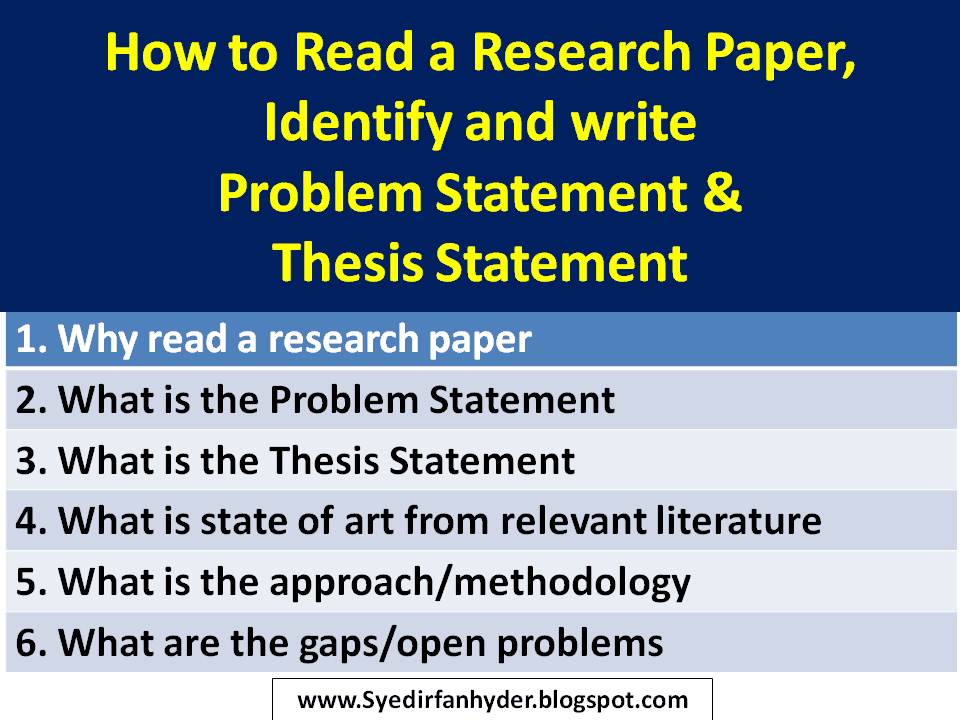
What is a Problem Statement and its role in MS-PhD Research
I am coming across research proposals and dissertations where there is a section heading called "Problem Statement" under which you find several paragraphs containing everything except the "Problem Statement"! The problem statement seems to be embedded somewhere in these several paragraphs but never crisply, precisely stated in a single sentence. Statement is ONE sentence. The problem statement is one sentence that describes why your research and your thesis exists. If you do not have a convincing problem statement describing the gap that requires to be filled, then there is no need for you to research! "Problem Statement" identifies the problem that you are solving, the gap that you are going to fill, the ontological "contribution" that you are going to make via the "original" research of your thesis. Unfortunately, an imprecise and vague description of the problem statement often creates a huge issue during the defense, because the examiners may not understand or buy into the problem as it was not precisely stated and not articulated convincingly.
Monday, August 21, 2017
What is a Thesis Statement and its Role in PhD-MS Research
My supervisor JC Browne at the University of Texas at Austin during 1990-1993 made me write the problem statement and the thesis statement for every research paper that I would read for my literature survey. Since early 2000s, when I started supervising my research students, I have also found the "Thesis Statement" extremely useful in focusing the researchers on the essence of the problem that they are solving and how their "thesis statement" presents in a single sentence the essence of what they have done in their research and why. Effort that I have put in with my research students in developing a precise articulation of thesis statement of their research or of the paper that they are reading or writing has revealed to me several benefits which were not visible to me when I was a student. Most important of these include:
Sunday, August 20, 2017
How to Read a Research Paper and Extract Problem Statement and Thesis Statement
Based on my experience of research supervision since 2002, I can safely say that if you do not know how to read a technical research paper and from it identify the problem statement and thesis statement and write them in a convincing readable manner then it would be difficult for you to complete your MS/PhD thesis. I strongly urge my research students to understand this process. This would help you to articulate the problem statement and the thesis statement of your MS/PhD research. These two statements define the scope of your research and also serve as the bulwark of your eventual defense in front of the thesis evaluation committees.
Thursday, August 17, 2017
How to Develop Personal Brands from Your Leadership Identity
Developing personal leadership brands is a lifelong quest for self-discovery, self-realization and self-actualization. It starts from your personal discovery of what is leadership and from there carving out your leadership identity which is about your "value proposition": The value that you are going to add to your work, to your relationships and to your life. You then become an embodiment of this "value" that should be seen, be heard and be read.
Saturday, August 12, 2017
What Legal Questions Perry Mason would have raised in SC Panama Case Disqualification of PM
Why read literature and history?
It had been a great surprise for me that the lawyers representing the PM have failed to raise forcefully some basic and fundamental questions about due process of law and constitutional rights in the recent SC disqualification of the PM in the Panama Case Judgement. Interestingly, if they had read Perry Mason and other books of literature they would have been better able to respond to the literary challenge of Judge Khosa! Their ignorance about history and literature was also telling in their defense. The lawyers failed to raise several objections forcefully during the proceedings as well as during the JIT investigations that a laymen reading of Perry Mason could have provided. Their ignorance about Islamic and Legal injunctions about due process of law was also evident. Even in the review petition, lawyers should note that literature can only be rebutted with literature, Islamic injunctions can only be defended through Islamic Fiqh, poetry can only be rebutted through poetry, accounting issues can only be defended through accounting principles, tax returns can only be defended through tax laws, and history can only be argued with history. Legal arguments need to be of course rebutted through constitution and law, even in that which they were seriously amiss:
Tuesday, August 1, 2017
SC Judgement as Project Assignment for Finance Accounting Students: SC Disqualifies PM on not Declaring Uncollected Receivables as Income
Finance, Accounting and Taxation Teachers: SC Judgement invoking uncollected receivables can be a very interesting project assignment for accounting, taxation, finance and business students. This assignment will bring alive accounting and finance to the students and would tell them the difference between personal and corporate accounting, tax laws, income and receivables and uncollected receivables.
Saturday, July 29, 2017
SC Interpretation of Sadiq and Ameen in Disqualification of PM Nawaz Sharif
PM Nawaz Sharif has been disqualified from being the prime minister as per Pakistan's constitution for not being "honest" using the concepts of Sadiq and Ameen. It is important for the followers of law and constitution to see the debates related to how courts have interpreted these concepts and how they have internalized these concepts through several judgments.
In 28 July 2017 disqualification of PM Nawaz Sharif, supreme court judgment states: 

Saturday, July 22, 2017
Can Corruption be Eliminated by Hanging a few Thousands through Panama Case like Judgements
[To understand the context of this post, please read At What Cost! Why Compute Economic Costs of Faulty Political Decisions]
It is worrying to see the sentiments of educated people and the functional illiterates (those who know how to read but are not readers) on the social media clamoring for the head of the PM and his family. They want an immediate decision and seem to have no patience for the "niceties" of "due-process-of-law" to be followed. They are shouting, screaming, cheering for the heads of PM and those related to him for the "crime of being rich". The crowds are being led and encouraged by those educated whose sentiments seem to have more in common with Robespierre during French Revolution. It is interesting to compare the emotions of people clamoring for the head of PM to the mobs/crowds during "reign of terror" in 1793 France screaming "off with the heads" of the rich. Heads of thousands of aristocrats were chopped off by the guillotine for the crime that their hands were soft (meaning that they were not working with their hands) which implied that they were rich. This mood was then captured by Balzac in his famous quotation which was used by SC Judge Khosa "Behind every fortune is a crime" in Panama Case Judgement. Balzac was an inspiration for Marx and Engels who were the inspiration behind the communist revolution in 1917 of Soviet empire that outlawed all individual enterprises and enforced "equality" of salaries and perks for all the jobs. Interestingly, this emphasis on artificial equality became the famous satirical expression "all are equal but some are more equal than others" that became the death knell for the demise of communism and Soviet Empire.
As I see the popular frenzy of the youth and educated on the media asking urgently for the head of the PM and ignoring and dispensing the requirements of due process of law, I am reminded of the Reign of Terror in France in 1793. I also connect it to the reference of French author in the SC Judgement of April 20 which starts with Judge Khosa's judgement that is spread over 200 pages and quotes Honore De Balzac "Behind every great fortune there is a crime" and then goes to condemn the rich using Shakespeare's Merchant of Venice quote: "To do a great right, do a little wrong”. Balzac was born in 1799 just a few years after the "Reign of Terror" and must have carried the emotions and sentiments of the crowds screaming "off with the heads" under the leadership of Robespierre with scant regard to due process of law.
This Balzac's statement "Behind every great fortune there is a crime" is categorical and is condemning all the wealthy people, a-priori, without trial and is thus a highly problematic concept to be relied upon in a court of law, and that too by Supreme Court which is going to make it quotable for decades to come. Fortunately, this view was rejected by the majority of the supreme court judges on the bench 3-2. The majority held that a person can not be convicted by an appellate court (SC) without due process of law in a trial court followed by his right to appeal.
It is interesting to note that Balzac emphasized class conflicts and inspired the revolutionaries and Marxists who hated the rich and gave birth to socialism and communism ideologies which emerged from Marx and Engels:
Marxist Friedrich Engels wrote: "I have learned more [from Balzac] than from all the professional historians, economists and statisticians put together".[128] [Wikipedia]
On the other hand irony of PM's situation in SC can be seen as a great "Makafaat-e-Amal" as he tries to defend himself after the submission of JIT Report. His counsel is fighting to get the "fundamental rights of due-process-of-law" for the PM. Those rights that are trampled upon daily by the police and LEAs (euphemism for overt and covert agencies in Pakistan); LEAs routinely handcuff the common people for extortion and bribes, often forget the suspects after throwing them in jail for years, kill them in blatantly contrived police encounters and subject them to "forced disappearances" about which even SC can't do any thing, ..... I believe it is the pent up emotions of this deep sense of injustice in our society that has led to the situation that is resembling the time before the "Reign of Terror".
PM's attorneys are struggling to get the following rights from SC.
1. Right to a fair and open trial
2. Right to due process of law, getting charged first before being sentenced.
3. Right to be held "innocent unless proven guilty".
4. Right to a defense attorney during deposition.
5. Right to be presented with evidence and cross examine the evidence by their attorney
8. Right to cross examine the witnesses by their attorney.
Pakistan nearing this stage where educated and the energetic youth are clamoring for the heads of rich and are willing to violate the due process of law in their haste is really terrifying:
PM's attorneys are struggling to get the following rights from SC.
1. Right to a fair and open trial
2. Right to due process of law, getting charged first before being sentenced.
3. Right to be held "innocent unless proven guilty".
4. Right to a defense attorney during deposition.
5. Right to be presented with evidence and cross examine the evidence by their attorney
8. Right to cross examine the witnesses by their attorney.
During the period of the French Revolution, and especially during the Terror (1793-1794) when the state enacted martial law, use of the guillotine skyrocketed. Led by Maximillian Robespierre, the Committee on Public Safety enacted a series of decrees that established a system of Terror, enforced by the state, in an effort to root out counter-revolutionaries and save the new Republic from itself.I believe that under no circumstance the demand for quick and instant justice from mobs and crowds and the pressure of popular sentiments should dictate the decision of Supreme Court of Pakistan. It would be disastrous for Pakistan. As we have seen that political issues can not be resolved through SC judgements. Gen Zia the dictator who toppled the government of Bhutton in 1977 tried to solve the problem of ZA Bhutto, the deposed PM, potential political protests through a contrived SC judgement on a criminal case of murder. He was hanged in 1979 as per the SC judge. The consensus today points towards the Supreme Court also admitting that their were serious lapse of the "due process". Popular opinion now considers the judgement as the "Judicial Murder"
Under this system, at least 40,000 people were killed. As many as 300,000 Frenchmen and women (1 in 50 Frenchmen and women) were arrested during a ten month period between September 1793 and July 1794. Included in these numbers were, of course, the deaths of Louis XVI and Marie Antoinette. Although all social classes and professions were targeted, the death toll was especially high for both clergy and aristocrats. The numbers of those killed and taken into custody were probably even higher as the documented numbers don’t include people killed by vigilantes and other self-proclaimed representatives of the Republic.
See other posts on Corruption:
- Can Corruption Problem be Solved by Hanging a Few Thousands?
- Can Corruption be Eliminated by Hanging a few Thousands through Panama Case like Judgments
- Corruption is a cause or symptom of Government Inefficiency- Challenge for Imran Khan
- Covey's First Habit Advice to Proponents of Corruption Eradication First
- How Corruption is being Eliminated in Pakistan since 1950s: Corruption as a Ruse to Maintain Status Quo
- How to Eliminate Corruption in Pakistan: Simplicity and Transparency of Bureaucratic Procedures
- It is not corruption but incompetence and inefficiency that is the fundamental problem of third world countries
See Also:
- Costs of Justice Munir's Doctrine of Necessity: 4 Martial Laws and 35 years of dictatorships
- Why Dictatorships are Weaker in Accountability than Constitutional Governments
- Essential Law for Masses: Perry Mason and my Learning
- Importance of Literature in Law: A Case Study of the Panama Case Supreme Court Judgement
- At What Cost! Why Compute Economic Costs of Faulty Political Decisions
Friday, July 21, 2017
Why People Hate Poetry? Because Schools have Taught them to Hate Poetry!
Why people hate poetry? Because schools did not teach them "to love poetry" but they actually taught them "to hate poets and their poetry". If you want students "to hate poetry" ask them to (1) write explanations (tashreeh) of poems, and (2) memorize life history and style (tarz-e-kalam) of poets, (3) associate grades with their learning of poetry, (4) make poetry a mind-activity instead of a heart-activity, (5) value subjects according to their potential for earning and employ-ability. The schools have sucked the life out of poetry by forcing the students to consider it as an object devoid of life, feelings and emotions, something that resides in mind and not in heart. Poetry is about feelings and emotions and expressing those emotions through similes and metaphors. Poetry is not about dissecting in a pedantic sort of the way why, when and how to write and appreciate good poetry. Unfortunately, schools specialize in making the students hate poetry through all the above ways.
Wednesday, July 19, 2017
Saturday, July 15, 2017
Essential Law for Masses: Perry Mason and my Learning
Would there be court room drama in upcoming SC JIT trial of Nawaz Sharif? Would there be arguments, counter arguments, counsels for the defendants and the prosecution? Would there be dissection of the evidence using the fine lens of law and constitution? Are there any Perry Mason (Erle Stanley Gardner's lawyer) enthusiasts of the fiction of court room drama around here?


Wednesday, July 5, 2017
Why no PM of Pakistan has ever completed his/her tenure?
[To understand the context of this post, please read At What Cost! Why Compute Economic Costs of Faulty Political Decisions]
All elected PM's in Pakistan starting from Liaquat Ali Khan were never allowed by establishment to rule during their tenure. Whereas there were three military dictators who comfortably ruled for around decades, not a single PM has been allowed to complete their five years terms.
Not a single PM has ever completed his/her full tenure! 19 PMs in 70 years of our history till 2017.
Sunday, June 11, 2017
Ulema Decree (Fatwa) against Suicide Bombings, Targeted Killings and Terrorism
There is a need to propagate the clear position of Islam that suicide is haram, murdering is among the gravest sin, and even taking the lives of foreign guests is haram [1,2,3,4].
Monday, June 5, 2017
Ethical Standards of 1940s. Due Diligence for writing Recommendation Letters: A Deputy Commissioner's refusal in 1943
I came across this 1943 letter from a Deputy Commissioner (DC) of Kumaon Division which shows the high ethical standards of that time. The DC refuses the request from a friend to provide recommendation for his son on the grounds that the DC has never met his son and does not know the son personally enough to evaluate and provide a recommendation. Contrast this with today when anyone is willing to write a recommendation for anyone whether known personally or not.
Saturday, June 3, 2017
Role of Sharifuddin Pirzada in Promulgating Martial Laws for Every Dictator of Pakistan
Sharifuddin Pirzada is responsible for assisting the violation of constitution and abuse of law by military dictators through the design of legal machinations and tools to subdue the judiciary and replace it with compliant judges. He supervised the drafting of the "mairay humwatano...." speeches for the coup plotters and dictators from Gen Ayub Khan, to Gen Yahya Khan, to Gen Zia to Gen Musharraf. This jugglery and twisting of law had been called wizardry for which he was titled as "Jadoogar of Jeddah"! He designed for dictators the instruments for subduing the judiciary and legitimizing the violation of law and constitution as Martial Law, and its substitution with MLR, PCO, MLO, etc. Looking back at this history of usurping of the constitution and law and for his role in the promulgation of Martial Laws in Pakistan he should be remembered as:
Nang e qanoon, nang e aaien, nange e millat
Friend of the dictators, enemy of the people!
Wednesday, May 31, 2017
Fool Rejoicing in Someone Else's Marriage/Fight: Parai ki LaRai/Shadi mai Abdulla Deewana
This post details how Pakistan had been entangled in someone else's war in anticipation of some crumbs falling to Pakistan as a largess in US Wars. In all these cases the results have been disastrous for Pakistan. This post is motivated by Pakistan's another venture to join the new US' Middle East War that portends huge costs for Pakistan vis-a-vis its neighbors especially Iran because the US Alliance of Arab Countries which is dominated by despots and royals is primarily against Iran, and Pakistan desperately needs a friendly neighbor on the West because its influence in Afghanistan has now been eclipsed by India [1].
To understand the context of this post, please read At What Cost! Why Compute Economic Costs of Faulty Political Decisions: Pakistan History 101
Subscribe to:
Posts (Atom)