Sunday, January 31, 2016

Depressive Moods and Psychology of a PhD Student: What Causes Depression and leads to dropouts or even suicides

The mood and psychology of thesis research students directly corresponds to their progress status. If you are making continuous progress you would be positive, if you are not making progress or are missing the advising sessions then you would be pessimistic. Your pessimism and your disappointment and disillusionment will continue to increase with the time period that you have not been working. Please see my other post on why PhD is difficult and why there are so many dropouts or ABDs (All But Dissertation). 

Psychological States of a PhD Student

This post only explains the psychological states.You can classify your mood from the following table:

The table links the Research Status of a PhD Student and links it with his or her Mood/ Psychological State. And the Perception of who is to be blamed or to be made the scapegoat.

Research Status of the MPhil/PhD Student
Mood/ Psychological     State
Perception of who is to be blamed or made the scapegoat
When you are working and making progress
Optimistic and energetic
Everyone is good
When you are working, but NOT making progress
Energetic
I am good
Initial state of not working 
Embarrassment
There are no issues. I will start to work next week
2nd stage of not working
Guilty
I am having issues, but will overcome them soon and show progress
Not working for 4-6 months
Fear of being reprimanded.
Why the supervisor is angry all the time? He should be more understandable.
Not working for 6-11 months
Denial.
Not only the supervisor but the office of graduate studies has problems
Not working for over 1 year
Skeptic
I think the supervisor, office of graduate studies as well as the university has problems.
Not working for 3 or more years
Disillusionment
I think PhD is not worth the effort. All PhDs are crap

A quick completion of the MPhil/PhD is simple for those who are willing to put in the desired time and effort. The only reason why people are unable to complete their Thesis/Dissertation on time is that they are not willing to put in the required time and effort. Consequently their moods go from denial to guilty to fear to disillusionment to skepticism.
When you are working and making progress, you are
Optimistic and energetic and Everyone is good.

When you are working, but are NOT making progress, then you are still energetic you still feel you are good and optimistic about future.

During the Initial state of not working, you start feeling
embarrassed. You feel there are no issues, and you think you will start to work next week. You admit your mistake and tell your supervisor that you will complete the work.

During the 2nd stage of not working, you become Guilty conscious. You begin to feel that you are having issues, but will overcome them soon and show progress. You highlight the issues with the supervisor.

When you have not been working for 4-6 months, you become afraid of being reprimanded. You start wondering why the supervisor is angry all the time? You expect him to be more understandable. The supervisor is now beginning to see through your excuses. You are also running out of convincing excuses. Now you are becoming afraid of even meeting the supervisor.

However, if you are not working for 6-11 months you enter a state of Denial. You start blaming. Not only the supervisor but the office of graduate studies has problems. You start projecting your problems outward. You now need an excuse why you are not going to the supervisor. Supervisor is now the bad guy and possibly in cahoot with the graduate department.

When you are Not working for over 1 year, you enter the state of skepticism. You now start feeling that the supervisor, office of graduate studies as well as the university has problems.

Then you enter the stage of not working for 3 or more years. This is the state of Disillusionment. You think and start believing PhD is not worth the effort. All PhDs are crap. All universities are crap. Even PhD is a useless degree. This is just cognitive dissonance. One can see the comments on many of the posts related to the suicide of the KU student.

This is the stage students typically drop out or enter stages of depression. This typically happens when you are an RA, or on scholarship, you do not have emotional support, and you do not have any option of bailing out such as being stuck with the stipends. You are stuck. You keep blaming the supervisor, your graduate office, your university. Then you start blaming your life and all those around you. Anyone giving you an advice appears to you as a tormentor. You can find fault in everyone else except your own self. Unfortunately, the person who can help you the most appears to you to be your biggest enemy.

How to Overcome the Psychological Stress


Not being part of an active research group is a recipe for continuous degradation of your psychological state. The group of peer researchers and coworkers with whom you meet every week or every other week is a great support system. How this helps is part of another post. Suffice to say that a peer support group consisting of friends is necessary to help you out when the supervisor scolds you, and some technical bureaucratic hitch stops your case from progressing. You actually need a shoulder to cry on, to listen and help overcome the phase.

In my experience every PhD student going through a tough program goes through at least one episode during the course of their PhD. Over the last few years I have supervised and helped several PhD students complete their programs. Every one of them have for one reason or other been very close to feeling depressive, dejected, disheartened, angry. Interestingly enough the major trigger had been different issues. Some relating to bureaucratic change in process, change in supervisor, change in HEC policy, some family circumstance, health, job or an unforeseen requirement. These showstoppers may come at any stage during the PhD process. It can be at the beginning of the program for not being able to meet a requirement, at the proposal stage, at the research stage, at the data collection stage, at dissertation submission stage, at the dissertation rejection/major objections by one of the externals, and even after the completion of dissertation for lack of bureaucratic approval from the university or even HEC. PhD students with good faculty mentors and peer support group can make it through.

Even during my PhD at UT Austin, I went through a similar phase when my proposal defense was rescheduled after a disastrous presentation in which my use of transparencies overlays (good old days of projectors and plastic transparencies) backfired. Please note that the proposal defense was happening a couple of years into my PhD. I got severe throat infection, fever and sleeplessness. I was referred to a doctor who gave me some sleeping tablets to overcome it. When I went to see my supervisor a week later, he listened to me and I still remember the chuckle with which he referred me to the co-supervisor saying please help him, he is going through that phase! He gave me some time out and helped me overcome the kink in my research formulation.

[PhD culture is highly charged with politics of power. This is also true abroad. But, there the power fight is on the validity of your philosophical approach vs the opposing philosophical approach. At UT Austin I found the truce in the philosophically opposing camps. Theoretical purist camp vs the pragmatist camp. The truce was that they had decided long ago that they would avoid meddling in each other's opposing camp's thesis processes, but would viciously criticize other in their own camps. In Pakistan, however, the politics of power is based on (1) supervisors' research incompetence or weakness, (2) jockeying for seniority appointments for promotions from asst prof to assoc prof to prof, (3) incentives for chairmanship, or some other prestigious position such as seat on a board, syndicate, Registrar ship etc. (4) using the power to fulfill the publication requirements, (5) lack of formal processes, (6) lack of automation and monitoring software.....But, that is a subject for another post.]

The important thing to note is that the student must hunker down, put his/her head down, take each challenge calmly and coolly. It does not matter even if you have to repeat a significant portion of your work. What is required is a dogged determination to continue, slowly, gradually, one step at a time. The tortoise always wins the race especially in a PhD. Hare always loses. He is too ambitious, too smart, too energetic for PhD which requires tortoise like dogged determination.

A quick completion of the MPhil/PhD is simple for those who are willing to put in the desired time and effort. The only reason why people are unable to complete their Thesis/Dissertation on time is that they are not willing to put in the required time and effort. Consequently their moods go from denial to guilty to fear to disillusionment to skepticism. And finally depression.

Are You Making Steady Progress?

I have observed that not all students often make steady progress. Some seem to be not working regularly and are only working in short duration pulses. This is not the way to work on Thesis research.
  • Working for 30 hours in (say) a short duration of three days is NOT equal to working for 2 hours for 15 days. Small dozes of work administered on a regular basis are much better than short intensive dozes. You can't get better by drinking the entire bottle of cough syrup in one day or by taking the entire prescription of antibiotics for five-day course in one day.
  • Thesis requires continuous dozes of efforts that need to be administered every 2nd day if not every day. You can compensate for long periods of inactivity by taking a few days leave and by working for 15 hours every day.
  • Thesis requires as much if not more work thinking about the problem (arm-chair time) then work you do by sitting on your desk (desk-time). You must let the ideas that you have read sink in. They take time to sink and digest. When you have read a few papers, take some time out for reflection. Your mind needs to compare and evaluate the ideas with one another. Most of the time your mind does this activity when you are not sitting on your work desk but when you are walking, sitting idle, driving, traveling, or even sleeping. This is like a digestion process or a background process. Digestion of complex ideas requires time for the ideas to sink in and form associations with other ideas that are already present in your mind. You can compare this with operating system processes that work in the background and keep on monitoring the hardware resources, reclaiming resources from dormant processes and dormant files, doing the housekeeping, recovering cached memory etc. Similarly, your mind requires background processes to run and digest the new ideas. Allocate some time every day.
  • Allocate (say) half-hour at night before sleeping or more if you can. Or in morning or any other time that would be exclusively reserved for research. The point is that the allocated time for research need to be faithfully reserved and followed.I have emphasized that you must allocate a definite period of time every day for research. It can either be early morning or late evening, or in afternoon. Whichever one suits you, you must allocate a time of day. Even if it is only half-hour to start with. Gradually as your interest will grow so would this time period also. You must make it a point to leave every thing aside and involve yourself in doing some thing related to the research.Do some thing in this time related to research. You may start with very easy things. You can start out today by writing down the references of the papers that you have selected.If you don't feel like reading a complex argument in the research paper, you may just go through the abstract, introduction or the conclusions and future work sections.
  • If you don’t want to do that, then you may just start writing your bibliography. If not that why not start writing a summary of some research paper that you have read. If not that, then you may just write down what is coming to your mind about the topic. Even if this is a jumbled list of ideas, don't worry, you will be able to compile them later. May be you should just organize the papers according to different categories. Why not just start writing a glossary of the important terms that you are working on. In short, do any thing related to the research. Don't let the time go by without you having done some thing.

Finally, if you have NOT written what you have done today, you have NOT done anything. If you have not written you have not done any thing.

The good thing to note about students making progress is that: They have sufficiently narrowed down their area of research. They have collected relevant papers. Although they still need to collect some more relevant papers. Papers that they have collected were research papers.

How many hours of work are required in a 3-Cr Hr Research Course


You see students typically want to know the formula for passing a 3 credit hour research course without putting more than 50 hours (i.e. 15 sessions x 3 hours/session + 5 exam hours). That is, they typically want to just attend the classes and not study at home and not put in the additional home-work hours. This is not possible. For every, one hour spent in the class, a student must be prepared to put in at least 2 hours at home. That is, an additional 100 hours of home work. (This brings the total time to 100+50 = 150 hours) Only then he/she can pass the course.

If you want to know the way to complete a 3 credit-hour research course by putting in less than the required 150 hours, then it is difficult for a supervisor to guide you. However, if you are willing to put in 150 hours for each 3-credit hour segment, then I can personally guide you to complete the requirements of the IS (3 credit hours) and in the same proportion MPhil Thesis (6 credit hours) or a PhD Disseration (30 credit hours) in a reasonable amount of time.

Please note that this formula of 3 Cr Hr course/semester means about 135-150 clock hours of work in a semester is a standard formula followed in taught courses typically by all recognized universities. Usually, the proportion is more for lab courses, research courses, project courses, clinical courses etc.

You have to make a decision. Whether you want to get a degree without working or you want to get the degree after working. If you want to get through without the requisite effort, then I can not help you. Go seek a third grade supervisor in a third grade university.

[Much of this material was first written in 2005 and distributed to research students as Guidelines for MS Research]
On January 31, 2016 I updated it in my blogpost web blog to bring in the PhD emphasis
I have updated it more for this post keeping in view the controversy surrounding suicide of the KU student. For Other PhD relevant articles google Dr Syed Irfan hyder's blog


See Also:

What is PhD?
Why PhD is Difficult: 
Starting with your PhD
Reading Research and Writing your Research
Qualitative Learning from a PhD

Am I ready for MPhil/PhD Research: Self Checklist

Am I Ready to Embark on my Thesis/Dissertation Research? Self-Checklist.

This checklist will help evaluate your status of preparation for embarking on your thesis research. If you have not carefully gone through this list, be prepared for depression and discouragement during your research:
  1. I know the difference between a thesis and a project.  A project tries to solve a single "instance" of problem, a thesis proposes a solution to a "class" of problems using some theory or model.
  2. I know the difference between an MS/MPhil and a PhD.

Sunday, January 24, 2016

Change Management in Academics: Change Agents and Credit Hours

Over the last twenty years, I have been involved in various change management efforts involving faculty members. Change management is hard and difficult in any organization; bigger the organization, more complex the change, and greater the challenge. Each organization has its own culture which makes change management distinctively challenging. In universities,  it becomes especially challenging to sell change among the faculty members who are used to displaying in front of students their intellectual prowess, who are often not at loss for words, and who are actually fond of involving students and others in intellectual debates and who are fond of giving arguments in favor of their positions.


As dean of private institutions of higher education since 2001, and before that deputy director at IBA, I often had the privilege of translating new ideas into policy statements and issuing them formally for implementation. However, for quite some time I have understood the limitations of such policies. I have learned that such policy pronouncements issued as memos and conveyed through faculty meetings are often accepted without protest, but are often ignored at the time of execution in the classrooms. The faculty members know that they are king of their classrooms, and it is not possible for administrators to police hundreds of class sessions being conducted often at different campuses every day, or to verify the contents of the question papers or validate the veracity of grading of thousands of answer scripts.

How to Select an MPhil/PhD Research Topic


How to Select the Area of My Research?

Don't spend too much time mulling over which area of research to concentrate on. If you feel that you have entered the analysis/paralysis stage and you are having too much difficulty zeroing in on the topic and finalizing it, then my advice is to just write down the names of areas of research that you are interested and then throw a dart blind-folded. Just start wherever it lands. Of course, I am talking about the sub-areas within the research specialty of your supervisor. 

Why PhD?

Why energetic youth should pursue PhD?

I think PhD is necessary for our youth, especially those who (1) have the opportunity and (2) have the academic background, for several reasons:

Saturday, December 26, 2015

Parenting and Physical/Corporal Punishment

In my experience typical justifications for beating the kids turn out to be flimsy excuses pulled out from scriptures (Hadeeth regarding prayers) and out of context as explained below.
A parent typically beats the kid when he is angry and not in his senses.  When the parent is irritated, frustrated, or feeling weak due to some illness, or may be angry due to fight with spouse/boss can make the otherwise reasonable parent vent his/her frustration and beat the kid.

Parents do not beat the kid when they are cool minded or in their senses. They beat their kids when their egos get hurt which happens when children refuse to obey their parents. The cause is not the violation of rule but the violation of ego!

Thursday, December 24, 2015

Harmful Effects of Comparing Siblings and Children

Biggest torture (zulm) on a child that can be done by a parent is "comparing the child with a sibling or some other child".
For example here is the complaint of a mother of two children:
"Comparison starts as early as one month;
  • He was active, but this child is so weak... 
  • He walked so early, but this child is still not trying... 
  • He started to speak so early, but this child still cannot babble... 

4 Attributes of Marital Relationships that can Build or Destroy

By Arif Masoud
[A renowned architect, motivator, and a greatly admired faculty member of CIIT,  Islamabad. His love in creating beautiful designs from deep appreciation of nature is visible from the architecture of Islamabad Monument at Shakarparian.]
.... Four attributes of a  "Marital relationship" (among others) which either build or destroy it:
... 1)   Ego
... 2)   Expectation
... 3)   Possessiveness
... 4)   Forgiveness

Friday, October 16, 2015

Are Generals Qualified to Make Long Term Strategy: Costs of Strategic Failures of Military Dictators

Is it possible for Generals to do long term strategic planning? 

What is meant by the famous quote "War is much too serious a matter to be left to the military men (or generals)". This quote is by Clemenceau who was a French statesman who served twice as the Prime Minister of France and was the statesman who led France in the First World War, and was among the principal architects of the Treaty of Versailles

Sunday, October 4, 2015

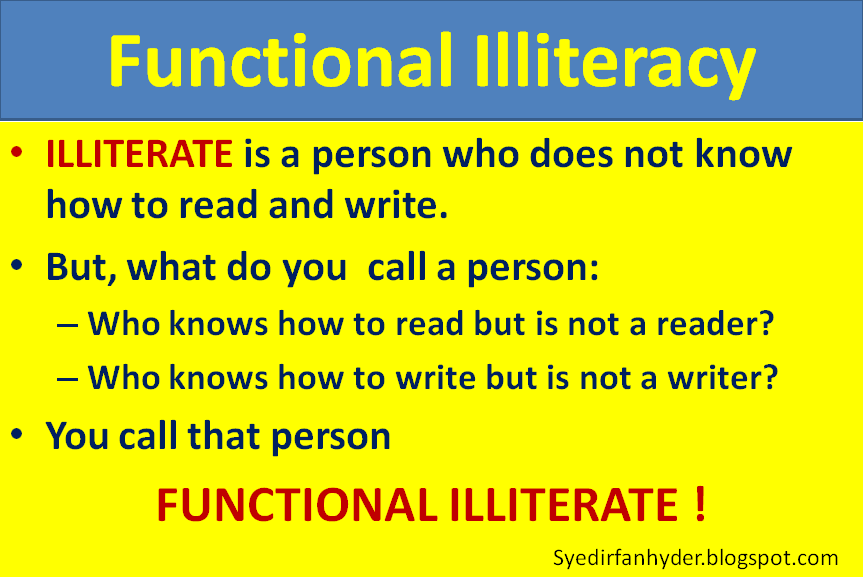
How Education System is Promoting Non-Readers and "Functional Illiteracy": Top Ten Reasons

Our educational system is producing graduates who can read but are not readers, who can write but are not writers i.e. functional illiterates [1].  They do not read fiction, have often never read books except those that they were forced to read for their exams, but which mostly they cunningly avoided by cramming the notes, and many a times not even the notes, just the presentation slides! I now think they are not even buying, let alone reading the text books!

Friday, September 25, 2015

How Mina Stampede Happened and How to Avoid it: Hajjis Traffic Management System:

During my hajj of 1996, we were in a segment of road in approximately the same area where Mina 2015 stampede occurred. We experienced how a stampede-like situation begins to build as hajjis begin thronging towards jumaraat. I can still feel the tension developing in the air, the silence of lull before the storm, the panic on the faces of the people, their deep anguished breathing, their anxious glancing to the left and right, their groping for space forward and backward, and the fear and nervousness writ large on their faces, and that waiting as if for a cue to really fly off the handle and start the domino that would lead to the stampede. The apprehension building on the faces of the people as they start coming closer and closer and start pushing more and more. Fortunately, there was no stampede, we avoided it because we along with large number of other hajjis were able to escape out of the road segment where the congestion was developing. We managed to enter the adjoining muktab by creating an opening in its perimeter wall and which, fortunately, in those days were not as tightly blocked for non-muktab hajjis as they are today. From that  muktab, we ejected out to the other parallel road, and from there we retreated back and postponed our attempt to jumaraat for a couple of hours.

Sunday, September 20, 2015

Managing English Teaching Outcomes in Universities: An Experiential Learning Case Study of ESL/EFL


My recollections as Vice President and Dean about ensuring the learning outcomes of English courses at PAF KIET from 2002-2012. 

Around ten to twelve years ago in our academic discussions with the President of the institute where I was working at that time, we would often worry about raising the English skills of our students. President of the Institute was Air Commodore (R) Khalid Husain who hailed from the Engineering Branch of PAF and who had been in senior positions in training and development wing of PAF. One day he mentioned that the new inductees in PAF are mostly from rural areas who have never been to English medium schools, and have had no or little exposure of English speaking environment. However, within a few months of their joining the PAF training academy, they are speaking fluently in English. How can we ensure that students of universities also start talking and writing in English within a few months? We agreed that  there was merit in this expectation, and we need to try to design systems that can ensure a similar level of outcome.

Sunday, September 13, 2015

Anti-National Language Policy leads to Rule by Rich and Corrupt Elites

One of the major reasons that has led to the continuous deterioration of economy and culture in Pakistan can be attributed to the anti-national language policies by the status-quo troika. This status-quo troika consisted of rich ruling elites in the bureaucracy that quickly joined hand with the establishment and the landed aristocracy during the rule military dictators to keep the common people away from the corridors of powers. The instrument of this machination was the use of English, the language of the colonial masters (gora sahebs), to extend the colonial rule during post-colonial era through their replacement with indigenous brown sahebs, the rich English speaking elites [1]. The recent supreme court judgement by CJ Jawwad Khwaja [2] is a bold attempt to correct this wrong perpetuated over the last 68 years and to strike at the root of the status-quo's power.
[Editing in Progress. Suggestions are welcome]
The discussion below giving examples from various institutions highlights that the dominant form of communications at all levels except the highest policy level is still Urdu and local languages (LL). Role of English is limited to making of the policy in an alien languages which common people should not be able to understand and also to ensure that policy making remains in the hands of the elites (brown sahebs) who are the real inheritors of the power from the departing colonial masters (gora sahebs) [3]. 

Schools and Universities

We know the sorry state of affairs in Urdu Medium schools. However, in majority of even private English medium schools, the level of English medium is pathetic. A survey has indicated that the maximum vocabulary of a typical English teacher in such English medium schools, is not more than four to six hundred. With such meagre and pathetic vocabulary, when these teachers conduct English classes, students know what sentences a teacher would use and when. They can even precisely predict what phrases they will say next. When schools force these teachers to speak only in English and also force the students to speak only in English, the results are disastrous because the teachers can neither make their student understand any thing nor the students feel confident enough to raise their hands and ask for any clarifications. This use of English under force and duress by teachers who have limited vocabulary impedes their ability to engage the students, to tell stories and other anecdotes in an interesting manner, and to stimulate the interests of students. Consequently, the willing expression of both the teachers and their students is stifled and strangulated; and teachers often resort to creating an environment of fear where asking of questions is considered as misbehavior. Teachers of technical subjects do not even make an effort to use English. They simply use Urdu or local languages to explain the technical contents. However, the tests and exams are in English. Therefore teachers take the easy route to just writing the contents of the book on the board and making the students copy that in their copies. Similarly, the students take the easy route to rote memorization over any attempt in trying to understand the contents.
Only the elite minuscule percentage of English medium schools that typically charge over Rs 15,000/= per month fees can afford teachers (at salaries around Rs 60,000 per month). These are the only places where one can expect some good quality English. However, these are the elite schools that cater to the rich and ruling troika of Pakistan. Here too the qualifying criteria is fluency of English. The only criteria for hiring of teachers is the fluency of English and Western modern dressing. But, these schools further create the elite class and does nothing to reduce the mediocrity.
The emerging scenerio has therefore been pathetic as depicted in the poignant Urdu saying, "Kawwa chala hans ki chaal, apni chaal bhi bhool gaya" (when the crow tried to walk the walk of a swan, it forgot its own walk). In fact, the students today neither know English nor Urdu.

With the exception of few elite universities, the situation in universities across the board is not much different. I need a separate post to describe the different techniques, methods and formats for teaching English that we have tried over several years with English department teachers of various backgrounds and competences in two universities. In our long meetings to discuss the efforts and their outcomes we often used to wonder about the efficacy of what can we do at the university level when the student getting admission has put in 12 years in English medium schools and had not learned much because they are neither readers nor writers. The state of English language learned by the students at the university level is not much different from the state described by this famous couplet of poetry by Momin Khan Momin:

Umr saari tu kati ishq e butaan mai Momin
Akhri waqt mai kya khaak musalmaan ho gay!

With the exception of English subjects, most other subjects are taught in Urdu. Teachers actually revolt when they are forced to teach technical subjects in English. They vociferously defend that if the objective is to teach the technical concepts, then why use English that impedes that learning!
With such confusion prevailing, over 99% of class room interactions, discussion, teaching takes place in Urdu or local languages. English is only used for writing the exam and tests. Hence the culture of mass ruttafication (senseless memorization) and production of people who neither have the capacity to express in any language nor any thing to express. The result is that we are mass producing Functional Illiterates. An illiterate is a person who does not know how to read and write. A functional Illiterate is a person who knows how to read, but does not read, and who knows how to write, but does not write. The educated majority in Pakistan are neither reading books nor writing books which is alarming.

Government and Governance

In Government offices, if you are dressed in national dress, your entry is difficult. If you are dressed as English Babu your entry is easier. If you talk in national/local languages your entry is difficult, if you talk in English language, your entry is easier. Interaction with government becomes easier if you have the right connections with the status quo powers. A telephone call would get your work done in no time. If you are not connected with the status-quo, you would need speed-money to get your task completed. If you are a commoner you will have to run from pillar to post; they will make you go from one window to another and at each window will ask you to fill out umpteen forms and applications; mind you, all would be in English. The system is rigged against redress of issues of common people.
If you are a government servant your promotion depends upon your ability to talk and write in English. This is the only language for file working and official notings, preparing of cases and getting their approvals. Merit and promotions all boil down to your knowledge and ability to draft in English.

I have noticed even bureaucrats of grade 21+ have difficulty of expressing themselves in Urdu extemporaneously what to talk about their ability to express themselves in English. They often send regrets at the last moment to functions where they are invited to speak. Most public officials are reading speeches written by their minions and in a manner so pathetic that exemplifies the state of English competency in Pakistan.
In every government office or department or ministry, whether at the federal level or the provincial level, discussions in the hall ways, in offices, in meetings with the officers, in dealing with the people, in participative discussions of meetings of officers, are all happening in Urdu or local languages. The only time English is used when presentations are being given on important matter where no discussion is intended or where the decision is already made. The final noting and decisions are all done in English so that only the English speaking and writing people have the decision making authority and right to promotion.

Assemblies and Lawmakers

Law bills are written and presented to parliament in English. Lawmakers; MNAs and MPAs rarely understand English with a competency to negotiate the nuances of English language in the law bills. Hence, discussion in the assemblies is in one direction and the law that gets promulgated says something else. This law is drafted by the status quo powers through careful deliberations of clauses that protect their interests. The inability of lawmakers to either understand this language or to appreciate its implications has led to the sorry state we are in where we are still using hundred year old laws of the colonial past with few amendments here and there.

The entire system is rigged to make the lawmakers coming from poor ground feel incompetent just because they lack command on English language. Had the language of law been Urdu, the lawmakers, MNAs and MPAs would have better understood the contents, and would have been better able to debate and also dessimate their intent to the masses. People, in turn, would have been able to comment and discuss the vires and nuances of the law that is being promulgated.


Courts, Tribunals, Regulators

Courts and tribunals and regulator hearings are platforms for those who can communicate in English. The irony is that all court proceedings either are conducted in Urdu or local languages but the decision is written in English. PLD is in English. The quality of case writing and published judgements is either not available or of poor quality [4]. Supreme court had to admonish the public officials and law ministry for not making these available. Add to the nonavailability of judgements to the common people, is the incomprehensibility by the masses of these decisions because of the foreign language in which they are written. Given the current state of English comprehension of lawyers, their ability to prosecute or defend the cases is poor. Consequently, litigants are mis-advised about the judgements and the cases are prolonged for the benefits of the lawyers and the associated legal touts.
The result is delay in dispensation of justice and the promotion of lawlessness and corruption.

Big Businesses, Multinationals and Banks, Markets

One would expect that the dominant mode of communication in big businesses and multinationals would be in English. But this is contrary to experience. Except for the board meetings, or formal meetings of the top executives, most of the communication taking place in most forums in these organizations is in Urdu or local languages. Whether it is communication or interaction with customers on telephone or in person, whether it is negotiations with the vendors, whether it is explanation of processes and giving of instructions to workers on the shop floors or in offices, whether it is training of sales persons and their interactions with customers, or whether it is interactions with other stakeholders, one would find Urdu and and local languages in most verbal communications. Written communications in English are often ignored and not read and have to be followed up with phone calls and meetings in person. Surprising thing is that business curriculum designers have also been ignoring this fact also [5].

Promotion in such organization is therefore not on the basis of competency of work but only on the merit of knowing the foreign language English and ability to make presentation to principals.

Small and Medium Enterprises and Informal Sector

This sector constitutes over 90% of businesses and over 95% of our workers. Again the predominant medium of communication is either Urdu or the local languages. This is where there are most non filers of tax for the simple reason as they can not fill out the technical forms or maintain the records in the language that is required by the tax authorities. Unfortunately, our regulators demand everything in foreign language. Hence most noncompliance is there. This may be a major reason for the graft and corruption we see in dealings with the regulators. The role of English in the development of this large sector has been debilitating and stifling.

Role of Dictators

It is important to note the role of military dictators in the impediments caused to the cause of national and local languages [6]. The rule of Gen Ayub and Gen Yahya consolidated the rule of the brown saheb. However, during Bhutto's regime the hegemony of the brown saheb was reduced and the new constitution proclaimed the status of Urdu as the national language to be implemented in a specified period which ended during Gen Zia's period who did nothing except paying lip service. The private English schools were the product of his time and also the start of the creeping influence of Cambridge system. After Gen Zia's death because of the 8th amendment there was a musical chairs of BB and NS each taking two turns; during this time neither the courts could function nor the political institutions were allowed to develop. This was followed by the dictator Gen Musharraf's 9 years which again were the hay days of the foreign cultural invasion. It was only during the post 18th amendment during Zardari's time that constitution was cleared of the martial law aberrations and led to the empowerment of constitutional courts. This paved the way for SC to act during NS's time. It can therefore be seen that Martial Laws had been stifling for the national aspirations and national languages, however, democratic rules have led to the empowerment of the national languages. 

References

[1]. Postcolonial discourse is an academic discipline that analyzes the cultural legacies of colonialism and of imperialism. Source: Boundless. “Postcolonial Discourse.” Boundless Art History. Boundless, 21 Jul. 2015. 
Also see an introduction at
https://literariness.wordpress.com/2016/04/06/postcolonialism/ 
[2] Supreme Court orders govt to adopt Urdu as official language, Daily Dawn, Sep 8, 2015
[3] Urdu kay mukhalifeen ka almia By Orya Maqbool Jan
[4] SC HEARS THE CASE REGARDING ERRORS IN PUBLICATION OF LAW BOOKS
[5] Revamping Business Curriculum in collaboration with Industry, talk by Dr Irfan Hyder in 2nd Conference of Deans and Director of Business Schools organized by HEC and NBEAC, Karachi, 2015.
[6] Supreme Court, Nifaaz-e-Urdu Aur Afwaj-e-Pakistan, by Orya Maqbool Jan, Daily Express, Sep 14, 2015.

See Also:

Saturday, September 5, 2015

6 Trends that will Determine your Career Success in the 21st Century

There are six major trends that are going to determine the careers of graduates in the 21st century:
  1. Shortening of the life cycle of organizations and businesses.
  2. From life-long full-time employment to short term, contractual, project-based engagements
  3. From teaching to learning
  4. From knowledge acquisition to enterprising creativity and innovation
  5. From management to leadership. From managed employees to self-driven autonomous decision makers.
  6. From choosing a career vision to choosing your purpose
[Based on my Orientation Speech for new students at IoBM on September 5, 2015.]

Tuesday, August 4, 2015

Belief in Rising of the Dead on the Day of Judgement- From belief to a scientific possibility

During the early 1970s before my matriculation the most difficult question of belief was how would people who have been dust and gone for centuries would be woken up. Even the pores of the fingers of the dead would be recreated to the exact pattern when they were alive millenia earlier. I used to spend hours and days thinking about the seeming improbability and would then be forced to bow towards the belief.


Thursday, July 16, 2015

Progress vs Pollution and Development vs Destruction of Nature? Costs of Progress and Development

Is progress same as pollution? 
Is destruction of nature same as "development"?
I believe progress means progress of humanity and progress in our quality of life as a whole.
  • If progress means pollution of pristine waters of lakes, aquifers, streams, rivers and oceans with industrial waste, chemicals, insecticides, refuse, plastics, and other garbage that renders them unfit for life, then it is “regression” not progress. 
  • If progress means herding the majority of people in sardine-like fashion in city ghettos with below-poverty level subsistence eating unhygienic food to become a source of cheap labor for making the rich richer, then this is “exploitation” not progress. 

Friday, July 10, 2015

Eight Disconnectivities induced by Social Networks and Smart Phones - Costs

Internet and social networks promised greater connectivity and greater access to information and greater assimilation of knowledge. The results are extremely discomforting as we are likely to be more disconnected than ever from our family, loved ones, and friends. We are disconnected in offices and public places. We are disconnected with our own self, and from nature while outdoors. We have become apathetic and disconnected with the plight and suffering of others. We are so busy taking pictures and saving our memories that their abundance has reduced their value, they have become disposable and we are likely to lose them in contrast to the memories or snaps of yester years that we cherished for a long time. Our ability to concentrate has dwindled. Our preoccupation with our selfishness in our selfies is degrading.

Friday, July 3, 2015

Nine (9) Dimensions of Ethical Leadership


[1]
There are three competencies of a leader which are necessary to inspire the followers on the path towards the destination. These competencies serve as a beacon of hope and encouragement for the followers to overcome the hardships likely to be encountered on the way. These are (i) the loftiness of vision (nigah-buland), (ii) heart-touching communication (sukhan dil-nawaz) and (iii) passionate soul (jan pur-soz) with empathy. 

Tuesday, June 30, 2015

Mismatch of Curriculum with Realities at Stanford, MIT and other Ivory Towers

From ivory towers to realities 

Published: June 28, 2015

Curriculum Mismatch with Real Life

As MIT freshmen are wont to do, we were up way past midnight discussing big absorbing questions like the meaning of life. We realised that none of us had a clue and decided to ask our professors. A natural candidate was our history professor, who seemed approachable and had engaged us in interesting discussions in class. He gave us an answer which seemed satisfying at the time. He said that we had to learn the basics we were being taught, before we could tackle the big questions. It was many decades later when I realised that we had been swindled. In a classic bait-and-switch manoeuvre, we were tempted with the possibility of learning wisdom and sold an entirely different package.

Sunday, June 21, 2015

From Disposable Cups to Throwaway Relationships: Costs of Disposable Culture

Transforming a Disposable Culture
By Dr. Irfan Hyder

Disposable Relationships
The emerging lifestyle of today requires that we restrict ourselves to a small cocoon. We are sold that we should gain expertise in only one particular subject. Our occupations are specialised, limiting our view to a narrowly focused area, and our daily chores revolve around our jobs, which we dutifully report to every day of our lives until the time to leave this world comes. The chimera of “convenience” has made “consumerism” the purpose of our lives, where our only objective is to buy, consume and throw away. It is not important to know how something is produced, nor what feelings, culture and tradition is associated with it. The importance of things is devalued, as we focus only on the short-term utility and not the extensive process of its development and nurturing. We forget that in life, the value of a goal is not just in its final output, but also in the process – the effort, toil and struggle for that goal.

Friday, May 1, 2015

Rememberance of My Father and Loved Ones: Every day is Father's Day and Mother's Day

Our love for the father gives us support for every day of our lives for a long time even after they have gone for years.


Matriculation of my father Ahsan Hyder:
From L-R:
Sitting: Syed Ikram Hyder(great-grandfather), 
Syed Ab Ghani Hyder (grandfather)
Standing: Sultan Hyder (Rummi)-Rasheed Hyder-
Ahsan Hyder-Zaheer Hyder-Jarrar Hyder
Prof Dr Zaeem Jaffery of LUMS, who left this world a few years ago, surprised me when he told me in 2000-01 that his father (Syed Hasan Jaffery) passed away six years earlier, and not a day passes when he does not remember him. I could not comprehend the enormity of this till I lost my father (Ahsan Hyder) in 2003.

It has been 11 years now and not a day passes that I do not remember him. Initially, this remembrance was accompanied by a piercing pain, a pang in my heart and a lump in my throat. However, now this remembrance is more mellowed and contains warmth, softness, and support, as explained below:

Picture Legend:
My father Ehsaan Hyder (standing in the middle) with his degree from Aligarh University in 1935 (or was it after his matric?). (b. 1917- d. 2003). Sitting on his right: My grandfather Abdul Ghani Hyder  (d. 1967). Sitting on his left: My grandfather's father Syed Ikram Hyder Naqshbandi (d. July 1942 at Siharanpur). All those standing with my father were graduates of Aligarh University. They were his cousins and brother: Standing from left to right: Sultan Hyder (my father's younger brother aka Rummi d. 2001), Rasheeduddin Hyder (my father's cousin and brother in law, d. 2002), Ehsaan Hyder (my father), Jarrar Hyder (my father's cousin d. ~2000s (?)), Zaheer Hyder (Achhay d. ~1952?).

Friday, April 10, 2015

Mass Production of Alims and Alimaas and Teaching of Maulana Ashraf Ali Thanvi

There seems to be a rush for the mass production of "Aalims" and "Aalimas" which is in conflict with the teaching of Maulana Ashraf Ali Thanvi: Becoming a good human (ach-ha insaan) is more important than becoming a buzurg because a good human would be a source of benefit to the fellow people, whereas a buzurg would only be a source of benefit to himself!!!!" With a heavy heart, I must point out the issues emanating from the establishment of of assembly lines for the mass production of certified "Alims" and "Alimas". Foremost among them is the contradiction of the intent to produce Aalims and Alimas with the intent of Maulana Asharf Ali Thanvi (1863–1943) [1] "to produce a good human and not a buzurg", who is among the most revered religious scholars of the 20th century in sub-continent.

Friday, April 3, 2015

Time Management of Social/Marriage Events in Karachi: A Case Study of How to Create Social and Youth Impact

It was first week of May of 2014 and representatives of Youth Impact came to see me at CBM. I was impressed to meet the team. They talked about the impact that they wanted to create on the youth and through them. They told me about their experiential learning program in which they take the youth for outdoor activities such as hiking, and other tours during which they impart training on leadership, problem solving, thinking skills, time management and other skills using the learning by doing approach. I was already excited about the concept of learning by doing, and had been implementing project based learning, problem based learning and "Experiential Learning" through various interventions described elsewhere in this blog. This had convinced me that our education methodology and our curriculum is totally disconnected from reality and real life problems. This disconnect has created a situation where the only thing on the mind of our graduates is their desire to leave the country (Why )


Friday, March 20, 2015

Remembering East Pakistan: We look before and after, And pine for what is not

[To understand the context of this post, please read At What Cost! Why Compute Economic Costs of Faulty Political Decisions]
It is early 1970s. I am in 4th grade and in Islamabad. One day I saw my father with tears in his eyes holding a letter in his hands that he had received from Bangladesh from a Bengali friend who had gone back from Islamabad to what was previously East Pakistan. I do not recall the name of the friend or much of the contents of that short letter with a couple of paragraphs. What I do recall is that he read that short letter to me with so much emotion and sorrow that the thought of it brings tears to my mind even today. I only remember a couple of lines:
 It started with "My heart bleats and my heart cries when I ......." and it ended with these words "We look before and after and pine for what is not". And I remember and cherish that experience of being with him to this day. Each recollection of the debacle of East Pakistan brings to my mind vividly the scene of my father full of emotions about his memories of the times and company of his friend(s) and the great loss that it represented to the dreams of those who left everything and migrated from India to Pakistan. Pakistan represented so much sacrifice, so much enthusiasm, so much promise and so many great expectations of the happy times that were to be awaiting for us in our own free country! 

Sunday, March 15, 2015

Revamping Business Curriculum in Collaboration with Industry for Impact


The model followed in Pakistan in the design of curricula is basically based on rearrangements of popular course names that correspond to some established (typically foreign) text books. A typical university in Pakistan designs a program by copying and pasting course names from some of the foreign universities and prominent local universities, making a semester-wise list of courses and throwing a few electives for each specialization. In the end the course descriptions end up being summaries of table of contents of selected text books. The final program mainly represents a rehash of the personal experiences of the academics of that university. Some of the universities may also invite a couple of people from industry or other universities to tweak this program in a forum pompously named as Board of Studies, which mainly involves playing with the names of the courses and their rearrangement. When HEC (or PEC) invites a curriculum meeting, it ends up rounding up the usual suspects (using the famous quote from Casablanca) i.e. university professors linked to the discipline. Industry executives and societal representatives are seldom invited/present in such deliberations. Major issues in such meetings revolve around courses, credit hours and the prerequisites. There is neither time nor the energy to go down to the contents of any of the courses.

Friday, March 6, 2015

How to Create Impact on Society: A Case Study of Experiential Learning Intervention in a Course on Social Advocacy

It was around 2007-08, I was chatting with some top decision making executives of five private universities/institutes in Pakistan. As is customary in Pakistan, the discussion invariably turned towards lamenting the sorry state of affairs in Pakistan, how Pakistan is going down the drain and how its situation is increasingly becoming deplorable. After a while, I could take it no longer and was forced to make an outburst that went something like the following:
Of all the people in Pakistan, we who are sitting around this table have no right to blame others for the sorry and dismal state that we find ourselves in! We, gentlemen, are in command of at least 20,000 students in the three major cities of Pakistan and these students often remain with us for at least two to four years. The students of our institutions hail from resourceful families. Our universities have enough resources. We can influence the type of courses that we offer, the content of these course and even the teachers who are conducting these courses. We can even fire or change the teachers. Collectively we are churning out over 4,000 graduates every year who have gone through the process designed and approved by us. Why can't we produce even 400 change agents who can transform the business and societal environment of Pakistan and who can turn the tide of our social deterioration?  

Monday, February 9, 2015

A Formula is Worth a Thousand Pictures: Dijkstra vs Buzan's Mind-Maps

A Formula is Worth a Thousand Pictures: Dijkstra vs Buzan's Mind-Maps

Problems with Pictures with too many details and Complexity
I had the opportunity to attend Tony Buzan's presentation of his famous Mind-Maps at the convention of Management Association of Pakistan held at Karachi in September 2014. Mind-maps became popular in Pakistan some years ago thanks to their use for pictorially representing the concepts in a summary page at the end of each chapter in many of the high school science text books for O/A Level students.  As Buzan was presenting the mind-map concepts, I was comparing them with my experience of graphs and pictorial representations for representing complex concepts, processes and relationships. 

Friday, January 23, 2015

Testing/Grading vs Motivation: A Variation on Heisenberg's Uncertainty Principle for Academics

Testing/Grading vs Motivation: A Variation on Heisenberg's Uncertainty Principle for Academics

Whenever there is a discussion of the performance of students, lack of motivation of students is the most frequent complaint of nearly all the teachers, whether in higher education institutions or in schools, whether today or 20 years ago. Performance of students and hence teachers therefore became my first priority when I started in academic administration nearly two decades ago.

Sunday, January 18, 2015

Why Project Based Learning? An Experiential Learning Case Study of Language Teaching

Why Project Based Learning? An Experiential Learning Case Study of Language Teaching

This post describes a major step in my personal journey towards becoming an advocate of PBL approach, which is often referred to as "Learning by Doing" and is part of the "Experiential Learning" landscape. Please note that that the learning through this case study is applicable to all languages and at levels of education as highlighted in some other posts although the experience mentioned here is in the context of programming language issue of a computer science department of a higher education institution. 

Saturday, December 6, 2014

Small is Beautiful: Why Small Businesses should Replace Big Businesses (A Case Study of Rickshaws vs Buses)


Major source of congested roads:
Minibuses/vans not rickshaws
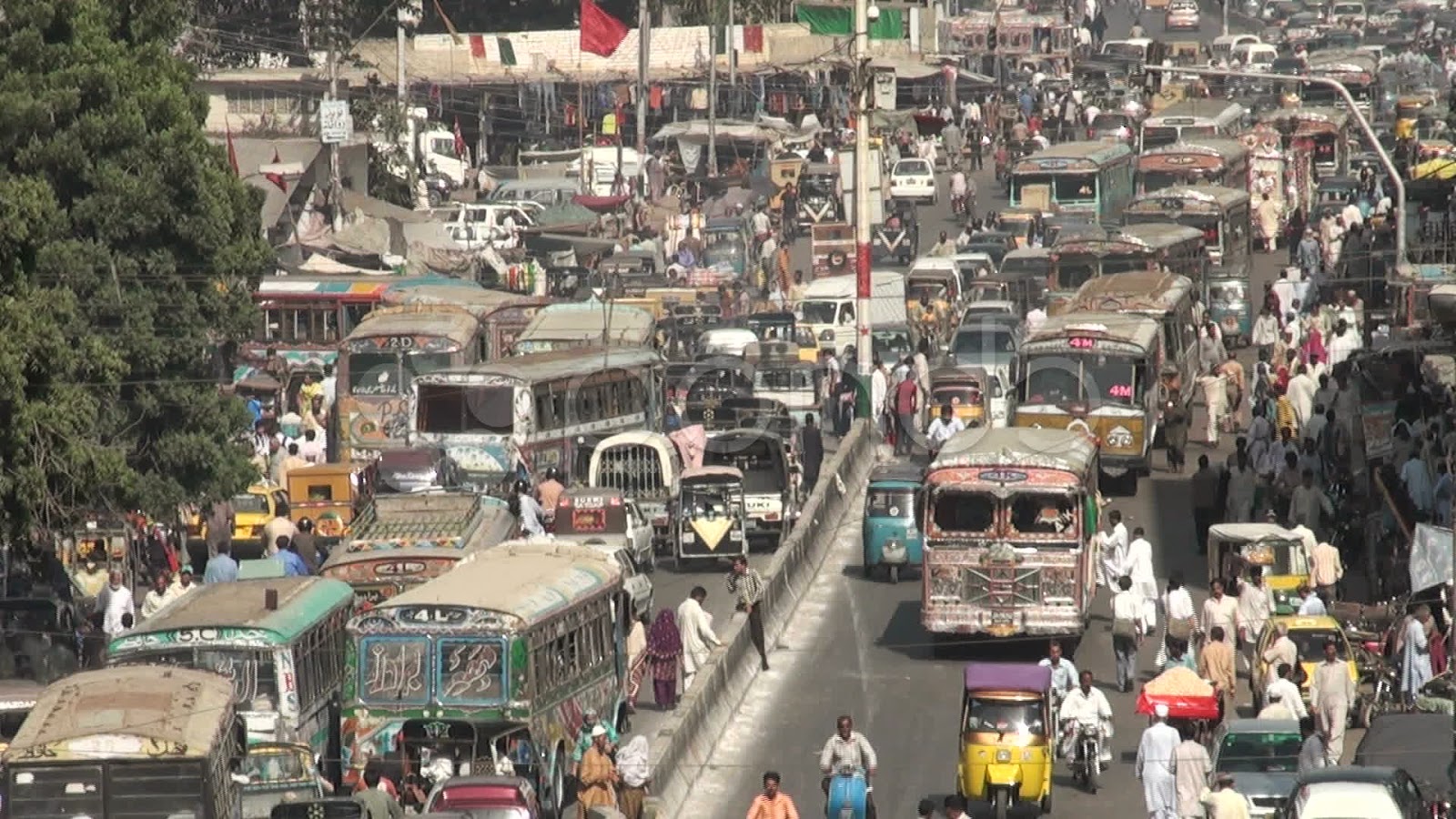
Have you noticed a marked reduction of the concentration of minibuses often called yellow devils on the roads of Karachi lately? My heart fills with a feeling of comfort when I see these yellow devils and anticipate their dwindling fate, when I see them surviving with mostly empty seats, and await the deliverance from their yoke. Their arrogance has led to their takeover by the small homegrown rickshaws (12 seater) and ChinChi (QingQi). Tens of millions of commuters and pedestrians have been suffering from the menace of these yellow devils for the last 40 years: Their overloading, wild driving, menacing overtaking, threatening moves from one side to another, trying deliberately to block you and even trample you, holding up the traffic for as long as they want, their insensitivity to the wailing sirens of stuck ambulances, not listening to the persistent horns blaring at them by the traffic stuck behind and not caring a hoot about the passengers whether old, young or women or their discomfort. The emergence of these smaller rickshaws has convinced me about the theory of Small is Beautiful

Friday, November 28, 2014

Computer Revolution and Moore's Law: A Personal Journey

Moore's Law: Exponential increase
in transistor density and speed

In this post I trace a personal journey of my interactions with the evolutionary stages of computational machines. I feel my decisions in life have been shaped by forces which were not as clearly understood or even visible in the 1970s and 1980s as they are today and are depicted in this graph. Tremendous progress in the speed of the computers and their reduction of costs obeys Moore's law which says that speed of the computer would double every 18 months and the costs would decrease by half every 2 years. This trend has held for more than half century and is depicted in the figure in the context of the microprocessors.

Wednesday, November 19, 2014

Encounter Project 2: Propagating Islam as an Inflexible, Rigid, Harsh System

I am now forced to translate "Encounter-2", an Urdu column published in 2000 because I have noticed that since 9-11 there is a flood of rigid Islamic literature, likes of which were never encountered in my readings of Islamic literature during 1970s-80s. The literature that I typically came across then was published from a period extending from mid of 19th century till the 1980s. Recently, however, the frequency with which certain rigid thoughts and ideas seem to have been excavated from the ancient archives of fringe Muslim thoughts and then systematically spread as mainstream Islamic thought appears to be a part of a concerted campaign that seems to be growing in intensity. I think we need to seriously examine the proposition put forward in Encounter-2 below when we see rigid literature specifically relating to children books written from fringe Islamic perspectives that indicate:
  • Ban on fiction; reading, writing and telling of stories.
  • Ban on humor; reading, writing and telling of even decent jokes.
  • Ban on poetry; reading, creating and enjoying of poems.
  • Ban on showing the faces of animals in pictures i.e. facial hijab of animals; cutting off the heads of horses, camels, goats and other animals from their illustrations in school books of children.
  • Ban on the picture of snakes and even of vegetables such as onions!

Monday, November 17, 2014

Big Data, Management Transformation and Voyager of Star Trek Movie

V'jer of Star Trek
The growth of digitization and computerization and its assimilation of everything and everyone that it touches reminds me of the first Start Trek - Movie, where the enterprise encounters a huge energy cloud that is devouring extra-terrestrial objects and even planets on its path as it moves towards the solar system and then eventually towards earth. There seems to be nothing that can stop this energy cloud/mass and there is fear that even the entire earth may be swallowed by it. With each
star swallowed and with each planet gobbled, its size increases and so does its power and energy. What eventually happens to this energy cloud is part of the story that needs to be seen in this movie. What is of relevance for us is that the core of this ever increasing energy cloud eventually turns out to be none other than our old NASA spaceship Voyager that was released from the earth in 1977 and which only recently i.e. in 2012 teared out from the solar system and became the first man made craft to enter the inter-stellar space. In this movie, the Voyager during its two hundred or so years of its journey in the interstellar space has mysterious encounters. Through one such mysterious encounter with an energy source, it transforms and acquires the capacity to start attracting objects, gobbling them and becoming bigger and bigger and amassing more and more energy. Anything and everything that comes in its path is not only swallowed by it, but is also transformed into the energy, which accumulated on top of its existing energy, not only increases its power but also the speed with which it gobbles up things with greater and greater ferocity and an ever increasing appetite.