Thursday, July 16, 2015

Progress vs Pollution and Development vs Destruction of Nature? Costs of Progress and Development

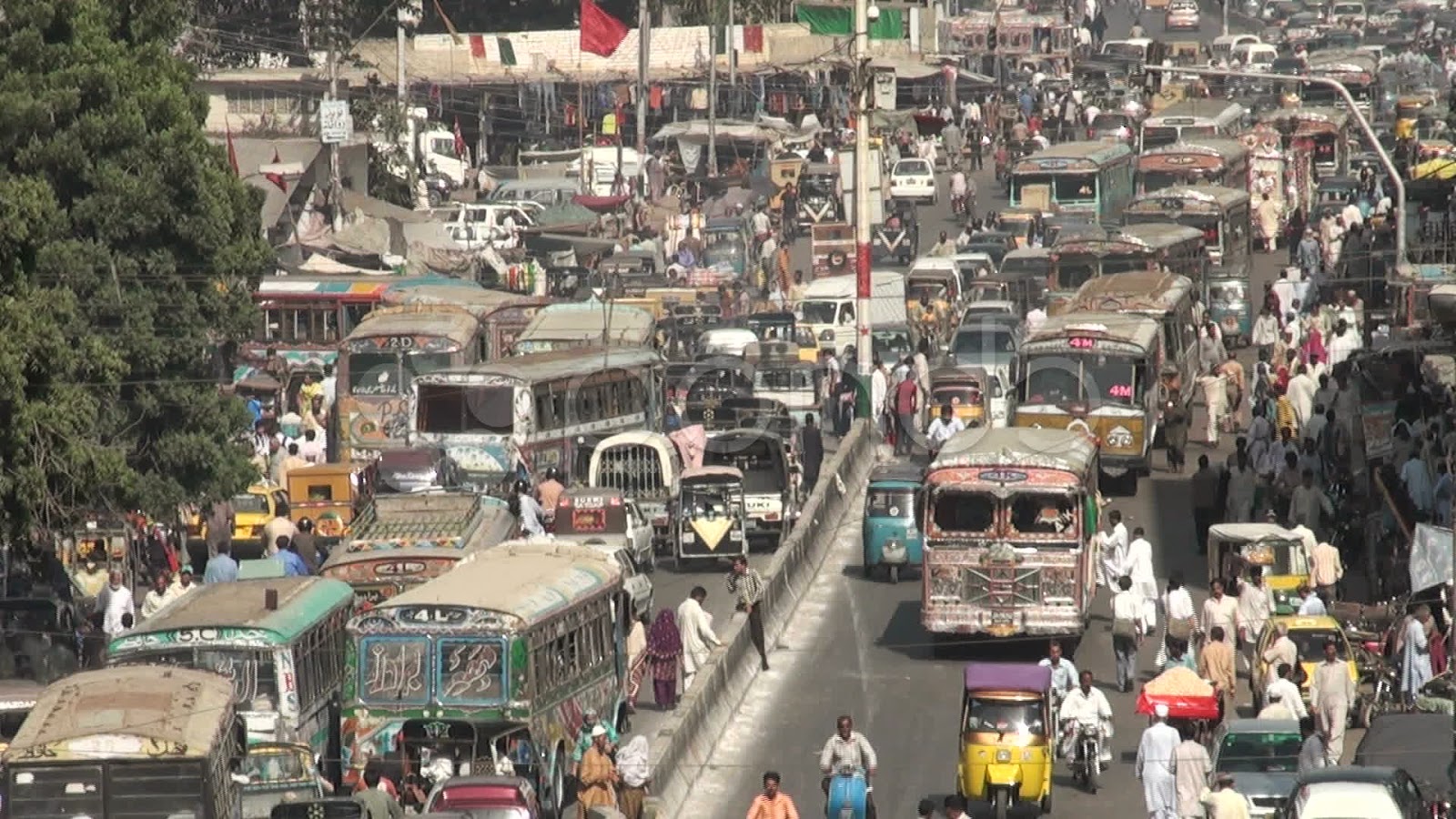
Is progress same as pollution? 
Is destruction of nature same as "development"?
I believe progress means progress of humanity and progress in our quality of life as a whole.
  • If progress means pollution of pristine waters of lakes, aquifers, streams, rivers and oceans with industrial waste, chemicals, insecticides, refuse, plastics, and other garbage that renders them unfit for life, then it is “regression” not progress. 
  • If progress means herding the majority of people in sardine-like fashion in city ghettos with below-poverty level subsistence eating unhygienic food to become a source of cheap labor for making the rich richer, then this is “exploitation” not progress. 

Friday, July 10, 2015

Eight Disconnectivities induced by Social Networks and Smart Phones - Costs

Internet and social networks promised greater connectivity and greater access to information and greater assimilation of knowledge. The results are extremely discomforting as we are likely to be more disconnected than ever from our family, loved ones, and friends. We are disconnected in offices and public places. We are disconnected with our own self, and from nature while outdoors. We have become apathetic and disconnected with the plight and suffering of others. We are so busy taking pictures and saving our memories that their abundance has reduced their value, they have become disposable and we are likely to lose them in contrast to the memories or snaps of yester years that we cherished for a long time. Our ability to concentrate has dwindled. Our preoccupation with our selfishness in our selfies is degrading.

Friday, July 3, 2015

Nine (9) Dimensions of Ethical Leadership


[1]
There are three competencies of a leader which are necessary to inspire the followers on the path towards the destination. These competencies serve as a beacon of hope and encouragement for the followers to overcome the hardships likely to be encountered on the way. These are (i) the loftiness of vision (nigah-buland), (ii) heart-touching communication (sukhan dil-nawaz) and (iii) passionate soul (jan pur-soz) with empathy. 

Tuesday, June 30, 2015

Mismatch of Curriculum with Realities at Stanford, MIT and other Ivory Towers

From ivory towers to realities 

Published: June 28, 2015

Curriculum Mismatch with Real Life

As MIT freshmen are wont to do, we were up way past midnight discussing big absorbing questions like the meaning of life. We realised that none of us had a clue and decided to ask our professors. A natural candidate was our history professor, who seemed approachable and had engaged us in interesting discussions in class. He gave us an answer which seemed satisfying at the time. He said that we had to learn the basics we were being taught, before we could tackle the big questions. It was many decades later when I realised that we had been swindled. In a classic bait-and-switch manoeuvre, we were tempted with the possibility of learning wisdom and sold an entirely different package.

Sunday, June 21, 2015

From Disposable Cups to Throwaway Relationships: Costs of Disposable Culture

Transforming a Disposable Culture
By Dr. Irfan Hyder

Disposable Relationships
The emerging lifestyle of today requires that we restrict ourselves to a small cocoon. We are sold that we should gain expertise in only one particular subject. Our occupations are specialised, limiting our view to a narrowly focused area, and our daily chores revolve around our jobs, which we dutifully report to every day of our lives until the time to leave this world comes. The chimera of “convenience” has made “consumerism” the purpose of our lives, where our only objective is to buy, consume and throw away. It is not important to know how something is produced, nor what feelings, culture and tradition is associated with it. The importance of things is devalued, as we focus only on the short-term utility and not the extensive process of its development and nurturing. We forget that in life, the value of a goal is not just in its final output, but also in the process – the effort, toil and struggle for that goal.

Friday, May 1, 2015

Rememberance of My Father and Loved Ones: Every day is Father's Day and Mother's Day

Our love for the father gives us support for every day of our lives for a long time even after they have gone for years.


Matriculation of my father Ahsan Hyder:
From L-R:
Sitting: Syed Ikram Hyder(great-grandfather), 
Syed Ab Ghani Hyder (grandfather)
Standing: Sultan Hyder (Rummi)-Rasheed Hyder-
Ahsan Hyder-Zaheer Hyder-Jarrar Hyder
Prof Dr Zaeem Jaffery of LUMS, who left this world a few years ago, surprised me when he told me in 2000-01 that his father (Syed Hasan Jaffery) passed away six years earlier, and not a day passes when he does not remember him. I could not comprehend the enormity of this till I lost my father (Ahsan Hyder) in 2003.

It has been 11 years now and not a day passes that I do not remember him. Initially, this remembrance was accompanied by a piercing pain, a pang in my heart and a lump in my throat. However, now this remembrance is more mellowed and contains warmth, softness, and support, as explained below:

Picture Legend:
My father Ehsaan Hyder (standing in the middle) with his degree from Aligarh University in 1935 (or was it after his matric?). (b. 1917- d. 2003). Sitting on his right: My grandfather Abdul Ghani Hyder  (d. 1967). Sitting on his left: My grandfather's father Syed Ikram Hyder Naqshbandi (d. July 1942 at Siharanpur). All those standing with my father were graduates of Aligarh University. They were his cousins and brother: Standing from left to right: Sultan Hyder (my father's younger brother aka Rummi d. 2001), Rasheeduddin Hyder (my father's cousin and brother in law, d. 2002), Ehsaan Hyder (my father), Jarrar Hyder (my father's cousin d. ~2000s (?)), Zaheer Hyder (Achhay d. ~1952?).

Friday, April 10, 2015

Mass Production of Alims and Alimaas and Teaching of Maulana Ashraf Ali Thanvi

There seems to be a rush for the mass production of "Aalims" and "Aalimas" which is in conflict with the teaching of Maulana Ashraf Ali Thanvi: Becoming a good human (ach-ha insaan) is more important than becoming a buzurg because a good human would be a source of benefit to the fellow people, whereas a buzurg would only be a source of benefit to himself!!!!" With a heavy heart, I must point out the issues emanating from the establishment of of assembly lines for the mass production of certified "Alims" and "Alimas". Foremost among them is the contradiction of the intent to produce Aalims and Alimas with the intent of Maulana Asharf Ali Thanvi (1863–1943) [1] "to produce a good human and not a buzurg", who is among the most revered religious scholars of the 20th century in sub-continent.

Friday, April 3, 2015

Time Management of Social/Marriage Events in Karachi: A Case Study of How to Create Social and Youth Impact

It was first week of May of 2014 and representatives of Youth Impact came to see me at CBM. I was impressed to meet the team. They talked about the impact that they wanted to create on the youth and through them. They told me about their experiential learning program in which they take the youth for outdoor activities such as hiking, and other tours during which they impart training on leadership, problem solving, thinking skills, time management and other skills using the learning by doing approach. I was already excited about the concept of learning by doing, and had been implementing project based learning, problem based learning and "Experiential Learning" through various interventions described elsewhere in this blog. This had convinced me that our education methodology and our curriculum is totally disconnected from reality and real life problems. This disconnect has created a situation where the only thing on the mind of our graduates is their desire to leave the country (Why ). 


Friday, March 20, 2015

Remembering East Pakistan: We look before and after, And pine for what is not

[To understand the context of this post, please read At What Cost! Why Compute Economic Costs of Faulty Political Decisions]
It is early 1970s. I am in 4th grade and in Islamabad. One day I saw my father with tears in his eyes holding a letter in his hands that he had received from Bangladesh from a Bengali friend who had gone back from Islamabad to what was previously East Pakistan. I do not recall the name of the friend or much of the contents of that short letter with a couple of paragraphs. What I do recall is that he read that short letter to me with so much emotion and sorrow that the thought of it brings tears to my mind even today. I only remember a couple of lines:
 It started with "My heart bleats and my heart cries when I ......." and it ended with these words "We look before and after and pine for what is not". And I remember and cherish that experience of being with him to this day. Each recollection of the debacle of East Pakistan brings to my mind vividly the scene of my father full of emotions about his memories of the times and company of his friend(s) and the great loss that it represented to the dreams of those who left everything and migrated from India to Pakistan. Pakistan represented so much sacrifice, so much enthusiasm, so much promise and so many great expectations of the happy times that were to be awaiting for us in our own free country! 

Sunday, March 15, 2015

Revamping Business Curriculum in Collaboration with Industry for Impact


The model followed in Pakistan in the design of curricula is basically based on rearrangements of popular course names that correspond to some established (typically foreign) text books. A typical university in Pakistan designs a program by copying and pasting course names from some of the foreign universities and prominent local universities, making a semester-wise list of courses and throwing a few electives for each specialization. In the end the course descriptions end up being summaries of table of contents of selected text books. The final program mainly represents a rehash of the personal experiences of the academics of that university. Some of the universities may also invite a couple of people from industry or other universities to tweak this program in a forum pompously named as Board of Studies, which mainly involves playing with the names of the courses and their rearrangement. When HEC (or PEC) invites a curriculum meeting, it ends up rounding up the usual suspects (using the famous quote from Casablanca) i.e. university professors linked to the discipline. Industry executives and societal representatives are seldom invited/present in such deliberations. Major issues in such meetings revolve around courses, credit hours and the prerequisites. There is neither time nor the energy to go down to the contents of any of the courses.

Friday, March 6, 2015

How to Create Impact on Society: A Case Study of Experiential Learning Intervention in a Course on Social Advocacy

It was around 2007-08, I was chatting with some top decision making executives of five private universities/institutes in Pakistan. As is customary in Pakistan, the discussion invariably turned towards lamenting the sorry state of affairs in Pakistan, how Pakistan is going down the drain and how its situation is increasingly becoming deplorable. After a while, I could take it no longer and was forced to make an outburst that went something like the following:
Of all the people in Pakistan, we who are sitting around this table have no right to blame others for the sorry and dismal state that we find ourselves in! We, gentlemen, are in command of at least 20,000 students in the three major cities of Pakistan and these students often remain with us for at least two to four years. The students of our institutions hail from resourceful families. Our universities have enough resources. We can influence the type of courses that we offer, the content of these course and even the teachers who are conducting these courses. We can even fire or change the teachers. Collectively we are churning out over 4,000 graduates every year who have gone through the process designed and approved by us. Why can't we produce even 400 change agents who can transform the business and societal environment of Pakistan and who can turn the tide of our social deterioration?  

Monday, February 9, 2015

A Formula is Worth a Thousand Pictures: Dijkstra vs Buzan's Mind-Maps

A Formula is Worth a Thousand Pictures: Dijkstra vs Buzan's Mind-Maps

Problems with Pictures with too many details and Complexity
I had the opportunity to attend Tony Buzan's presentation of his famous Mind-Maps at the convention of Management Association of Pakistan held at Karachi in September 2014. Mind-maps became popular in Pakistan some years ago thanks to their use for pictorially representing the concepts in a summary page at the end of each chapter in many of the high school science text books for O/A Level students.  As Buzan was presenting the mind-map concepts, I was comparing them with my experience of graphs and pictorial representations for representing complex concepts, processes and relationships. 

Friday, January 23, 2015

Testing/Grading vs Motivation: A Variation on Heisenberg's Uncertainty Principle for Academics

Testing/Grading vs Motivation: A Variation on Heisenberg's Uncertainty Principle for Academics

Whenever there is a discussion of the performance of students, lack of motivation of students is the most frequent complaint of nearly all the teachers, whether in higher education institutions or in schools, whether today or 20 years ago. Performance of students and hence teachers therefore became my first priority when I started in academic administration nearly two decades ago.

Sunday, January 18, 2015

Why Project Based Learning? An Experiential Learning Case Study of Language Teaching

Why Project Based Learning? An Experiential Learning Case Study of Language Teaching

This post describes a major step in my personal journey towards becoming an advocate of PBL approach, which is often referred to as "Learning by Doing" and is part of the "Experiential Learning" landscape. Please note that that the learning through this case study is applicable to all languages and at levels of education as highlighted in some other posts although the experience mentioned here is in the context of programming language issue of a computer science department of a higher education institution. 

Saturday, December 6, 2014

Small is Beautiful: Why Small Businesses should Replace Big Businesses (A Case Study of Rickshaws vs Buses)


Major source of congested roads:
Minibuses/vans not rickshaws
Have you noticed a marked reduction of the concentration of minibuses often called yellow devils on the roads of Karachi lately? My heart fills with a feeling of comfort when I see these yellow devils and anticipate their dwindling fate, when I see them surviving with mostly empty seats, and await the deliverance from their yoke. Their arrogance has led to their takeover by the small homegrown rickshaws (12 seater) and ChinChi (QingQi). Tens of millions of commuters and pedestrians have been suffering from the menace of these yellow devils for the last 40 years: Their overloading, wild driving, menacing overtaking, threatening moves from one side to another, trying deliberately to block you and even trample you, holding up the traffic for as long as they want, their insensitivity to the wailing sirens of stuck ambulances, not listening to the persistent horns blaring at them by the traffic stuck behind and not caring a hoot about the passengers whether old, young or women or their discomfort. The emergence of these smaller rickshaws has convinced me about the theory of Small is Beautiful: 

Friday, November 28, 2014

Computer Revolution and Moore's Law: A Personal Journey

Moore's Law: Exponential increase
in transistor density and speed

In this post I trace a personal journey of my interactions with the evolutionary stages of computational machines. I feel my decisions in life have been shaped by forces which were not as clearly understood or even visible in the 1970s and 1980s as they are today and are depicted in this graph. Tremendous progress in the speed of the computers and their reduction of costs obeys Moore's law which says that speed of the computer would double every 18 months and the costs would decrease by half every 2 years. This trend has held for more than half century and is depicted in the figure in the context of the microprocessors.

Wednesday, November 19, 2014

Encounter Project 2: Propagating Islam as an Inflexible, Rigid, Harsh System

I am now forced to translate "Encounter-2", an Urdu column published in 2000 because I have noticed that since 9-11 there is a flood of rigid Islamic literature, likes of which were never encountered in my readings of Islamic literature during 1970s-80s. The literature that I typically came across then was published from a period extending from mid of 19th century till the 1980s. Recently, however, the frequency with which certain rigid thoughts and ideas seem to have been excavated from the ancient archives of fringe Muslim thoughts and then systematically spread as mainstream Islamic thought appears to be a part of a concerted campaign that seems to be growing in intensity. I think we need to seriously examine the proposition put forward in Encounter-2 below when we see rigid literature specifically relating to children books written from fringe Islamic perspectives that indicate:
  • Ban on fiction; reading, writing and telling of stories.
  • Ban on humor; reading, writing and telling of even decent jokes.
  • Ban on poetry; reading, creating and enjoying of poems.
  • Ban on showing the faces of animals in pictures i.e. facial hijab of animals; cutting off the heads of horses, camels, goats and other animals from their illustrations in school books of children.
  • Ban on the picture of snakes and even of vegetables such as onions!

Monday, November 17, 2014

Big Data, Management Transformation and Voyager of Star Trek Movie

V'jer of Star Trek
The growth of digitization and computerization and its assimilation of everything and everyone that it touches reminds me of the first Start Trek - Movie, where the enterprise encounters a huge energy cloud that is devouring extra-terrestrial objects and even planets on its path as it moves towards the solar system and then eventually towards earth. There seems to be nothing that can stop this energy cloud/mass and there is fear that even the entire earth may be swallowed by it. With each
star swallowed and with each planet gobbled, its size increases and so does its power and energy. What eventually happens to this energy cloud is part of the story that needs to be seen in this movie. What is of relevance for us is that the core of this ever increasing energy cloud eventually turns out to be none other than our old NASA spaceship Voyager that was released from the earth in 1977 and which only recently i.e. in 2012 teared out from the solar system and became the first man made craft to enter the inter-stellar space. In this movie, the Voyager during its two hundred or so years of its journey in the interstellar space has mysterious encounters. Through one such mysterious encounter with an energy source, it transforms and acquires the capacity to start attracting objects, gobbling them and becoming bigger and bigger and amassing more and more energy. Anything and everything that comes in its path is not only swallowed by it, but is also transformed into the energy, which accumulated on top of its existing energy, not only increases its power but also the speed with which it gobbles up things with greater and greater ferocity and an ever increasing appetite.

Sunday, October 26, 2014

Pursuit of Excellence vs Guzara: How to teach excellence through everyday examples

This is late 1979, I had completed my intermediate, and my father had retired from his government job in Islamabad. We were moving back to Karachi from Islamabad via train in a reserved coupe of the economy class. The train system was already in a fast decline then. Gone were the days when the reserved compartments only had passengers with confirmed seats. Our
Coupe of the Train
reserved compartment was full of people standing and sitting on floor without reservation or even without tickets. My father had already complained to the ticket checker several times but to no avail. We had put a bedcover in front of the coupe as a curtain to gain some privacy. There were people standing and slowly nudging closer and closer to our reserved seats. One of them asked for the  space to sit on our reserved berth saying "guzara karna hai" (need to just get along). The word "guzara" somehow got my father to explode and he viciously turned the person down. I did not understand why my father, who was otherwise so considerate, got so much angry; after all it was just a matter of some space on the berth for a few hours. I could not understand then that it had to do with the use of the word "guzara", and the attitude associated with it. But, now several decades later, having seen the continuous decline in the quality of the services and products all around, whether government or private, I have come to the conclusion that this word "guzara" has become the bane of our existence, it is a malaise that is afflicting our society and eating its foundations.

Sunday, October 12, 2014

Why PhD is Difficult to Complete and Why there are so many ABDs and PhD Dropouts

After debunking the myth of  what does it mean to be a PhD and PhD myths related to specialization and departmental scope of expertise, this post debunks two of the myths about the difficulty of PhD. These two myths are responsible for discouraging many to pursue a PhD:
  • Myth 1: PhD is hard because doing it is very technical and complex!"
  • Myth 2: A PhD degree requires a lot of intelligence and smartness. Holders of PhD are at the top of the intelligence pyramid.